The Power of a Like

I exist on a variety of social media platforms, (Facebook, Twitter, Instagram, I think I even have an unused Tumblr sitting around somewhere) and sometimes I post things and sometimes I get likes on them.

For instance, I recently posted this on Instagram, a picture of blue cake with yellow icing. I got a few likes, one from a cousin I haven’t seen since I was 7 or something, one from a friend I haven’t seen in a few years, one from an aunt I haven’t seen in a few years, one from a friend I haven’t seen since college, and one from a person I have never met.

But the in the instance of each like, I felt connected to each person, if only for the briefest of seconds.

My cousin just recently got married, in a very bohemian wedding, in a way that I have come to know is totally her. My friend loves Harry Potter and is a total NERD. My aunt is one of the best people I have ever known. She recently was at a beach. My college friend is a professional photographer, and I love seeing her work, mostly of weddings and other portrait sessions, but also of her dog in the snow and the early morning sun cracking over the Adirondack mountains. One person apparently likes blue cake with yellow icing and posting pictures of LEGO.

I’ve heard all the arguments about how people are glued to their phones and how they don’t interact anymore, and how the world is losing something in its increasing digitalization. But each time my phone notified me of a like on my silly Instagram picture of  blue cake with yellow icing I felt more connected in that instant than I had before.

Sure, two of the five people I’ve known since I was born. The others a few years. One I’ve never met. But I follow each on Instagram and thus see the slivers of their lives that they share through little square pictures.

Maybe that is the sad realization of the times, but look at who I was connected to: two friends, a cousin, an aunt, and a person I know only by screen name. The cousin lives in California, the friend and aunt in Virginia, the college friend in New York, and I haven’t the foggiest notion where the other person lives. And I, in frigid Wisconsin, was connected to them all in an instant. At that exact moment in time, I knew that each was doing what I was doing: looking at my picture on Instagram.

Their likes said that they saw a piece of blue cake with yellow icing and it made their moment. They “liked” it. In that moment, it compelled them to tell me that, only that, simply that, merely that. None of them felt the need to leave a comment or communicate further, and that is ok. This isn’t about comments or actual communication, this is about sideways communication, the power of a like.

A like is a very simple way of saying: “You put this in the world, where it didn’t exist before, and I like that”.

I like that, too. I also liked my blue cake with yellow frosting. It was delicious.

(By the way, if you are interested in following me, you can find me on most social media platforms as PhilRedbeard.)

Down the Dusty Road

Hey there, everyone, anyone who reads this blog or who has read it in the past,

I am thinking about what to do with this blog. For a while there I was using it was a portal for my poetry, while I was regularly writing poetry. But I am not doing that anymore and I find myself with a blog and nothing regular to write on it.

Except that I often have a lot to say, and no one to say it to, or nowhere to say it, except this dusty old blog of mine.

So, if it’s ok with you, I am going to start saying things here. Feel free to read them and respond and have a good time with it or ignore it completely. I won’t mind. Often I just want someone to talk to, and the good ole’ internet of friends, family, and complete strangers will sometimes suffice just fine.

Thanks,

Phil RedBeard

The Last Poetry Roundup

Hello all. Today was a cold, cold day as I made my way to Barnes & Noble. Such is fall/winter in Wisconsin. After I had got inside the store and warmed up, I sharpened my pencil and began to write. Today’s last two chapters were on the sonnet, that grand old form that served Shakespeare so well, and other miscellaneous “forms”.

I must be honest: I don’t like sonnets, and I’ll tell you why shortly. But, they come in two varieties, the Petrarchan sonnet and the Shakespearean sonnet. They both have fourteen lines, but the Petrarchan sonnet is differentiated by a rhyme scheme of ABBAABBACDECDE whereas the Shakespearean sonnet has a rhyme scheme of ABABCDCDEFEFGG. Really, that is all the difference I can find in the form, though each, perhaps, has its uses and themes that are better suited to pairs of rhymes or what not. I wrote one sonnet of each variety. The first, a Petrarchan, could also be called an ode, as it is written about a personal object that I so love.

Minifigure

The little man with yellow face and smile,
he stands upon my desk to greet the morn.
Though well he has been played; little worn
is he. His legs could walk a million miles,
his arms could lift a heavy plastic pile.
And should an arm or leg from body shorn
with careful reattachment he’s reborn
to last again some many little whiles.
But this tiny person is not too real:
he’s molded plastic, a child’s plaything,
minute and pallid, this man is but a fake.
Yet I like him and he has great appeal
to me. He and his kind, though small, are kings
of the playground. For him a world I’ll make.

The second sonnet, a Shakespearean, tells, at last, why I hate sonnets.

I Hate Sonnets

Though poet I am and poet remain
some forms of po-et-ry I do disdain
and try, as much as I can to refrain
from composing: the sonnet I abstain.
It’s overlong, and I don’t like the rhymes
Which come in separated pairs of ab
or cd or ef. And did I say the crimes
include a steady beat and meter drab?
Why it’s enough to drive the poet mad!
That is, if the poet’s me and not Bill
Shakespeare or, uh, Petrarch who both wrote scads
of poems in sonnetical form at will.
It seems, to some, like them, it’s easily wrote.
Apparently I got in the wrong boat.

Ha ha. I thus amuse myself.

The final chapter of my book, The Ode Less Traveled by Stephen Fry, as yes, I have at least reached the end, was on miscellaneous and sundry forms that are not, really, proper forms. There are the whimsical non-forms of ee cummings that seem to do whatever he wants them to do to fit the theme, and there are other poems by poets that make a shape to illustrate themselves. Finally there are forms for forms sake, such as the rictameter, which for no particular purpose is in the shape of a diamond. Here, I’ll demonstrate:

Shapely

They say
that a diamond
is a girl’s very best
and that to win her heart you must
buy one, ring one, set upon her finger
but I find it crass and capital
to buy love with a rock
white, sparkley
and cut.

See? Diamond themed AND diamond shaped. How bout that?

Lastly, I took a stab at an ee cummings type poem.

Faucet

From here it

               drip

              drip

             drip

             drips

            down

     la
sp     sh

And there you have it. A dripping faucet.

I have very much enjoyed my poetical foraging, and for now I’ll put down the pencil. For one, next week is my sister’s wedding and I will be quite otherwise entertained, and for another, I’m done with my guidebook and must now think how to proceed without a set structure to follow. As always, I hope you enjoyed reading my poems.

Earth’s Mightiest Poems

I made it to Barnes & Noble this week earlier than ever before in the morning, just after the store opened. On a Friday, that meant the store was mostly empty and quiet, just perfect for a bit of poetry play and rhyming.

This time I worked along two avenues, one with two forms that mix and match a poet’s own words to form new poems, and the other in exotic forms in the vein of the haiku.

My theme today was the Avengers.

the Avengers
the Avengers

The first two forms I worked with were the Cento and the Clerihew. Both ostensibly re-work an existing poet’s lines of poetry to form new poems. Instead of taking an existing poet and his words, I instead worked from another medium that I enjoy: film. For my centos I remixed lines from the three Iron Man films to form poems. A cento also uses the name of the purloined poet as the first line of the poem, and in this case, the name of the movie. There is no meter or rhyme scheme.

Cento 1

Iron Man
Yeah, well, vacation’s over,
there’s the next mission, and nothing else.
(Sometimes you gotta run before you can walk.)
What you’re asking about: it’s me.

It’s not technically accurate,
I’m just not the hero type.
(Yeah, I can fly.)
The truth is: I am Iron Man.

Cento 2

Iron Man 2
It’s subtle, all the bells and whistles,
It’s a high tech prosthesis,
The suit and I are one:
It tastes like coconut. And metal.

The point is: you’re welcome,
I am your nuclear deterrent,
I’ve successfully privatized world peace:
it’s about legacy.

Cento 3

Iron Man Three
Let’s track this from the beginning:
we create our own demons,
the prodigal son returns.
Technically, I am Iron Man.

(I broke the crayon)
Everybody needs a hobby,
my armor was a cocoon:
I am Iron Man.

For these centos I tried to encapsulate what each film was about, speaking to both the plot and theme. And, as I said, all are composed entirely of lines spoken by Tony Stark/Iron Man.

Next was the Clerihew which is again formed by lines from an existing poetical work, for which I again used lines from a film, in this case, the first Avengers film. The clerihew uses the name of the poet for the first line of two couplets. There is no set length, and again, it is non-metrical and non-rhyming.

The Avengers

Thor
Who controls the would-be king?
Do I look to be in a gaming mood?
This is beyond you, metal man!

Tony Stark
Doth mother know you weareth her drapes?
Have you ever tried shawarma?
We have a Hulk.

Bruce Banner
So this all seems horrible.
I’m always angry.
Puny God!

Steve Rogers
There’s only one god, ma’am.
Put the hammer down.
We have orders, we should follow them.

Natasha Romanoff
These guys come from legend.
I’ve got red in my ledger.
This is just like Budapest all over again.

Clint Barton
You and I remember Budapest very differently.
Ever had someone take your brain and play?
I see better from a distance.

For better or worse: a clerihew. I tried to capture the core of each character, and also do a sort of call and response from one stanza to the next. In actual fact, each stanza is its own clerihew, as a proper clerihew is only four lines long. This is, truth be told, a super clerihew, just as the Avengers are a super team. Neat, huh? My cleverness knows no bounds, apparently.

Next up I tackled some more exotic forms. First, a Japanese form called the tanka, which is a five line poem consisting of lines of 5,7,5,7,7 syllables. Again, the Avengers gave me inspiration.

Hulk

Banner is a man
who got hit with gamma rays.
The man’s a monster
who turns tall and strong and green.
The Hulk is always angry.

Cap

Steven Rogers fights
for the small and helpless man.
The military
experiment made him strong,
time made him legendary.

Thor

He’s a demi-god
Thor from the realm of Asgard
He wields a hammer
a weapon to pound, a tool
to build a much better world.

After that I wrote a tanaga, a Filipino form consisting of four seven syllable lines, all rhyming.

Romanoff

Natasha’s a widow black,
a spy with assassin’s knack.
Fear and cowardice she lacks,
she shuts down the tesseract.

Finally, after all that, I wrote a Persian form called a Ghazal, which is written in couplets that rhyme the final word before an ending refrain. The ghazal is typically signed by the author in the last line.

The Avengers

There are six who fight: the Avengers.
In Loki they inspire fright, the Avengers.

Romanoff, a woman with widow’s bite,
Hawkeye, possessed of keen sight, the Avengers.

Thor, whose hammer throws light-ning
Captain America stands for the right, the Avengers.

Hulk, he smashes with green might,
Iron Man, a modern metal knight, the Avengers.

Though the world’s in a plight,
I, Redbeard, love to write the Avengers.

Do remember that all my poems are basically explorations of a form or style of poetry and are not claiming to be exemplars of said forms. They merely adhere to (most) of the rules of the form, no more, no less. Thus they are not great poems, or even good poems, but they are poems. I enjoy writing them, and as always, I hope you enjoy reading them.

Haikuween

Happy Halloween everyone!

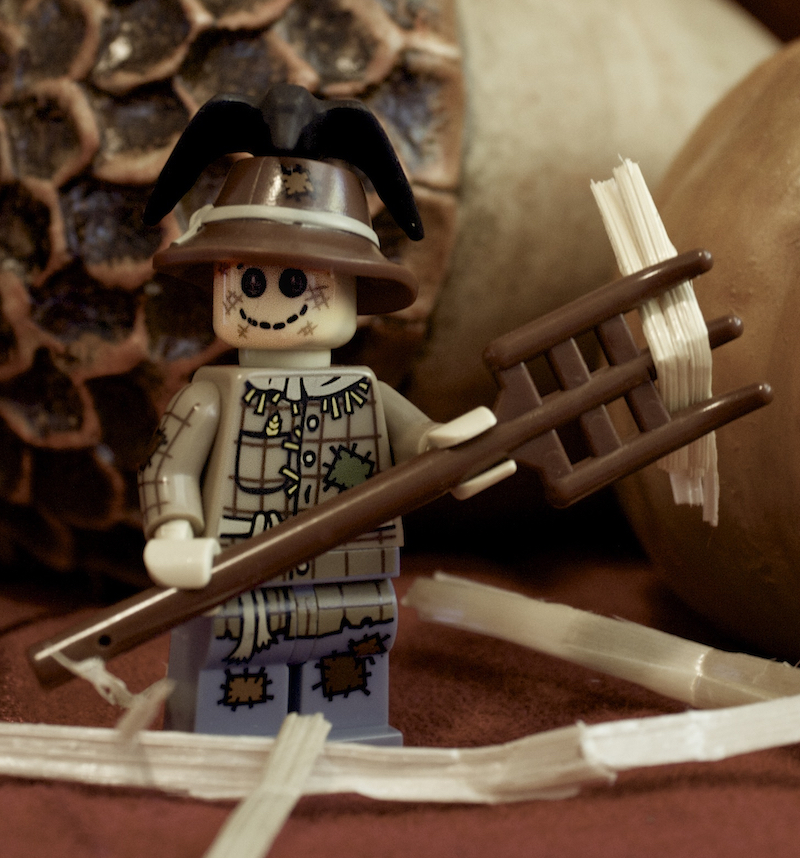
Scarecrow
Scarecrow

Today I went down to Barnes & Noble, as is my custom now, and wrote some poetry. The poetical forms of this day were exotic, by which was meant foreign-to-English forms. I focused on the haiku, a Japanese form that in English is rendered as 17 syllables in three lines of 5,7,5. Usually the subject is nature, with the season being referenced in the haiku. There is some discussion as to whether or not the Japanese form can actually be translated into English for use, but I think the approximation is worth pursuing. I certainly had fun with it, at any rate.

Half of my haikus are about the autumn season, the other half are a macabre collection celebrating the holiday of Halloween.

Haikus on Autumn

1
A cool wisp of breeze
Rustles in the fallen leaves
Autumn is aground

2
A crow in flight caws
Harshly. The cold waning light
Lands on naked branch.

3
A leaf on the wind
Soaring, dancing, falling low
Joins its dying mates.

4
Chiseled pumpkin grins
Letting out the light within
Glows on the dark hearth

Halloween Haikus

1
Creaking and moaning
This cabin in the woods sits
Full of horror’s screams.

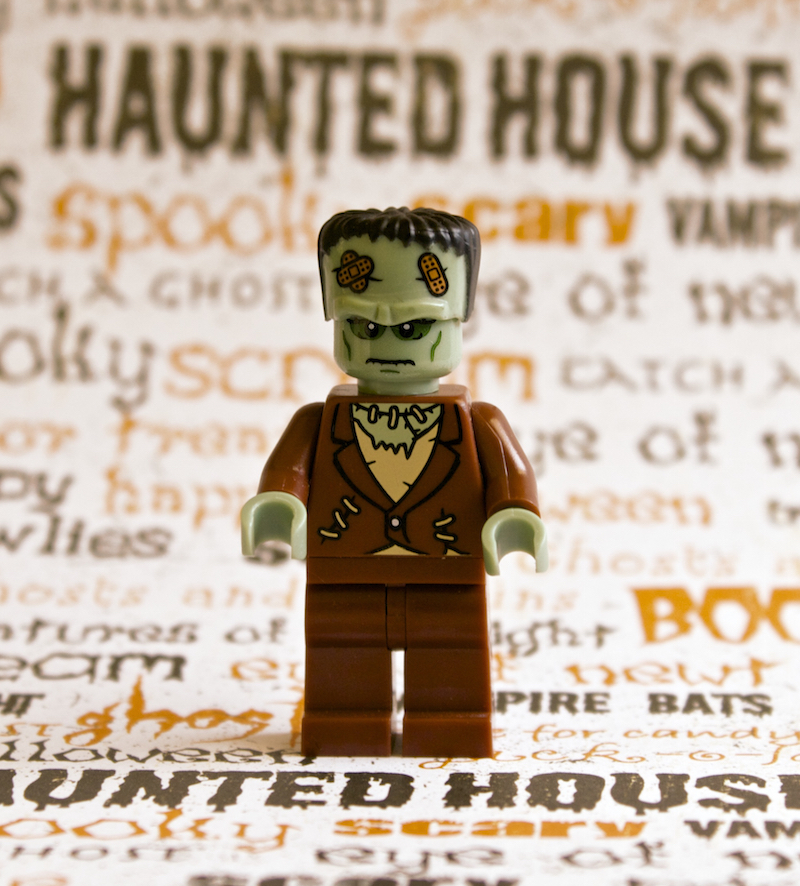
Frank the Monster
Frank the Monster

2
Jangling and clanking
Skellington walks into town
To trick-or-treat you.

3
Ghastly laughing ghoul
Haunts the house on the dark ridge
Ghost of virgin past

4
The monster moans low
He’s stitched and sewn together
Missing a partner.

5
Clink clank in the dank
Cold dungeon dark and slimy
Chained: rotten zombies.

6
Low moan on the heath
Zombie, ghost, or monster mean?
Just the autumn wind.

Like I said, I had fun, especially with the Halloween haikus which I wrote more in a spirit of the old gothic novels, creepy castles and Frankenstein’s monster, than in the mode of today’s horror films, which I detest for various reasons. Anyway, I hope you enjoyed reading through my haikus.

Until next time, have a spooktacular evening. *creepy laugh*

Lord of the Verses

This week I ended up at Barnes & Noble a day earlier than I usually go. It was a warm, autumn afternoon, and I was full of poetry ready to be written. This week I had several more French styles of poem to work through: the rondeau redoublè, the roundelet, the roundelay, the triolet, and the kyrielle. These are similar to last weeks poems, and to each other. Each has a simple AB… rhyme scheme and each repeats various lines for effect. The repeated lines are easy to pick out, as are the rhymes because I wasn’t terribly clever in my writing.

This week I picked Lord of the Rings/ the Hobbit for my theme and wrote away to Middle Earth. I doubt Tolkien would be very impressed, but I like my poems.

The Hobbit

Once upon a time in the land of Middle-Earth
Far over the Misty Mountains sheer
Bilbo was a hobbit full of mirth
Thorin and his thirteen set forth with cheer.

The sun shone bright, the air was clear
The company sought gold, memory of mirth
The ponies jangled with weapons and gear
Once upon a time in the land of Middle-Earth

Old were the dwarves, one of great girth
The dwarves were bold, the hobbit full of fear
Many miles from the Shire of his birth
Far over the Misty Mountains sheer.

They fought and ran with sword and spear
A dragon who roared, made the land a dearth
though the goblins laughed and jeered
Bilbo was a hobbit, full of mirth

With magic ring he won in history a berth
Many peoples toasted his name with  beer
The wizard, dear little Bilbo showed his worth
Thorin and his thirteen set forth with cheer
Once upon a time

Above you can see that each line of the first stanza repeats as the last line of each subsequent stanza, with the first half of the first line repeating as a refrain at the end. This is a rondeau redoublè. This is a retelling of The Hobbit.

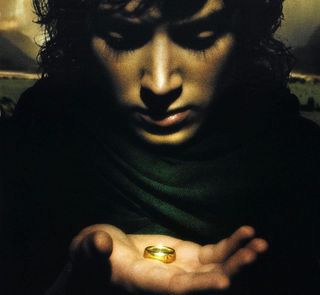
Frodo’s Song

Frodo Baggins
Frodo Baggins

I am not brave
I will take the ring
I am not brave
The business is grave
Doom will failure bring
“Courage, courage!” I will sing
I am not brave

In the above roundelet the first, third and last lines are all the same. This is an imagined song that Frodo Baggins might have sung after accepting the quest of the ring in The Fellowship of the Ring.

The Three

An Elf, a Dwarf, a Man
chased the evil Uruk-Hai
through the vastness of Rohan
under Sauron’s watchful eye.
Tirelessly the three ran,
their friends they’d not bid good-bye.

Through the vastness of Rohan,
under Sauron’s watchful eye,
the hunters the horizon scanned:
the Rohirrim made the Uruks fly.
Tirelessly the three ran,
their friends they’d not bid good-bye.

The hunters the horizon scanned,
the Rohirrim made the Uruks fly,
the orcs fell into the horseman’s plan
the Uruks stood to fight and die.
Tirelessly the three ran,
their friends they’d not bid good-bye.

Here in the above roundelay the end lines repeat, as do a few of the other pairs of lines. This is about Legolas, Gimli, and Aragorn chasing the Uruk-Hai orcs who kidnapped the hobbits Merry and Pippin at the beginning of The Two Towers.

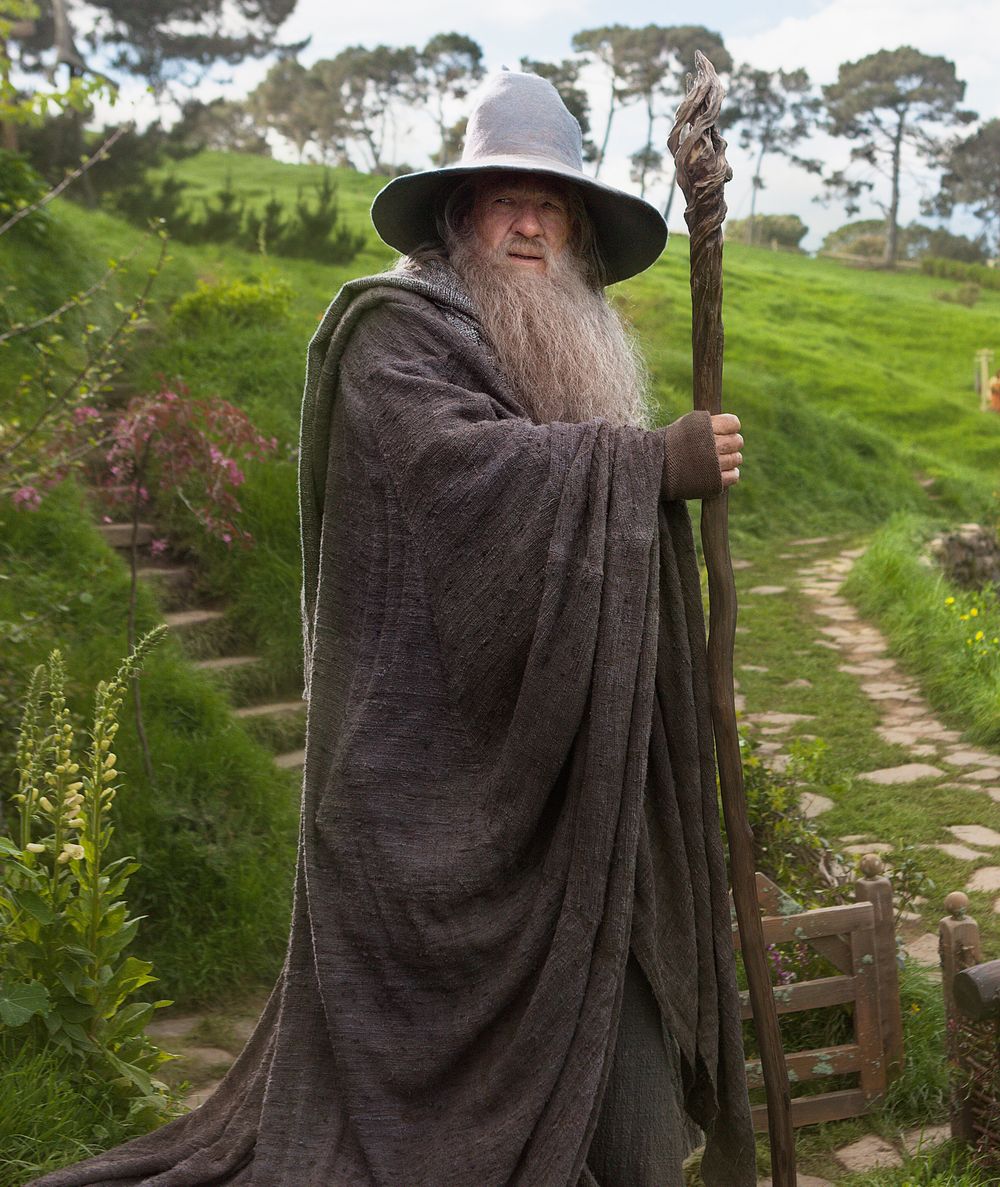
Of Gandalf

Gandalf
Gandalf

Gandalf was a wizard bold
with flashing sword and magic bright.
In appearance: a man now old,
Gandalf was a wizard bold.
Once he quested for dragon’s gold,
trekked o’er mountains, through the wold.
Gandalf was a wizard bold,
with flashing sword and magic bright.

This above triolet gets its name from the trio of repeated lines, the first, and fourth, and next to last. The second line repeats as well to round out the poem. This is of course about the wizard Mithrandir, whom hobbits and men called Gandalf.

Merry and Pippin

Careless, care free, and full of song
May the Valar have mercy on us!

Friend of steward and of a King
The top o’their lungs they’d sing
May the Valar have mercy on us!

Hobbits did save warriors life
Each did evade the orcish knife
And sing of the tree lord’s lost wife
May the Valar have mercy on us!

The dark of night nor point of sword
could dull their merry little chords
May the Valar have mercy on us!

Merry and Pip did dance a jig
May the Valar have mercy on us!

Finally the above kyrielle, written in Iambic tetrameter, has the last line of each stanza repeat which is to be some variant of “God have mercy” (in this case, the gods of Middle-Earth, the Valar). Other than that there is great freedom in the form as long as some manner of rhyme scheme is maintained. This particular kyrielle is about the jolly hobbit twosome of Meriadoc Brandybuck and Peregrin Took and their exploits throughout The Lord of the Rings.

I hope you have enjoyed my poetical side trip through Middle Earth. I certainly did. Until next week.

Warrior Poet’s Way

It was cold this morning as I headed to Barnes and Noble, but it was a pleasant, autumn cold. I found a table and began writing. Halfway through my phone’s battery died, so I surreptitiously pulled a rhyming dictionary off the shelf and continued working. I managed to write three poems before the rozzers wanted their book back, but by then I was creatively spent anyway.

Today we have a ballade, not to be confused with a ballad, a rondeau and a rondel. The last two are French in origin. The ballade has a long a complicated rhyme scheme of ABABABBABA, and the final line of the stanza repeats as the final line of every stanza, followed by an envoi of four lines (again with that repeated line at the end). Usually they are written as to a prince, or patron, of the arts. Given my recent poetical adoration of pop culture, I have gone with a steady diet of Star Trek related themes in today’s poems. This first one hails from Kronos, the capital of the Klingon Empire.

Klingon War Ballade

Klingon Empire
Klingon Empire

My son, lift your bat’leth to the sky
the un-fought enemy is worst, I deem.
From cowardice and fear, fly!
Your Klingon brothers are your best team,
May you over the battlefield teem.
So let loose with battle cry!
To my advice there is but one theme:
Today is a good day to die!!

My son, raise your mek’leth high
and listen to this battle scheme:
A running man’s blade is never dry,
four thousand throats he may un-seam
in one night. He bathes in blood’s stream,
to his enemies he bids good-bye,
destroyed by disruptor beam.
Today is a good day to die!!

My son, strap a d’k tahg to your thigh,
and remember Sto-Vo-Kor‘s steam
awaits the warrior bold, so do not sigh.
Make your weapons shine and gleam,
build your battle regime:
Sharp knives are nothing without sharp eyes,
serve revenge cold for a taste supreme.
Today is a good day to die!!

Envoi

Prince, Tonight may your blood scream.
Tonight, eat deep of the bloodwine pie.
Tonight of victories may you dream,
Tomorrow is a good day to die!!

I’ve added links into my poem to the unfamiliar words, so you dear reader can know what I am talking about. Mostly they are Klingon weapons, Sto-Vo-Kor is the Klingon heaven, and bloodwine is a traditional Klingon beverage. I’ve also adapted several Klingon adages into the poem such as “A running man can slit four thousand throats on one night” and “Revenge is a dish best served cold” and of course the refrain is perhaps the most popular Klingon battle cry of all time “Today is a good day to die!”. I’ve written the poem as from a Klingon father to his young son, perhaps just before bedtime.

Next up is a Rondeau which has a complicated rhyme scheme of RABBA AABR AABBAR. The last line of the last two stanzas comes from the first half of the first line. The most famous example of this form is “In Flander’s Fields”. In my attempt I have again mined Klingon culture.

A Klingon Warrior’s Song to his Foe

Share in death, my warrior bold
Revenge is a dish best served cold
Fight to the end, do not a coward be
My mek’leth you’ll never see
You will not age, never grow old

Your life is forfeit, your fortune sold
You’ve nothing left, no sword to hold
Do not hide, stand straight and free,
Share in death.

When this battle, the end is told,
I’ll be heaped, be buried in gold
No, I will not, cannot hear your plea
Mercy will not come, I’ll not save thee
No grave you’ll have, only this wold
Share in death.

This poem turns on the old Klingon proverb that “Death is an experience best shared”. Next up is a rondel, which repeats the first two lines of the poem in the middle and again at the end while alternating rhymes throughout. For this one, I changed paces and traveled to Ferenginar, home of the Ferengi, a race completely obsessed with amassing wealth. This poem extols the virtues of Ferengi culture.

The Ferengi Heart

Ferengi Alliance
Ferengi Alliance

Nothing is sweeter than profit,
Latinum is the best of all.
I’ve heeded the greedy call
Of business and acquisition, her prophet.
I’ve made gold my precious cossette,
Wealth keeps me in thrall.
Nothing is sweeter than profit,
Latinum is the best of all.
I’ll steal as much as I can haul,
All I fear is the FCA audit,
All I need is Ferengi plaudit,
Charity is the only thing I appall.
Nothing is sweeter than profit,
Latinum is the best of all.

Highly amusing to me, and if you know anything about Ferengi culture, a highly accurate poem. Again I have hyperlinked some of the more obscure references.

I hope you have enjoyed my foray into the Star Trek galaxy, I know I have. Until next time, live long and prosper!

(Repetitive) Poetry

I sojourned down to Barnes & Noble for my weekly poetry meet up with Stephen Fry (oh how I wish I could actually meet up with Fry to write poetry!). It was a cool, crisp fall morning, just perfect in every way.

Today’s poetry is a continuance of the rigid forms I have been exploring, with repetitions and rhyme schemes and convoluted processes. It sounds burdensome, but when you get into writing within the form, it can be quite fun to see the poem unfold. Today I have two (one is quite long, which is why I only have two): the sestina and the pantoum which my spell check wants to correct into phantom. Anyway, the sestina repeats ending words in a specific pattern at length followed by a three line Envoi that includes all six ending words in a set pattern. There is no official metre, though I have chosen iambic trimeter for my sestina. There isn’t a rhyme scheme, other than the way repeating words might be said to rhyme. As given to me by my friend Bobby Callaway, the theme of my sestina was “double” whatever that may mean to me.

Double

I wash my face and stare
into the frosty mirror.
What I see there scares me,
or is it me I see?
It could be him that looks
at me from out that glass.

I wipe and clean the glass
and start to climb the stairs.
From each picture a look
at me as if a mirror.
Each one is tossed, a sea
of thoughts churning in me.

I want to know: who’s me?
My soul’s fragile, like glass.
The cracks that form, I see,
I lose my gaze, I stare:
each one a hundred mirrors.
I am compelled to look.

Within each crack, a look,
a gaze, another me.
Each one another mirror.
Am I hollow as glass?
Do they, at me, all stare?
All this I can’t un-see.

But now that this I’ve seen,
I’ll take another look.
With new purpose I stare
into the eyes of each me
and find, as clear as glass,
the clear answer in’th mirror.

I’m me and him, mirrored,
each self that I have seen
in every single glass
a different side, new looks
at the same old, same me
at whom each day I stare.

Envoi

Into the mirror I look
And now just see just me
into the glass I stare.

So there you have it: a sestina. By nature, a long poem as it takes time to work through all the ways the end words may be jumbled. It can continue indefinitely, but with each sixth paragraph it starts to repeat the way the lines end.

Onto the next, the pantoum. The pantoum has an endless number of four line stanzas, each line composed of 8 syllables, and ending with a rhyme scheme of ABAB BABA etc. At least, it should rhyme, but it doesn’t have to. Additionally, starting after the first stanza, the second and fourth lines of each stanza are repeated as the first and third lines of the next stanza until the poem ends, in which case the first and third lines of the first stanza become the second and fourth lines of the last stanza. The explanation will perhaps be clearer with my example. The repetition and rhyme often lends itself to solemn themes, so I have chose the Battle of Hoth, from Star Wars: the Empire Strikes Back as my theme.

Invasion: Hoth

It’s a cold, snowy day on Hoth
The battle lines are drawn in snow.
Lord Darth Vader, all black and goth:
fear in the hearts of rebels grows.

The battle lines are drawn in snow,
The Imperials cut a swath.
Fear in the hearts of rebels grows
of troopers, white visigoths.

The Imperials cut a swath
Vader at their head, a black crow,
and troopers, white visigoths,
rebel blood in red icicles flows.

Vader at their head, a black crow,
Lord Darth Vader, all black and goth,
Rebel blood in red icicles flows:
it’s a cold, snowy day on Hoth.

This pantoum is fun, a bit like a villanelle, but to my mind and poetical sensibilities, a bit easier to pull off.

I hope you have enjoyed this week’s poetical musings, with all their repetitions and fun-ness. I certainly have. Until next week, then…

An Ode to Odes

It was cold and rainy as I made my weekly trek to Barnes and Noble, a perfect fall day. On the trees the leaves were changing and in the air there was a crispness. I felt juvenated and alive. I sat down at a large table in the back of B&N and took out my copy of the Ode Less Traveled and began to read and write.

Today’s forms included the many types of odes. These days an ode can refer to any kind of poetry, but there are specific forms that are “proper” odes. Among those I attempted the sapphic ode, the pindaric ode, and the horation ode. A sapphic ode is usually written with three stanzas, and each stanza is composed of four lines, three of iambic tetrameter and one of iambic dimeter. I say usually because there are many variations possible within the form, but as described is the classic form.

An Ode to Stormtrooper Armor

All gleaming white, the armor stands,
the black insidious eyes do stare.
It clothes the Empire’s ruthless bands;
should just be bare.

It takes a hit, a hole appears;
the soldier dies, a flash of light
upon the chest: what poor career
the choice, a blight.

Why wear the armor bright? It yields
no benefit. The man beneath
just groans and dies. Bury him in fields
of green, the heath.

A pindaric ode is written in three stanzas. Each has a function, and while overall the meter is variable, each stanza must be composed identically in form. I chose to write each stanza with four lines of iambic dimiter, trimeter, tetrameter, and pentameter in ascending order. This ode need not rhyme. Actually, no odes need to rhyme as odes are originally a Roman thing, and there isn’t much rhyme outside of English.

An Ode to Stormtroopers

Strophe (Turn)

All hail!
the brave, the few, the true,
an Empire’s legion: stormtroopers.
They fight and die to win the Empire’s day.

Antistrophe (Counter Turn)

But they
cannot take aim or shoot
a straight and forward beam of light
at their targets, through “crack” and “best” they be.

Epode (the Stand)

Perhaps:
secret rebel dreams hold
behind their masks of white and black
to let the heroes live to fight back.

Then there is the Horation ode, which is much like the pindaric ode where the prevailing method of the form is that it remain consistent to each stanza. I chose three lines of iambic trimeter and one line of iambic pentameter. Just because.

An Ode to Barnes & Noble

I love thy smell of books
and coffee commingled in’th’ air
I love thy stacks and rows
of history, humor

of toys and games and Nook
the digital book for all
and desks at which to sit
to read and write a poem

There are a few other odes, some proper, some not, but due to the variability and required subject matter, I skipped them.

Lastly I moved to other forms and attempted a villanelle, which is a fun, favorite form that I love to try. A villanelle has no set meter, but does have a set rhyme scheme in which certain lines repeat. Usually it is A1BA2, ABA1, ABA2, ABA1, ABA2, ABA1A2.

An Villanelle Ode to Baseball

Baseball is a many pleasured thing:
the ball that buzzes, the bat that cracks;
it starts after the anthem rings.

Pitcher fires the ball, batter takes a swing,
he hits a double with a mighty thwack!
Baseball is a many pleasured thing.

The runner’s picked off, a sneaky sting.
He jogs to the dugout, bent back.
It starts after the anthem rings.

The submariner a curveball slings,
the batter whiffs, the ball glove smacks.
Baseball is a many pleasured thing.

The centre fielder to the wall springs,
he leaps and makes the catch at the track:
it starts after the anthem rings.

It all can change with just a swing,
a swift strike or a homer bat crack,
baseball is a many pleasured thing:
it starts after the anthem rings.

As usual, I claim no greatness or mastery, unless it be of fun and adherence to form. I do my best to enjoy the process of writing and sharing poetry, and leave greatness to the eventual tinkering and adjusting that is editing and the time that is the measure of all things. I only hope you enjoy reading my poems as much as I enjoy sharing them.


Pop Culture Poesy

This week I did make it to Barnes and Noble, I am merely late in posting about it. I went earlier in the day than I normally do, and perhaps as a result, my normal table was occupied. I was forced to find a table at the local Starbucks-in-a-bookstore that almost all Barnes and Nobles have these days. It wasn’t entirely unconducive to poetry work, though it was a bit louder than I am used to, more idle conversation less quietly browsing of the stacks.

This week’s poetical musings are in the form of the ballad and heroic verse. The ballad is written in a variety of standards, but most popular is one with alternating lines of iambic tetrameter and trimeter and a rhyme scheme of ABAB. Heroic verse is not mostly about Iron Man and Batman, but is in fact a simple iambic pentameter with a rhyme scheme of AABBCCDD.

This week I decided to dedicate my poetical notions to Star Wars.

The Ballad of Luke and Leia

Now gather round and let me tell
the tale of Luke and Leia.
The sandborne son, the Alderaan belle
their love, it’s true, a fluke.

Never had he known love at all
and she was much too busy
He knew only sand and droids tall
She knew politik privy

But she fell in with Imper’al types
and he came to her rescue
then they did kiss, an act most hyped
not knowing they were askew

For he was her long lost brother
and she was his own sister
then they will help discovered the other
still he, yet twice, had kissed her.


It won’t light the world on fire, but I find it amusing enough. Of note, my rhyme scheme is ABAC, and in the first stanza it really should “Leia and Luke” but it just sounds better the other way around, to me at least. Now: to my heroic verse.

Obi-Wan’s Confession

Dear Luke, I must confess to you a truth:
a move I made for your fam’ly in youth.
The move’s become a mistake you must now know
Before this ill advised, ill love can grow.
Your knowledge is not complete, I must tell
you things you need to know, this love to quell.
A single child you are not, now nor ever
have been. You have a sibling. If you’re clever
you will know of whom I speak to you…
Yes. True. The one I mean is your new boo,
the one you have now kissed: your sister.
Shall we now chalk it up to this, you missed her?

Again, nothing very profound or even that good, but again, it amuses me. I had trouble with the rhymes in this and the ballad, but I did my best. Some are obvious, some are clunky, but at least all rhyme. I do, however, like this idea of adapting pop culture to old poetical forms. I think I will continue to do so. Until next time, do enjoy!