SWD: All Work and No Play

Welcome to a new year, and a new Star Wars: Deconstructed post. I apologize for the great length of time between these posts. When I began this series, I was posting much more frequently and with greater enthusiasm. My enthusiasm waned, and with it the frequency, however, I have resolved to write at least one of these a week. Hence…

Star Wars Episode Two: Attack of the Clones (00.40.57-00.50.20)

Having received a wealth of good intel from his good friend Dexter, and some guiding wisdom from Yoda, Obi-Wan Kenobi finally set out to find the mysterious planet Kamino where he hopes to find the bounty hunter who killed the assassin who failed to kill Senator Amidala twice and find out just why she is wanted dead and by whom the bounty was set. He arrives, predictably, exactly where he expected the planet to be (00.41.14). Why he didn’t just head out there in the first place is a little mystifying, but perhaps the Jedi Council is stingy with their Jedi starfighters, and I suppose it is good to be sure of a destination before setting off on a journey many lightyears long.

Kamino appears to be like most of the other planets in the Star Wars galaxy: comprised of only one topography (perpetually stormy ocean) and one city. Either that or it has a really long rainy day and Kenobi found the right city purely by accident.

Once he lands, he is immediately greeted, and is “expected” (00.41.58). This is surprising to me. I know Dexter said that the cloners keep to themselves, but really, they wouldn’t have tried to check in with the Jedi Council about their order of clones at least once in over ten years? That seems really unlikely. I order something insignificant, and I get at least one email about it within hours, and I can check the progress of the order online. I can’t believe nothing like this exists in a galaxy as technologically sophisticated as this one is supposed to be, what with faster than light travel and lightsabers and all. In any case, the Kaminoan immediately assumes that Kenobi is A) a Jedi, and B) supposed to be there, and C) authorized to have any and all information about the cloning project. This also seems unlikely, but who knows what the privacy agreement is with an organization that is willing to go ten years without checking in with their clients. Kenobi manages not to give away that all of this ready information is completely and shockingly new to him, but I doubt his subterfuge is even necessary as the Kaminoans hardly seem to notice or care.

Lama Su, prime minister of Kamino, gets right down to business, even though there wasn’t anything else going on. At any rate, he wishes to immediately make up for lost time and tries to update his client on the status of his order. “Jedi Master Sifo-Dyas is still a leading member of the Jedi Council, is he not?” he asks and Kenobi gives him the bad news that “Sifo-Dyas was killed almost ten years ago” (00.43.18). See? that is why you check in with clients: they might die before the order is placed, or, in this case, right after it is placed. After all, why bother “building” a million clones (and spending the money to do so) if you don’t have to? I am assuming that Sifo-Dyas paid for the order in full ten years earlier, otherwise the Kaminoans are very stupid. Still, I suppose the way the Council operates, the order was at the behest of the Council, and not any one Jedi. Collective possessions and all, I guess.

But, after divulging all of his information, Lama Su assumes Kenobi would like to inspect the clones. Kenobi lamely covers his surprise with a “that’s why I’m here” even though he is actually there to find a bounty hunter (00.43.55). However, I give Kenobi the benefit of the doubt here because sometimes the best way to find what you are looking for is to look for (or at) something else and let the situation unfold before you.

Anyway, the movie shifts back to Naboo and Anakin and Padme. The film is now following two separate story lines with intercut scenes, but for the past ten minutes, and for most of the rest of the movie, the two plots have nothing whatsoever to do with each other. In fact, the Anakin/Padme storyline is completely useless. It barely advances the arc of either character, and it divulges no useful information by way of exposition. The only action of any consequence comes when Anakin murders an entire tribe of Tuskens, but that only reveals what is already inside of him: pure evil. This film is all about Kenobi and the plot to…create clones. There is no reason for any particular scene break, and to be perfectly honest, this part of the movie is really boring. The only reason it does get interesting is because a few fights break out, but they are short lived.

Anyway, the movie shifts back to Naboo and Anakin and Padme. They are arriving in their clever hideout at a favorite vacation spot of Padme’s. I find it necessary to remind my readers that Anakin and Padme are in fact supposed to be hiding from a deadly bounty hunter who has already tried to kill her twice. Each attack came when Padme was exactly where she was supposed to be: her landing pad or her apartment. It is absolute lunacy to expect that going to a third place she is supposed to be (her home planet and places very familiar to her, ie the Palace and Vacation Spot #1) would be a safe or even remotely advisable course of action. When there is an attempt to take the life of the President of the United States, he is immediately moved to an underground bunker at an undisclosed location, or is kept flying around in the sky somewhere in a jumbo jet surrounded by fighter jets. He isn’t kept at the White House, or Camp David, or his Chicago home. Because that would be stupid. Padme isn’t that important, but if someone is trying to kill you, the best option is to hide somewhere you aren’t supposed to be.

I belabor this point, but the easier thing to do is to state what is really going on here: Padme is perfectly safe. Why? Because Lucas is done with the assassination part of the story and has moved on to the love part of the story. Jango Fett has retreated to Kamino, and won’t bother trying to kill Padme ever again. Even Nute Gunray is waiting on Geonosis for Padme to arrive and then he lets Dooku try to kill her, and then he gives up trying. Padme is in absolutely no danger whatsoever because the writer of the story simply dismissed that part of the plot without resolving it, and acts for the rest of the movie as if it never existed. This is bad writing. This is excruciatingly bad writing. Every single bit of tension has drained from the movie.

Anyway…Anakin continues to be creepy. He creepily touches Padme, creepily tries to kiss her, there is an awkward half-completed kiss, and right as people are being weirded out, the scene shifts back to Kenobi looking at clones (even the music is awkward here). I wasn’t going to mention this, but if Padme is conflicted about her growing affection for Anakin and his obvious lust for her, she chooses odd raiment for a few days: very revealing come-jump-on-me clothes. Just saying.

Back on Kamino, Kenobi finally learns that a bounty hunter is in fact on Kamino and that his name is Jango Fett. I want to mention that the use of “host” to describe Fett is incorrect. Fett is host to nothing. Host is not a term used in cloning terminology.

Of note here: the scene where Kenobi emerges onto a balcony to see massive amounts of clones marching in unison is really the first scene of the Empire: helmeted, white armored soldiers. John Williams should have been allowed to use the Imperial March here, and not later at the end of the movie when this scene is repeated almost exactly when the awe of it is diminished.

Anyway, back on Naboo, Anakin and Padme take a picnic lunch in the middle of a massively open field during the middle of the day. See? I told you no one cares about an assassination attempt anymore. What follows is a bit of painful dialogue about Padme’s past lovers (something no guy wants to talk about), politics (something few lovers talk about on dates), and a ride on some sort of tick looking animal (which sort of falls into the “stupidly trying to impress the girl” category), and some rolling in the hay which just makes me go “what?”. Padme’s actions are completely incongruous to her words. No wonder Anakin is very “tormented” and sadly confused about her intentions. She is either supposed to be a bit of a sanctimonious jerk who leads him on maliciously, or she is badly written. I choose the second because it fits the emergent pattern in the Star Wars prequels.

And the scene ends with nothing much having been accomplished. Maybe the next ten minutes will be more…something. I really wish I could be more positive here, but even the special effects are bland and unconvincing (especially the tick animal on Naboo). There isn’t too much to hate, but there is nothing to love.

(00.50.20).

2.11

I’ve never really made New Year’s Resolutions because I know myself well enough to know that I would never actually have the discipline to carry out some radical new change in my standard operating procedure. But, this past year, 2.10, I achieved a radical new change in status: I am a college graduate and a married man. I thought that perhaps this should signify a change in the way I think about each new year.

For the past 18 consecutive years, my life has primarily been centred around one thing: school. Since I was five I have been in school every year for most of the year. Summer was the part of the year, like Christmas and Spring Break, that I wasn’t in school. I defined my life by my various scholastic incarcerations. This was true through homeschooling, a year abroad in Papua New Guinea, two years at Bible school in New York, and three years at college in Pennsylvania. This past September was the first September since I was five that I was not enrolled at any sort of academic institution.

One would think that a wedding day would be a defining, pivotal moment in their life (and in many ways, it is) but for me, it really wasn’t. My pivotal, life changing day was my graduation day. I had been hanging out with my girlfriend for three years, and had been practically living with my fiancee for a year, and then we got married and made it official and moved all the way in together, so for five years my wife was a constant part of my life even if she wasn’t my wife. Having Hannah around won’t ever change, and so, like having brothers and a sister I can’t ever get away from, Hannah is a part of normal life.

But school is not normal life, it is, in point of fact, quite abnormal, and for me, quite over. I plan on going to grad school at some point, but even if I do return to some sort of educational institute, it won’t be full time like it was before. I won’t live there; I won’t centre my whole life around it. It will become something I am doing, not something that I am.

And so, as I look outwards on the 6th of January in the year 2011, I feel out of place. This past September I was aware that my still enrolled friends were heading back to school and were hitting the books as hard as ever while I was out of the game. On my graduation day, and before, and after, many people asked me the third most hated question ever: “what are you going to do after you graduate?” (For the record, the other two most hated questions are: “What college will you go to after you graduate from high school?” and “What can you do with an English degree? Can you even get a job with one of those?” – the answer to the second is “No”.)

I knew what the right answer to the third most hated question was supposed to be: “I will get a job and become a happy, productive member of society” but my real answer was “Sleep. Lots of sleep.” I had been going to school for 18 years straight and the bottom line was exhaustion. I was very tired. I know that in the “real world” (whatever the hell that is) most people do not have the luxury of graduating and immediately falling into a sweet slumber. Most people have to take whatever job they can find, finagle, or steal and work hard to earn enough money to buy pizza, beer, and a monthly cell phone contract. Most people can’t sleep, unless they want to do it on the street in a cardboard box or something. For some reason, my situation allows me the luxury of taking the time off.

Six months Post Graduation, I am finally starting to feel a little of the weariness fade from my bones. I struggled until a few weeks ago with actually keeping to any consistent sleeping schedule. I would often stay up until 4am and sleep until noon or 1pm. But now I am actually in bed by 11pm and up by 0730. I would see my wife for only a few hours each evening between when she got home for work and when she went to bed. Now, I see her for those hours, fall asleep with her, and wake up with her. My wife-time has doubled (not really, but it feels like it).

And now I have about 9 hours during the day to fill. I could get a job, but honestly, I can’t face that prospect quite yet. I haven’t the mental energy or the psychological stamina. A job may be surmounting the horizon, but it is still many miles away.

But, I want to do something. I want to have some sort of structure to my day. Right now it looks like this:

Wake Up
See Wife Off to Work
Make Bed
Watch Colbert Report with Breakfast
Empty
Turn on Lights Around House
Welcome Wife Home
Make Dinner
Hang Out with Wife
Got to Bed

Rinse and Repeat

I want to turn that “Empty” part of my day into something, and be conscious about it. Sure, mostly I still struggle with staying awake all day long and fighting an overwhelming sense of fatigue, but sometimes I am fascinatingly lucid and I write blog posts like this one. So, with it being a new year and all, I want to (not make resolutions) set some goals for myself and blogging about them makes them more real to me. I think that my brother reads this blog and I know my wife does, but I imagine that some other people might, and in any case having the sense that other people read about what I say means that making such a decision is more binding than simply speaking into the empty air of my apartment.

[I just got distracted by this: http://www.filmschoolrejects.com/features/watch-scrats-continental-crack-up.php You can check it out if you promise to come back.]

Now that I have lost my audience, my goals for 2.11 are as follows:

1. Blog at least twice a week.

2. One blog must be a Star Wars: Deconstructed blog. These will be available here on my blog.

3. Write one poem a week. Learn and try new forms. These will be available here on my blog.

4. Take one creative picture a day, preferably with Instagram [link], an awesome creative picture taking app for my iPhone. These will be available on my flickr! [link] and on my twitter @PhilipJoelM

5. Write a publishable work, either memoir or short story. Submit for publishing.

6. Prepare for grad school (this might actually entail applying).

They aren’t many, but they are good, and (for the most part) are centred around what I put myself into massive debt to learn: writing. It figures that whatever I do with my life ought to include that in some aspect or other.

So, I am hereby resolved. I do hope it works out.

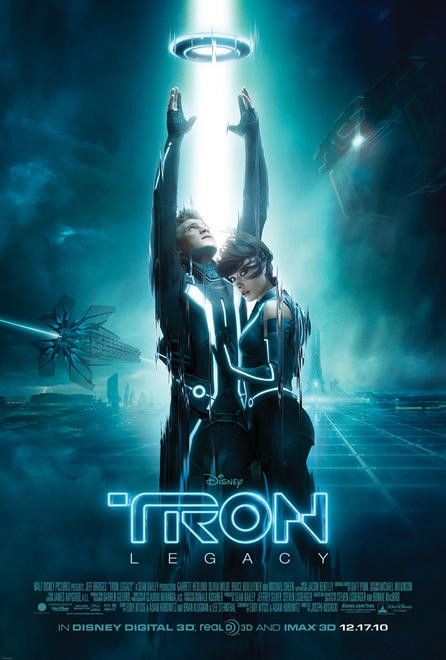
Reflections in Film: TRON: Legacy

A few weeks ago I posted about my desire to see and review films. I then saw and reviewed Chronicles of Narnia: Voyage of the Dawn Treader.

I then present the second review in the series.

TRON: Legacy

TRON: Legacy
TRON: Legacy

History: The original TRON came out in 1982, starring Jeff Bridges as Kevin Flynn, a hacker who used to work for a software company called ENCOM which had stolen Flynn’s designs for several computer games and marketed them as their own, making millions and making Flynn a flunky who depended on the profits from an arcade, in which teenagers played his stolen games, for income. In the effort to hack ENCOM’s computers and find proof that he in fact did create the games, Flynn was transported into the world of the computer and into a desperate fight for life against the Master Control Program which was seeking domination over both the world of the computer and the real world.

The story idea was compelling, the acting was pretty good, and the graphics were cutting edge (for their time). However, the world of computer graphics soon exploded and TRON was left looking painfully bad.

The film achieved geek cult status, and I first really heard of it, and became interested in it, after the title character of the television show Chuck had a TRON poster in his bedroom. I eventually rented the dvd from the library and loved the film after the first viewing. TRON had quite a bit of what I call the “2001: A Space Odyssey” effect (or, alternatively, the “Star Trek: The Motion Picture” effect): endless sequences of a ship flying through space accompanied by music, but the story is what captivated me. It was the Matrix without all the mysticism, enslaved humans, rock and roll kung-fu, (and Keanu Reeves) before the Matrix. It was a world of imagination and wonder; a world of beings who lived and died under the command of lines of code, beings who nourished themselves on luminescent electric energy, beings who died in gladiatorial combat on light cycles. It was nerdy, thoughtful, and very cool.

Hype: I was incredibly excited to see TRON: Legacy. In fact, I think the only movie in recent memory that I have been as excited to see was Star Wars: The Phantom Menace. I was keenly interested the story material, and I knew that computer graphics had finally come of age. All that the film’s writers, director, and producers could envision, they could finally create in full, vivid detail. The original TRON was all grey and light, and kind of incomplete, actually, but the new TRON could be black and light and cutting edge. The light cycles could really roar and the world of the computer could finally suck the audience in. I was expecting an immersive world and mind-blowing action sequences.

The Good: Everything that I wanted, TRON: Legacy delivered and so much more, which was actually less, ironically. The world of the Grid was beautiful, endless, and compelling. The graphics were top notch and stunning. The gladiatorial games (light cycles, disc wars) were violent, awesome, and soon over. There was less action than I anticipated, but that turned out, after contemplation, to be a very good thing. Legacy achieved true brilliance: it didn’t overdo anything that TRON had already done. It had exactly what it needed to tell the story, while advancing the world, the characters, and the philosophy. In was, in every meaning, TRON 2.0. It was TRON updated graphically and advanced in substance. It was satisfying, thought provoking, entertaining, and so very cool.

The Bad: History. TRON: Legacy advanced the story of TRON, but the history of what had happened in the intervening 28 years wasn’t really explained. There was some exposition, and some hints, but the backstory of what had really taken place wasn’t really fleshed out, either inside or outside of the computer. I was left wanting a bit more story, but not in the good way. None of this effected my understanding of the immediate plot, or my enjoyment of the film, but my curiosity wasn’t quite sated.

Along with history of the world of the computer, I would have liked to see a little more interplay between Kevin Flynn and the antagonist Clu 2.0, his digital creation. This was such a complex and multi-textured relationship that I would have loved to see it explored and teased out a bit. I would have liked to live in the mind of Kevin, and see a bit more of how he felt about Clu 2.0.

Also, what had Tron (Flynn’s digital sidekick from the first film) become? I want to know.

The Personal: I have never had a film so completely fulfill what I wanted to see. I connected to the emotional interplay between Sam Flynn and his estranged father Kevin Flynn; and I resonated with the dynamic of the relationship-gone-wrong between Kevin Flynn and his computerized creation Clu 2.0 which was part father/son, part lover, part brother, part God/creation. I saw reflections of my own relationships in each of these aspects, and was able to really emotionally invest in the characters, while exploring my own emotions through the characters. This could be part of a much longer exploration of my life in light of TRON, but sometimes I really feel like Sam who felt abandoned by his father, and sometimes like Clu 2.0, who felt less and less the need for his creator. I also felt like Kevin, who saw the magic of his wildest dreams come true, and then turn horribly wrong and spin out of control.

For me, this is the most important part of cinema: the ability to create a world in which the audience recognizes reality while being able to enjoy the alternative parts of it.

Final Score: 4.1 out of 5 End of Lines.

Bonus: Favorite line: “I am going to knock on the sky and listen to the sound.” – Kevin Flynn. (This is right up there with “Tastes like coconut!” – Tony Stark from Iron Man 2.)

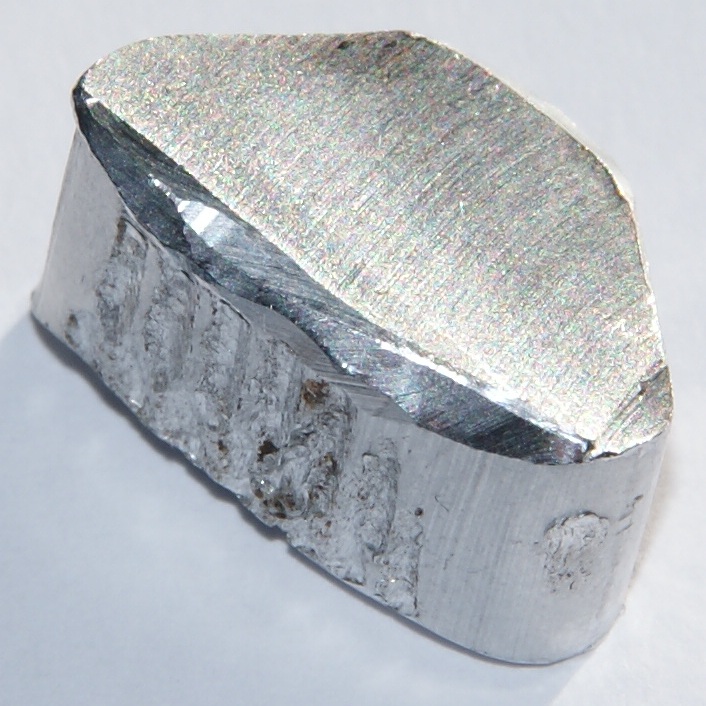
Update: Aluminium

Aluminium
Aluminium

I own an Apple iMac, a most sexy computing machine, which came with a most sexy input device: a bluetooth keyboard. I happily used this wireless keyboard for most of the year and half I have owned this particular iMac. The keyboard is impossibly small, lightweight, and spectacularly easy to use. The latter point was most surprising to me as the first two were readily evident, but I thought that having something so small and compact would make it harder to type on. Quite the opposite, in fact. While I grew up on massive beige PC desktop computers with their massive beige PC keyboards, for the past few years I had been using either an iBook or a Macbook laptop, and Apple has been making their laptop keyboards smaller and more compact in the endless pursuit of the perfect portable computing machine. The end result was that I was becoming more and more accustomed, without realizing it, to a smaller keyboard. In actual fact, the Apple aluminium wireless keyboard is really about the same size as a Macbook keyboard. Therefore, when I received one with my new iMac, typing with it was as natural as ever.

Wireless
Wireless

A few months ago, however, I had become somewhat nostalgic for a full size keyboard, that is, one that contained a numeric keypad and larger arrow keys. I had a full size Apple keyboard lying around, and when I say full size, I mean full. I had picked up an old iMac keyboard on eBay a few years back as a backup in case all my batteries went dead, or I spilled something, or for whatever reason I needed a keyboard that would plug in and work. But the massive input device was easily three or four times the size of the sleek bluetooth model and more than usually clunky.

Ye Olde Keyboard
Ye Olde Keyboard

All this talk of size, and sexiness, aside, the worst problem that I had with the old keyboard was that the keys were so large, and so spread out, that I continually hit the wrong key. A long time ago when I was just a young lad and Windows 95 was brand new, I typed in much the same way that a woodpecker pecks: tap – tap- tap (except that woodpeckers are usually faster). I hunted endlessly for the right key and then punched it down with a determined finger. Eventually, though, I took a short typing class in school, wherein I learned “correct” procedure, and straightaway I began typing faster with much fewer mistakes. Now, of course, like most people my age, typing is second nature. I never really look at the keyboard anymore, my fingers just fly across it and I magically hit the exact key that I intend to type almost every time. Sometimes I still find this amazing, given the number of keys on the keyboard and their completely unalphabetical layout. (I mean, who was this QWERTY person anyway?)

So given the fact that spend most of my time on the computer typing away, writing one sort of thing or another, the ability to type quickly and accurately is a necessity, and the large old keyboard simply couldn’t help me. The other problem I had was that I am mostly an insomniac and my writing is largely a nocturnal activity. I tend to only use the minimum amount of electricity, and so didn’t bathe in an overabundance of light. The aluminium keyboard, with its white keys and silvery reflective body, never gave me cause to have a problem. The iMac screen emitted enough light to see by for those few occasions when I actually needed to look at the keyboard; however, the older keyboard had black keys, and seeing as how I frequently missed the one I meant to hit while typing, I couldn’t even see the keys to find the correct one. I was reduced to using a USB lamp plugged into the convenient USB port on the left end of the keyboard just to make sure I was typing accurately.

Sure, most of these problems were the result of poor lighting and a dark keyboard, no doubt solved with proper illumination and a whiter keyboard, but the fact is, as soon as I retrieved my wireless keyboard and set it back up, I was typing much quicker and more accurately from the get go. There quite simply isn’t any comparison between the old and the new.

Now, if only there were a way to have my numeric keypad as well.

Turns out: there is.

Wired Aluminium
Wired Aluminium

I have since sold my wireless keyboard and purchased the Apple aluminium wired keyboard with numeric keypad. Much slimmer and sexier than ye olde keyboard, and the keys are compact like the wireless version. I love it so very much!

Reflections in Film: Voyage of the Dawn Treader

I posted yesterday about my desire to see quite a few movies in theaters throughout 2011 and then to write a visceral, day-after review to compare hype to happiness. I am beginning this blog series, which I have decided to call Reflections in Film, with two movies here at the end of 2010 which I have been very excited to see. First, Chronicles of Narnia: Voyage of the Dawn Treader, and second, TRON: Legacy.

Reflections in Film will be part movie review and part self discovery. I will write about the film itself: what I think it did well, what I think it did badly, and perhaps comment on different portions as necessary. I will also write on why I liked it, and what I took away from the experience. I admit that I am unsure of how, or if, this will work, but I am eager to try.

I will endeavor, as I can, to write the post the day after the viewing, in order to give the film a chance to percolate in my mind, but still be fresh and rememberable. However, with Dawn Treader, I am a few days late, but I do not think it will matter too much.

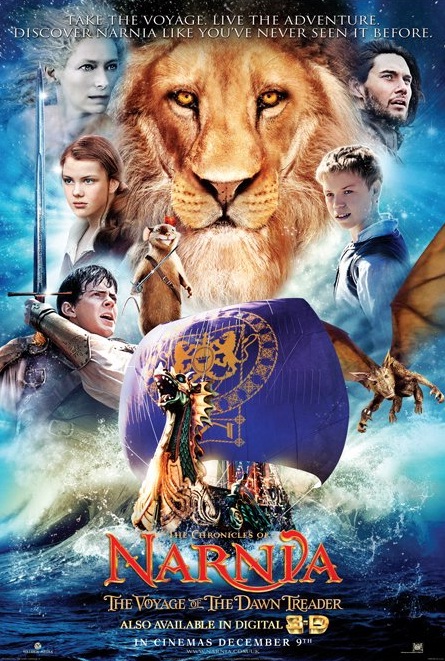
Voyage of the Dawn Treader

The Chronicles of Narnia: The Voyage of the Dawn Treader

History: I saw Dawn Treader on Saturday, December 11th. It is the third film in the Chronicles of Narnia saga, based on the books by CS Lewis. The first was the Lion, the Witch, and the Wardrobe in which four children from World War II era England discover a magical world called Narnia, accessed through a magical wardrobe. They discover that they are prophesied heroes, called from their world to defeat an evil White Witch and free Narnia from her spells of winter without end or Christmas. They are aided by the powerful lord of Narnia, a lion named Aslan. The second film was Prince Caspain, set a year after the first film. The four children are once again called to Narnia, this time via a subway station, and discover that several hundred years have passed in Narnia, and all whom they knew are dead. A race of humans from outlying islands have invaded Narnia and have pushed all the magical creatures and beings deep into hiding. An evil lord seeks to depose the rightful heir to the throne, Prince Caspian, and the children come to his aid in a battle to assure his kingdom while restoring freedom for all in Narnia. At the conclusion of the battle, the two eldest children are told by Aslan that they will never return to Narnia. The third film is the Voyage of the Dawn Treader, in which the two youngest children, some time after the second film, enter Narnia, along with their disbelieving cousin, through an enchanted painting. They arrive in the middle of the ocean and are rescued by King Caspian, who has launched an expedition to find seven lords who vanished some time ago. The children, the King, and the crew embark on a journey at sea through many perils and adventures, all the way to the end of the world where lies Aslan’s country. At the conclusion of this quest, the two original children are told they will never return to Narnia, but that their cousin may yet.

Hype: Having been a fan of the book series, and liking the first two films well enough, I was Moderately excited to see Dawn Treader. The first film followed the first book very faithfully and suffered a bit for it, being slightly stiff. The second film took a few more liberties with the intricacies of the book and became an living adaptation, holding true to the heart of the story while adjusting the story itself to become a decent movie. I prefer Prince Caspian to Lion, Witch, Wardrobe mostly because it was funnier, darker, and explored the characters in some depth.

I was hoping for more of the same from Dawn Treader, because several aspects of the story deal more heavily with internal conflict than with battles (though there are some); and the first two Narnia films delivered a magical, wonderful world, and I longed for a return to that world with all the texture therein.

The Good: I think that Voyage of the Dawn Treader stayed true to the book, in terms of story, plot, and characterization. I could feel the magic of being once again in Narnia. The character of the cousin, a boy named Eustace – who believes firmly in science, and logic, but who is also a simpering, preening brat – was perfectly cast. Will Poulter had only starred in one other feature film, but his performance as Eustace was spot on. He was every inch the character that one loves to hate. The other two main characters, Lucy and Edmund Pevensie, were again portrayed by Georgia Henley and Skandar Keynes as they had been in the first two Narnia movies. I love seeing the maturity that an actor brings to a role as the actor grows physically between films in a series, especially when the character is also supposed to age and mature, and the actors chosen for the first Narnia film are still the best choice for the third. They embody CS Lewis’s characters quite well.

Aside from the cast, the film was beautiful, full of vivid detail, and immersive. I didn’t think the digital effects were overdone at all (a flaw more and more common in this current golden age of computer driven cinematography) which I greatly appreciated.

The Bad: Time. I felt rushed through the story, and I didn’t like it. The journey takes the children and King Caspian to several different islands and locations and on each one new information is learned about the lost lords, or a new challenge is faced, and it just felt like the film rushed each of these destinations. I would have preferred a bit more exploration at each turn. Both the first and second Narnia films took time to set the scene and evoke the mood, and gave the audience place to observe the main characters’ emotions and struggles at each new situation. In my memory of Dawn Treader such observations were a blur they happened so quickly.

The character of Eustace, on one particular island, turns into a dragon, an all too real metaphor for the way he acts and treats people. Throughout the book he struggles with the fact that he may never return to human form, and the horror of his own being, and eventually is forced to go to a dark internal place in the struggle for humility and repentance. In the movie this happens, but like most things, it is too quick. There is a sense of Eustace’s emotional state, but goes from human to dragon to human much too rapidly, and the audience doesn’t have time to be acquainted with his situation. This would have been a conflict well worth the exploration.

To compare to an earlier film, in Prince Caspian, the character of the eldest Pevensie child, Peter, struggles with his own growth as a person. At the end of Lion, Witch, Wardrobe Peter was made High King of all of Narnia, and he and his siblings lived there many years as adult regents before returning to England, once again to be children. At the beginning of Prince Caspian, Peter is shown having a very hard time adjusting from King to nobody, from adult to child, and even throughout his return to Narnia, Peter’s pride and lust for power take him to dark places where his decisions impact the lives of many. He struggles with the new rightful King Caspian and eventually finds his place in both worlds. Prince Caspian gave Peter’s character time to evolve, whereas Dawn Treader rushed through the evolution of Eustace, both literal and metaphorical.

However, the rapid pace of the film wasn’t enough to ruin my enjoyment of the film, nor was it enough to obscure the characters’ growth. It merely hovered on the edges, perceptible but not necessarily distracting.

The Personal: As I mentioned earlier, I love the Chronicles of Narnia in book form, and have a fondness for their movie counterparts. I like a film that presents realistic characters, and shows those characters growing in some fashion throughout the film. Sure, I love a good fight sequence, explosion, or action piece, but what really makes a movie for me is the ability to connect with the characters. Theater, film, books, and campfire stories only work because the audience sees themselves in the people of the story. Maybe they recognize an exact reflection. Maybe they see the opposite, their perfect self, or maybe they recognize their own flaws, but they witness something of themselves in the characters. The ability to form solid connections, emotionally, intellectually, and spiritually depends upon the actor’s portrayal, the director’s influence, and the cinematography’s framing of the character. In Dawn Treader, the first and third were there in spades, while the second was weak. I knew what was coming for each character and wanted to feel that connection, but the timing issue disrupted that enough to through off my emotional bonding. I enjoyed the film, but didn’t get to project myself into Eustace, or Edmund, or Lucy and see my struggles, triumphs, or goals in their own, and for me something was lost.

Final Score: 3 out of 5 Dawn Treaders (barely matched hype level)

A Tale of Two Batteries

About 22.8 days ago I started an experiment to see how long my Apple branded AA batteries would last when powering my Apple branded Magic Mouse. I did this more out of curiosity than anything else. My test parameters were as follows: I inserted two fully charged (according to the Apple battery charger) AA  batteries into my Magic Mouse. I started up the Clock app on my iPhone. I turned on the Magic Mouse. As soon as my iMac paired with the Magic Mouse via bluetooth, I started the timer on my iPhone. I then left the mouse on and left the timer running. I waited until my Magic Mouse lost bluetooth connection with my iMac and stopped the timer. This is what I saw:

Apple battery time test 1
Apple Battery Time Test

546 hours, 27 minutes, 43 seconds – and so on. It might not be precise down to the tenth of a second, or even the second, but I think that it is accurate enough for my purposes. I now know how long, approximately, a pair of  branded AA batteries lasts in my Magic Mouse. But, I grew up doing science projects in middle and high school where I was graded on my ability to design, run, and conclude rigorous experiments. One test is hardly a conclusive pseudoscientific experiment.

Well, as it so happens, I have two other  AA batteries, and I have started a second test along the exact same parameters as the first. I will perform 10 tests with each set of batteries and then can cull a more exact approximation of their time before depletion. Then, to be fair, I will test two sets of two AA batteries from two leading brands (probably Duracell and Energizer) as controls to which I can compare my results.

Sounds like months of scientific fun!

You can read my original post about the batteries here.

In the Year of Awesome

As 2010 winds down, I look across the horizon into the new year of 2011, and as I do so, my heart beats all to a flutter, and I will tell you why: I am ridiculously excited about more than one film that will be released next year.

This year had a few good movies, among them Iron Man 2, Inception, and Toy Story 3, but next year is set to be an astounding year. It is full of sequels, threequels (in one instance a 5th), a few new comic book movies, and at least one completely original story. I have a list of 10 films that I absolutely do not want to miss seeing in theaters, and quite a few alternates that I would love to go see, but cannot quite justify the expense to do so (please feel free to provide funding).

I am telling you this because I am quite well acquainted with the phenomenon of a film not living up to its hype, and leaving in its cinematic wake a trail of tears, disappointment, broken hearts, and emptier wallets. I am interested in documenting said phenomenon with a full review after each movie, a scoring of some sort, and a determination of the final experience of each film.

I can honestly say that I have not been as excited for an entire year of movies before in my life.

Behold: the Listing!

Fast 5 (April 29) the fifth in the Fast and Furious franchise, starring Vin Diesel and Paul Walker

Thor (May 6) the story of the Norse god Thor (Marvel comics version), starring Chris Hemsworth

Pirates of the Caribbean: On Stranger Tides (May 20) the fourth in the Pirates franchise, starring Johnny Depp

X-Men: First Class (June 3) a new prequel to the X-Men trilogy, starring James McAvoy and Kevin Bacon

Cars 2 (June 24) the only sequel Pixar has made outside of Toy Story, starring Owen Wilson and Michael Caine

Transformers: Dark of the Moon (July 1) the third Transformers film, starring Shia LeBouf

Captain America: The First Avenger (July 22) the story of Marvel’s biggest hero, starring Chris Evans and Hugo Weaving

Cowboys & Aliens (July 29) a new story about the old west and aliens, starring Daniel Craig and Harrison Ford

Mission Impossible: Ghost Protocol (December 16) the fourth M:I film, starring Tom Cruise and Ving Rhames

Sherlock Holmes 2 (December 16) the sequel to last year’s film about the legendary detective, starring Robert Downy Jr

Honorable mentions include Green Hornet, The Adjustment Bureau, Rango, Green Lantern, Rise of the Apes, Three Musketeers, The Adventures of TinTin: Secret of the Unicorn. I might actually go to one or some of these, but I am not sure yet.

I will begin this blog series with the final two films of 2010 that I highly anticipated: The Chronicles of Narnia: the Voyage of the Dawn Treader; and TRON: Legacy.

Yes, there is more to life than movies, but I have been an avid film fan all my life and I love writing. In recent years have become more intentional about why I like certain movies and why I dislike others, and therefore want to explore myself and my love of film more intentionally through this blog. Writing is my avenue towards self-discovery.

SWD: “The Clone Wars” Special Edition

I have been going through a deconstruction of the Star Wars movies, and while I am focusing my attention on those six films, I am going to take a moment to deconstruct a few aspects Clone Wars cartoon series, while drawing a few examples from the most recent episode, Pursuit of Peace (available on StarWars.com).

Mostly I have been ignoring the Clone Wars, watching each episode out of morbid curiosity, usually while I eat my breakfast. I find the animation to be a little distracting sometimes, the writing is almost always atrocious, and even worse, this season, for whatever ill advised reason, the show’s producers and writers have been playing merry merry hob with the timeline. From what I can tell, most of Season 3 has taken place before Season 1, and various episodes have bounced around during Season 2. If a fan were not diligent about reading the episode guides on StarWars.com, I fear they would be hopelessly lost, sad, and confused by now.

That being said, I appreciate the effort, however badly executed, to show the intrigue, politics, and breadth of the Clone Wars. What first kept my attention in the series were the clone troopers themselves. Throughout the first (and partially the second) season special effort was made to show the clones as individuals, with hopes, dreams, fears, and most importantly, lives. Far from being organic battle droids, these guys were as human as the other characters in the Star Wars universe that fans knew and loved. Far from being faceless drones, these guys were every man.

Sadly, that level of characterization has been lost in the effort to promote female characters in the Star Wars universe, and Padme in particular (not that I have a problem with female Star Wars characters). Almost every single political episode features her in a major way. One would almost believe that she was the only Senator of importance, and every other Senator hovers in her circle. Even in the latest episode, Pursuit of Peace, Bail Organa is said to have greater influence than Amidala, but from what transpires (and what has already transpired) I do not believe it.

What prompted me to write this special deconstruction post was the way that Amidala’s handmaiden is treated in this episode. I focus on this interaction specifically because it showcases appalling gaps of logic in the writer’s reasoning, and is directly opposed to the goal of promoting female characters. I will explore that as I move through the episode.

First, the voice over says something about peace attempts being halted by a “droid suicide bombing” (00.29). I guess I better schedule a psych visit for my toaster oven, because I didn’t know machines that were designed to be bombs could commit suicide. If the robots in question were as sophisticated as Isaac Asimov’s creations, I could entertain a discussion on droid suicide, but not with something that was programmed to be a bomb from the beginning. Writing like that makes me either cringe, or giggle, but is what makes me not take this show seriously at all.

Much about this episode centres around a vote in the Galactic Senate to deregulate the banks in the galaxy which would have the direct result of allowing the Republic to borrow money in order to purchase more clone troopers. This is a move that Amidala directly opposes, ostensibly because she wants to end the war without further fighting. I personally do not see how deregulating a bank makes borrowing money from it any easier unless the Senate had previously passed a regulation limiting the amount of money they could borrow from private banks. Furthermore, I don’t understand why the Senate even needs to borrow money from private banks to fund their war. I admit that I don’t know enough about economics and politics to really critique this, but I fully suspect that the writer of this episode knows less than I because nothing here makes sense. In fact, the only outcome of the deregulation would seem to be a charging of extremely high interest on the loan from the one bank that Amidala talks to, which would appear to be a dumb move, because there would almost certainly be some other bank willing to loan money at a lower interest rate in order to get the Senate’s business.

However, the episode begins with an argument in the Senate, and Amidala tries desperately to get the Senators to continue with a bid for peace talks because the previous “droid suicide bombing” that has everyone outraged took place after the request for negotiations. I fail to see at all how she thinks this matters. The show’s writer apparently thinks this matters, but I just don’t understand. I know the audience (if they watched previous episodes) knows that the peace talks were a genuine gesture from the Separatists, but the Senate hardly knows that. As far as any given Senator knows, the peace talk overture was designed to lull the Republic into a false sense of security. Those that Amidala opposes have extremely valid viewpoints.

Directly after this, a representative from the Kamino cloners suggests that the Republic buy more clones. Can anyone explain to me why it is a good idea to allow corporations direct representation in the Senate? This is just stupid.

Senator Organa objects to this plan, not because it is war profiteering or stupid to take advice on the war from a party that makes more money the longer the war is being waged, but because the Senate is in debt. He wants to know how the troops will be paid for. The Kaminoan representative says that she wants to raise the money, and an indignant Amidala interrupts with a wild accusation that the money would probably come from a bank. What a horrid thought! Who would borrow from an institution that has money and is willing to loan it out? Already a mere one minute and thirty-nine seconds into the episode and the absurdities mount like borrowed credits.

Amidala continues her tirade by pointing out that the attack was designed to destroy the peace process. Well. Yeah. I generally don’t make peace with those who are trying to kill me. I try to kill back. Amidala is meant to represent a strong, forward thinking woman dedicated to peace. She sounds (and acts) like a total idiot. I mean a gibbering, senseless idiot. The only thing that Amidala says that is intelligent is that not every Separatist wants further war.

But, before the Senator’s one shred of logic can be explored, Count Dooku appears before the Senate to blame them for an attack that killed the Separatist Senator who was leading the peace process. And nobody checks with anybody in the military to see who launched the attack, why, or even if it was the Grand Army of the Republic. There is zero investigation. The Senate just accepts Dooku’s word. And he is the enemy. Who is writing this? Can I have their job? This makes absolutely no sense whatsoever and each second the episode continues is another opportunity for something dumb to occur or be said.

I know that this is supposed to be primarily a kid’s show, but if so, it is child abuse. I wouldn’t want my child anywhere near something this stupid. I want to them consuming intelligent entertainment, not mindless drivel.

I will skip ahead to the scene that made me write this post in the first place.

Amidala’s plan to defeat the deregulation of the bank’s hinges on her belief that plunging the Senate deeper into debt would bring about an inability to meet the basic needs of the Republic’s citizens. In a Republic formed by thousands of planets, I find this very hard to believe. I will illustrate with an interview Amidala carries out with her handmaiden, Tekla.

Amidala wonders why no one listens to her (as if it weren’t obvious) and Tekla says that it is because Amidala really listens to people, “people like me” (15:37). Never mind that Tekla is indistinguishable from any other handmaiden Amidala has ever had, and is paid (?) to be there and wait on Amidala hand and foot as if she were still the Queen. Tekla abruptly turns to go, as if she fears the wrath of Amidala for speaking when not spoken to. Seriously, that is exactly how that appears. But, Amidala, judging by the look on her face, stops her because Tekla may just be the leverage Amidala needs to sway the Senate. She then asks Tekla about her family. Because it is politically helpful, not because she seems to really care.

Tekla says “they are fine” but that isn’t quite what Amidala needs, so the Senator rephrases “how is the war affecting them?” to which Tekla says “it isn’t easy” (15:59). Amidala still isn’t getting the answers she wants, so she pumps her handmaiden for information. Apparently, revealed later during Amidala’s speech, Tekla “lives in a district without electricity or running water…her children can now only bathe once every two weeks…and they have no light by which to read, or study at night” (19:34). Really? The aide to a Senator from Naboo lives without electricity and running water? REALLY? How is Amidala that callous that she lives in a top floor penthouse suite and is waited on by someone without access to basic utilities? Does she, or the government of Naboo, not pay Tekla enough so that she can afford to live somewhere better, like Naboo, that is verdant, green, and covered with enough water that the planet core is full of it?

Oh. Wait…Amidala explains that it isn’t her responsibility because “the Republic has always funded these services” (19:43). What? The Republic pays the utility bill for the entire galaxy? How has it not collapsed 990 years before this? Furthermore, Amidala blatantly exploits the squalid life of her slave in order to win votes to further her agenda. No, really, that is exactly what happens.

This. Does. Not. Make. Any. Sense.

To recap: not only does Amidala appear to be an opportunistic idiot who exploits people, but her female handmaiden is little more than a slave, and apparently has the housing to match. How are these empowered women? Am I supposed to have these be the role models for my nieces?

But Dave Filoni and the writers on the Clone Wars want the viewers to believe that Amidala is good, and that this speech is a rousing example of heroism — just listen to the steadily rising music behind Amidala and examine the way the scene is filmed (with blatant overuse of electricity which could be powering lights for Tekla’s children to read by). I don’t care if a war is on. Nothing ever seen in the Star Wars galaxy, or reality, leads me to believe that this is true or could ever happen.

I try to give George Lucas the benefit of the doubt when it comes to his movies, but I know that for the rest of the Star Wars expanded universe, he is more benefactor than controller, and therefore he is only loosely associated with much of what happens on the Clone Wars show in particular, and the universe in general. So, I don’t blame him, but I do blame whoever approves the Clone Wars scripts. I honestly believe you have to not care, or work very hard, to screw up this badly, and I don’t know which I prefer or suspect.

Bad Writing is all around us. And it hurts.

SWD: South of the Rishi Maze

Sadly, it has almost been a month since my last Star Wars: Deconstructed post. This fact is a testament, mostly, to a lamentable curse: “Work once stopped is rarely restarted.” Despite that, I bring you the next installment of Attack of the Clones: Deconstructed, in which I look at a surprisingly well written section of the film.

Star Wars Episode Two: Attack of the Clones (00:31:34-00:40:56)

Obi-Wan Kenobi, having just put Padme and Anakin on the bus to school, has finally begun the investigation into the plot to assassinate the Senator. He heads to an old fifties diner run by a gruff, four armed former prospector. I absolutely love this sequence. This scene shows that Kenobi has street smarts. Somewhere along the line he descended from the ivory tower of the Jedi Temple and rubbed elbows with the blue collar workers of the galaxy, striking up a friendship with Dex. Or he just found the diner one day while hunting for a quick bite, but either way, Kenobi obviously doesn’t have a problem hanging out with a diverse group of people. Indeed, this is even a shadow of Old Ben in the dusty Tatooine Cantina, a place one could easily see him frequenting during those long desert dry spells. Having been unable to identify the toxic dart he found in the dead body of Zam the Assassin (seen in a deleted scene), the first place Kenobi heads for information is the man who might know, and even if he doesn’t, he would know who to ask next. As it turns out, Dex recognizes the dart almost immediately.

Lucas manages to achieve quite a bit of exposition in this scene while having it feel like a genial meeting between old friends, and that is a mark of good writing. Exposition is a necessary evil in all dramatic pieces. Somewhere along the line the writer is forced to take a step back from the story and explain what is going on, or explain something about what is happening, or explain something that the characters already know, but that the audience doesn’t. However it happens, explaining usually takes place somewhere. The challenge is to not interrupt the story, break the fourth wall, and go: here’s what you need to know. Anyone who watches the NBC show Chuck already is well acquainted with bad, albeit straightforward, exposition. At the beginning of almost every episode the audience hears Chuck say “Hi, my name is Chuck and here are a few things you might need to know or maybe you just forgot” before a montage of “Previously on…” clips plays out. That is a very bare bones exposition; it presents the background for the episode that is about to begin. What happens in Dex’s Diner is much better exposition. Two friends share a drink, a few jokes, and information. The interaction is informal and completely realistic. This scene would have been much worse and more boring if it had taken place in the Jedi Library, which is where Kenobi goes next.

Having learned the name of the system where the toxic dart originated, Kamino, Obi-Wan heads back the library to do a little research. Very quickly he finds that there is no information in the Jedi archives, and calls for assistance. It is comforting to know that librarians are librarians everywhere, even in an alien galaxy far, far away. The Jedi librarian quickly dismisses Kamino as myth simply because it doesn’t appear on record. She haughtily proclaims “if an item does not appear in our records, it does not exist” in response to Obi-Wan’s confidence in Kamino’s existence (based on a reliable witness who had once been there) (00.34.35). I am still trying to decide if this supreme and laughable arrogance is meant to show the obvious decline of the Jedi or is an artifact of George Lucas’ misunderstanding the breadth of the universe. To give Lucas the benefit of the doubt, and also because the first seems much more likely, I hold to the former explanation. It seems the Jedi have grown so complacent and so over-confident in their abilities and “wisdom” that they actually believe (some of them, at least) that they possess all available knowledge. Of course, I still find this hard to believe because even in 1000 years of interstellar travel an entire universe could not have been explored, and therefore there would be many items in existence that don’t appear in the Jedi Archives. How the Jedi could think the opposite is quite beyond my capacity. The mere idea is lunacy. As Dex said moments earlier: “I should think that you Jedi would have more respect for the difference between knowledge and wisdom” (00:32:57). Clearly the distinction has become muddled. However, it seems that the omission of planetary data, at least on a system that people clearly know about and sometimes travel to, should be there, and the fact that it isn’t is noteworthy. Obi-Wan settles in to ponder recent revelations, and the perspective shifts to Anakin and Padme en route to Naboo.

Unfortunately, the scenes between Anakin and Padme are consistently where this film fails the hardest. Despite Anakin spending a great deal of time complaining already, Padme goads him into more. She puts a surprisingly negative spin on the Jedi life, focusing on the restrictions of the order instead of on its higher calling and humanitarian focus. She wonders: “it must be difficult having sworn your life to the Jedi: not being able to visit the places you like, or do the things you like…” (00.35.17). It would seem to me that being a Jedi actually allows one unprecedented ability to travel the galaxy much more than an ordinary citizen who may not be able to afford a seat on the next spaceliner headed for an exotic planet. Sure, Anakin might not choose his destination, but he certainly isn’t limited on them. Of course, Anakin doesn’t address any of that, he just jumps right into creepy-lover-boy mode.

I’ve said it before, but I really don’t understand the Jedi restriction on love. Apparently they are supposed to appear monkish, but monks (and nuns) give up on romantic entanglements to focus on their relationships to God. There is no god in the Star Wars universe, so I don’t know why romance is forbidden. It doesn’t make sense. In any case, Anakin jumps right to defining compassion as passion, mistaking a fondness for the well being of others for a fondness of Amidala. He is so twisted. I do not understand how Amidala is falling for this guy. As a do-gooder Senator, she should be all over real compassion, and not be enchanted by Anakin’s abuse of the concept for his own personal lusts. To be fair to Amidala, once Anakin mentions his dreams (about her) again, she does give him a long I’m-creeped-out look, so at least some part of her remains unsure about him. Cue awkward pause.

Meanwhile, back in the Jedi Temple, Obi-Wan, who is convinced of Kamino’s location and existence, nevertheless seeks out Yoda’s take on the puzzle. Ostensibly he presents the dilemma as a simple problem, but I refuse to believe that Obi-Wan does not already know the answer to his own question. It is too painfully obvious. I buy that he is seeking confirmation of his belief, but not that he doesn’t believe. Yoda is busy teaching three year olds to handle lightsabers (I desperately hope that they are non-lethal) but still has time for Obi-Wan. Yoda also apparently knows the answer to Obi-Wan’s question, but asks his pupils if they have any ideas. I like this, even if the age of his students makes it a little amusing. When teaching, every moment is an opportunity to learn, and Yoda takes full advantage of that fact. Also, children are the closest thing to a free association engine there is, and are unbiased by adult assumptions about the world, so it is possible that they might have some random insight, however, I think that such insight would be more likely from kids a bit older than they appear to be. However, both youngling and Yoda give Kenobi the answer he already had. Yoda, like Obi-Wan, seems much more disturbed by the fact that the information is missing, not the nature of the missing information. Apparently only Jedi can erase information (proving once again to that snotty librarian that all knowledge does not reside within the Archives – for if deletion is possible, it occurs, even if only by accident). Yoda promises to ponder the erasure, while back on Naboo, Amidala and Anakin have arrived.

The current discussion between the fledgling love birds is much more natural than what they shared a moment ago. They catch up like old friends, talking about shared events from long in the past. Amidala then presents a report to the current Queen. Even if she is in hiding, she may as well make the most of the opportunity. Queen Jamilla, current leader of the Naboo, says “the day we stop believing in democracy is the day we lose it” in response to Amidala’s assessment of the current political crisis in the Republic (00.40.12). She is more right than she knows. My brother posted a bit about the economic and political breakdown in Greece which illustrates this rather starkly, especially when one remembers that it was Greek politicians who invented the idea of a republic in the first place. A loss of faith in the system leads directly to a dissolution of the system itself.

However, the talk naturally shifts towards the more immediate concern of Amidala’s safety. Sio Bibble, advisor to the Queen, asks Anakin’s opinion because Anakin is the Jedi, and the assigned bodyguard to the Senator. But, not one to be cut out of any discussion, Amidala jumps in to belittle Anakin and get the attention (I mentioned earlier that she does this quite a bit). “This is my home” she snarkily says. “I know it very well, that is why we are here” (00.40.39). That might be true, but she is stomping all over Anakin, especially when he was asked a direct question. This is nothing more than that annoying person who stands around at a party and answers every question they hear regardless of who asked whom. Anakin actually does the mature thing and just lets the argument go. I think Anakin is supposed to be showing his headstrong nature again, but he comes off as mature in this exchange while Amidala just sounds smarmy. Little unintended inversions like these are the definition of bad writing.

On that note, the scene ends.

(00:40:56)