SWD: Operatic Considerations

It has been nearly three years since I last delved into the world of Star Wars and my deconstruction of the prequel trilogy. Since that time much has happened in my life, but my love of Star Wars remains undimmed. I return to Star Wars Deconstructed and pick up where I left off: in the early part of Episode III, Revenge of the Sith.

To recap briefly, the galaxy is at war, and young Jedi Anakin Skywalker is at the centre of all the conflict, both professionally and personally. Currently, Anakin is enduring a very long day, filled with people in his life pulling him in separate, often conflicting, directions. The night prior he had a prophetic dream in which his wife died in childbirth, and the next morning Yoda could only tell him to “let go of everything you fear to lose”. At a morning briefing on the Clone Wars, he was informed that Chancellor Palpatine wanted to meet with him. The Jedi are not happy with Anakin’s close relationship with the Chancellor. Palpatine wants Anakin to sit on the Jedi Council as his personal representative. The Council allows the appointment, but only if Anakin will spy on the Chancellor for them. Later in the day, Master Windu and Yoda express distrust of Anakin while Anakin faces pressure from his wife, Padme Amidala, to use his influence with the Chancellor and the Jedi Council to foster her push for peace talks. Anakin responds with frustration at being used as everyone’s pawn.

That evening, he receives an invite to the opera, and meets with Chancellor Palpatine for a second time, and things get even more confused for the frustrated young Jedi.

Star Wars: Revenge of the Sith (00.42.40-00.48.00)

As Anakin arrives at the opera house there is a blink-and-you’ll-miss-it cameo of Star Wars director George Lucas. He is dressed in fancy robes and is painted blue, so don’t worry if you miss him the first time around.

Anakin is drawn into a what will prove to be the first of several seductions from Chancellor Palpatine, also known as but not yet revealed to be Darth Sidious, Dark Lord of the Sith. In fact, this is his second seductive meeting of the day, the first was earlier when the Chancellor placed Anakin on the Jedi Council. Slowly, gently, and yes, seductively, Palpatine is giving Anakin what he wants while playing on his fears, his frustrations, and his failures.

Despite some stiff acting from Hayden Christensen as Anakin Skywalker, next to some somewhat subtle acting from Ian McDiarmid as Chancellor Palpatine, this scene works very well. The mood is sombre and underscored by the deep operatic singing of the Mon Calamiri who form the backdrop of the conversation. If only the acting were on par with the setting, this scene could give chills.

This time, the bait Palpatine offers is that the Chancellor, through “clone intelligence”, has discovered where General Grievous is hiding. This is what Anakin most wants as a Jedi warrior, his enemy where he can destroy him and he swallows the bait. Earlier, the Jedi council had admitted that the couldn’t find Grievous, and in his eagerness to find him and his blind trust in Palpatine, Anakin does not question how the Chancellor knows Grievous’ whereabouts. I give Anakin a pass for not calling Palpatine on this. His head is no doubt spinning from his back and forth day, and he has a lot on his mind as a result.

Palpatine dismisses his aides and invites Anakin to relax, and begins stage two of the evening’s seduction games. Palpatine admits that he doesn’t trust the Jedi council, and this prompts Anakin to confide the same. Anakin considers Palpatine to be a father-figure, and is taken aback when Palpatine somehow knows that the Jedi Council wants Anakin to spy on the Chancellor. I think Anakin should be slightly more suspicious of how precisely the Chancellor is guessing here, but again, I give him a pass.

This leads to a discussion of Jedi versus Sith, how they are similar, how they are different, and how all who seek to gain power are afraid to lose it. The dialogue transcends McDiarmid’s delivery of it, and his assertion that “good is a point of view” is spot on. I wonder if Lucas actually did write this part of the script because of how well it is written. I guess even a bad writer can occasionally get it right. However, right about the time when Palpatine offers up, sort of from nowhere, a Sith parable, Anakin should be getting alarm bells in his head. Trusted mentor or not, he has been trained his whole life to be wary of Sith philosophy, and to be on the alert for the Sith to return to prominence in the galaxy. How Palpatine knows this “story the Jedi would [not] tell you” is a question he should ask. Sith legends that promise exactly what you really, really want shouldn’t go unquestioned. As a former slave child, Anakin should have a defensive mechanism against things which sound too good to be true, especially from questionable sources, that is the Sith more than Palpatine from Anakin’s perspective. That he doesn’t question Palpatine and this story is an unforgivable logical lapse in the plotting. Even if Anakin eventually decides to side with Palpatine, he shouldn’t be so trusting at this point. At the very least Palpatine should have been forced to come up with a bad excuse for being so familiar with Sith philosophy and old Sith legends.

Also troubling here is the other side of this talk which rather directly implies that the legendary Darth Plagueis created Anakin Skywalker. This is a dangling plot point, not to mention a gaping plot hole. Why would a Dark Lord of Sith create a child and then abandon him to be potentially found and trained by the Jedi? Why not raise and train him yourself as the ultimate Jedi killer? This whole midichlorians-are-the-Force thing is something I wrote about in my deconstruction of the Phantom Menace, but here I will say again that a biological underpinning to a mystical power is dumb and unnecessary. The Force operates just fine without a biological source, and such a source only raises questions about Jedi and Sith and the entire “ancient religion” that they both adhere to. Furthermore, if a Sith lord can create life, why hasn’t he created an army of Sith and ruled the galaxy already. Why rely on his apprentice and a long con war to give the Sith a galaxy wide victory? None of this life-creating death-delaying makes any sense as presented. Even Yoda wasn’t powerful enough to forestall his own death in Return of the Jedi, so this super powerful Sith definitely shouldn’t have stopped with one Sith-Force-rape kid he then abandoned to the deserts of Tatooine.

Still, if you choose not to think of any of that while watching this scene, the Sith legend thing kinda sorta works. Anakin at least is thinking about it, and wonders if it is possible to learn this power and discovers that he can, just “not from a Jedi”. Seduction: underway. Who exactly does Palpatine know that can teach him? Anakin never thinks to ask and that is yet another example of why the Star Wars prequels are examples of bad writing: an incurious hero is a dumb, shallow hero.

Anyway, the action in Revenge of the Sith is about to pick up, which means so will the pace of my writing about it as I move through the rest of the film. I promise not to wait another three years before the next installment of the series!

To read other Star Wars: Deconstructed posts, search my blog for “SWD” or click “Star Wars” at the top.
On Gender Inequality in Modern Myths

I am not a scholar of myth, ancient – modern – or in between, nor am I a professional historian, sociologist, or qualified authority on gender. What I am is a keen observer of people and things.

The world is changing.

In my lifetime, I have seen the rapid empowerment of women in my society go from a backswell to a prominent and unignorable fact. In like manner, I have seen the treatment of women in popular culture change radically. When I was a kid, there wasn’t much being said about the lack of female roles, or the lack of gender diversity. Today: it is sneaking in everywhere. And I am not that old.

This battle for gender equality in life and fiction started long before me, though I hope desperately that it may grind itself to a halt in my lifetime. I will be grieved indeed if it does not.

However, my own thinking in this area has undergone change, and sadly I confess that I am not completely there. But lately a few things have caught my attention and have turned the lights on for me. I want to discuss the portrayal of females in popular culture, as well as their roles in popular culture. By portrayal I mean: what they look like. By role I mean: what they do.

Portrayal. It is the stereotype, and still the dominant way of displaying a female within pop culture, as an icon of beauty, of sex, and little else. Personally speaking, I sexually prefer women, and I think the female body is powerfully beautiful in all shapes and sizes. Therefore, for me, it is very hard to separate my personal enjoyment of the female body and the effect that has on my perception of women. Generally speaking, when one objectifies something, it becomes more difficult to see that something for what it really is. When one gets into the habit of recognizing women only for their sex appeal, one has trouble seeing them as people. (I only use women here in this context, because, like I said, I am a person who sexually prefers women. That’s how I understand this paradigm best. I works for men who prefer men, men who prefer women, etc.)

To analogize a bit, I’ll put this in other terms that I am also quite familiar with. I use, and am quite a fan of, Apple products. That is iPhones, iMacs, iPads, iPods ad nauseum. I tend to objectify them, if I am not careful, and hold them up as exemplars of modern technological engineering. In certain cases, Apple has made some fantastic products. Some of them are quite good. But I can tend to see them as objects of beauty rather than what they are: a phone, a computer, a music player, a tablet, and really, when you get down to it, no better at their job than anything any other company makes. In this modern era what any piece of technology is able to do is pretty amazing. My point is that I see my iPod as a gorgeous object for something which merely allows me to experience my music.

Yes, I just compared beautiful women to iPods. I apologize. Please don’t send me hate mail or refuse to have sex with me (simply because of that). I only try to wake up the mind to what I am realizing: women are so much more than just a hot body. They are people, precious souls, and irreplaceable members of human society and advancement.

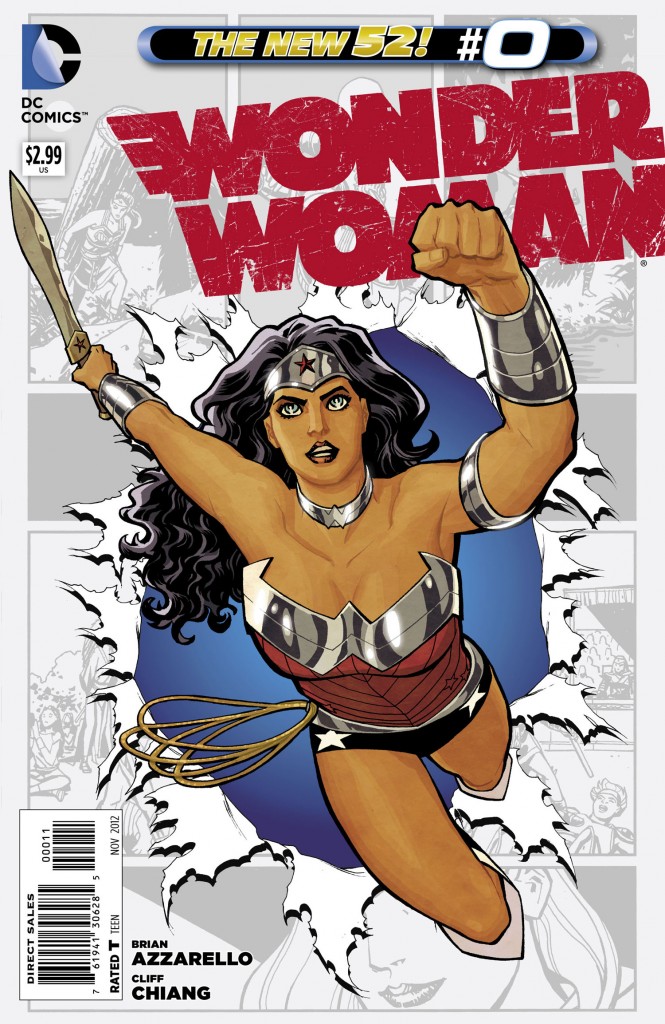
Consider this picture, a recent comic book cover:

Wonder Woman
Wonder Woman
This is the brand new, Issue #0 reboot of DC Comics’ Wonder Woman from last year, 2012. It tells me three things, visually. One: Wonder Woman has massive breasts. Two: she has a thing for chrome. Three: she can fly? To be clear, that is exactly what I am supposed to notice and in that order. When I first see the comic book, I won’t have time or capacity to read the title. There, staring me in the face, are breasts. Then I see other things, then I read “Wonder Woman” and go “well, yeah”. This is wrong. Wrong. I shouldn’t need to have a massive pair of mammaries thrust in my face for me to be interested in a comic book about a woman. What isn’t wrong is that she is beautiful. That is all well and good. But beauty is skin deep, culturally defined, and transient. What is really important about Wonder Woman? She fights for truth, justice, and gender equality. Her magic lasso makes it impossible for anyone ensnared in it to tell a lie. Wonder Woman fights crime. Wonder Woman, being a powerful woman herself, is very committed to making sure every woman is given respectful treatment. So why show her boobs first?

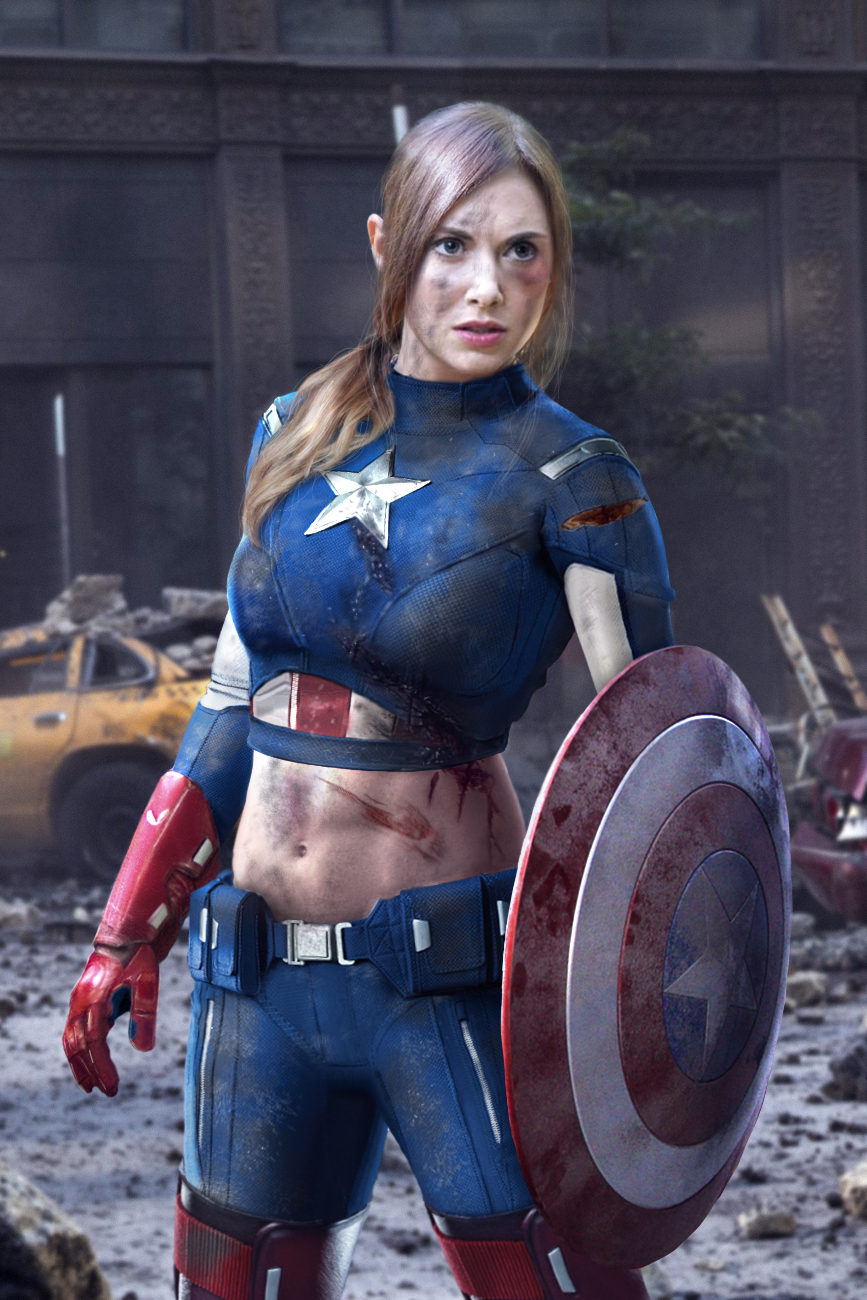
I’ve been aware of images like that my whole life. It didn’t really bother me or make a dent in my brain until very recently. Sure, I had an intellectual understanding that such comic book covers objectified women and that it was wrong, but it didn’t mean anything to me until this week when I saw another image. This is entitled Miss America and comes from Fan Art Exhibit.

Miss America
Miss America
This is a digital manipulation of a shot of Captain America from the recent Avengers film. Obviously the creator has merged a female body with that of Steve Rogers to give us Miss America. I noticed two things about this picture. One, she has a bare midriff. I have no idea why she also doesn’t have a low cut top and copious cleavage as that seems more standard for female superheroes, but she does have a bare midriff, which is Item No. 2 on the “Make Her Look Uber Sexy” checklist comic book artists apparently have. This is the image that lent a machete to my intellectual thicket. Why the hell would a soldier wear body armor of any type that leaves such a vital (to life) area of the body completely exposed. This makes no sense whatsoever. The “sexy for sexy sake” did not pass the “it makes sense” test for my brain and I short circuited. I could almost buy a super hero like Wonder Woman wearing less than a bathing suit because, usually, she has a Superman level of invincibility. Therefore, armor is irrelevant (even if her wardrobe makes no sense for other reasons). But a genetically enhanced super soldier leaving the gut exposed? No way. And two, why is she called “Miss America”? The artist named her so, but why not Captain America? Captain is a rank and is gender neutral. And then the lights flashed on and I went “Ooooh.”

Don’t judge me too harshly, please. My point here is that society my entire life has been feeding me this idea of women and it is hard to break. By the way, I do want to point out that men have it no better, but it is less kosher to point it out, mostly because, as a society, men still have a majority of the power and influence so it is boorish to whine. But, do walk through a comic shop sometime and see if you can find a realistic looking man on the cover of anything. Go ahead, I dare you. I could not look like Captain America as he usually looks any more than any girl could hope to look like Wonder Woman.

Role. Most women in popular culture are eye candy, the damsel in distress, or non-existent. They exist to look pretty, to be rescued so the man looks heroic, or they simply aren’t there. I really, really enjoy the Lord of the Rings, both in book and film form. Do you know how many females there are in the main cast, in the Fellowship of the Ring? 0. Nine males. How about the Hobbit, how many women in the main group? Yeah, 0 again. There are 13 male dwarves, a male hobbit, and a male wizard. Even in Star Wars the ratio is still 5 to 1. (Han, Luke, Chewie, R2, C-3P0 to Leia). And what does Leia do in the first film? Gets captured by men and gets rescued my men. In the Empire Strikes Back? Gets rescued by men. In Return of the Jedi? Tries to rescue a man, gets punished by way of brass bikini, gets rescued my men and male ewoks. I love Star Wars, but it has a gender equality problem. Only recently, and very slowly, has this changed. Even the mighty Joss Whedon, who elevated women so spectacularly in Buffy the Vampire Slayer, was shackled when he made Avengers because, yep, women were outnumbered on the super hero team 5 to 1. But Joss did what he could and made that one woman one of the most important and smartest of them all. Men break things, men fix things, men are the heroes. That is the message I’ve heard my whole life. And not only does it not make sense, it is stupid, and ignores completely the role women have wrested for themselves at great cost. Even in our long, patriarchal history there were women who did great things and stood high above men, but mostly they are ignored or marginalized. For shame.

How did this happen? That is a very long discussion. But, I blame two things: biology and laziness.

Not to ruffle feathers, but you can’t argue with evolution. The male part of the human species, rather generally, has more muscle mass than does the female part. Way back when we were fighting for evolutionary survival, that mattered. Men led because men could kill more, hunt more, build more simply because they were stronger. And, because all who gain power fear to lose it, once women let men fight for the power, men never gave it up. The majority of societies built since our meager beginnings have been male dominated (to my knowledge). Once we, as a species, kill our predators, kill our food, and build a fire, we like to be entertained. So we tell stories. We are smart, but not that imaginative, so our stories reflect everyday life. They are about warriors, hunters, builders. And, since what we see every day are men in those roles, men take those roles in our stories, our legends, our myths. Hence, laziness.

Since the dawn of history, until now, very rarely have we as a species deigned to allow women into our myths in any significant way, just like in real life. Sadly, it is only recently, and then only a little, that this is changing. Modern comics, tv, film, books are the myths of old retold again and again. Why else is Wonder Woman the lone female member of the Justice League (in popular consciousness) why else is Black Widow the only female member of the Avengers (again, in the popular consciousness, I am vaguely aware that in the comics Wasp was also a founding member)?

Humanity is a species slow to change. It has taken me 25 years. It has taken us millennia. I hope not much longer before women are in power, realistically portrayed, alongside realistic men is simply the way of everyday life and the stuff of legends. I advocate not for a reversal of the binary, but a destruction of it. Men and Women are equal in every way that matters biologically speaking. We should be socially and mythologically as well.

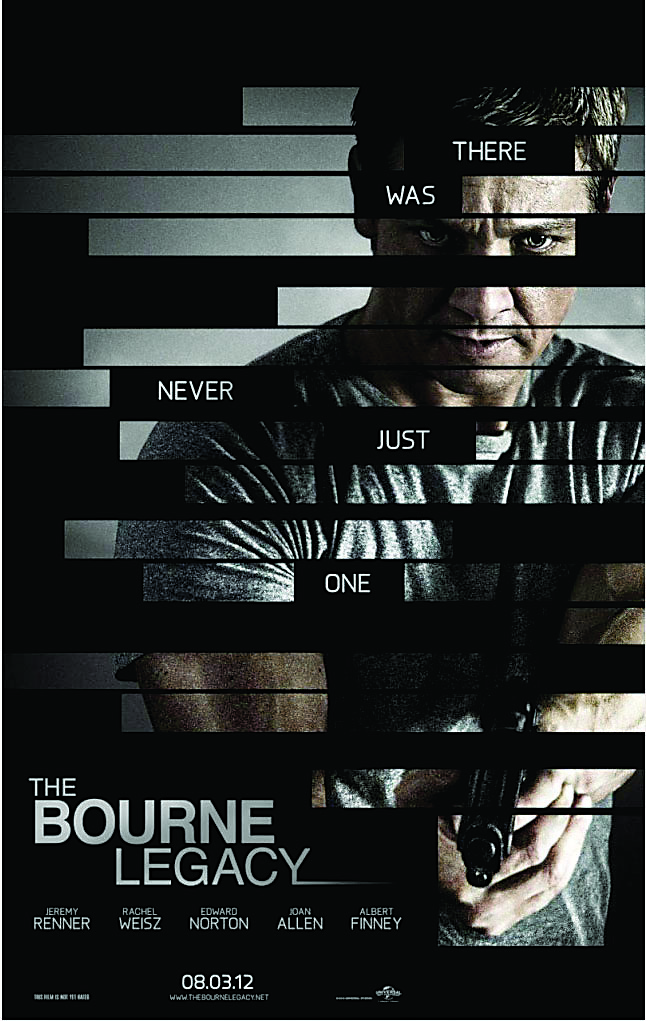
Bourne’s Legacy

The Bourne Legacy
The Bourne Legacy

From the moment the Bourne Legacy began it was clearly evident where the budget for the film went: location, location, location. The film begins with a mysterious man surviving in the Alaskan wilderness, and we are treated to expansive helicopter shots of rugged mountains, lonely snow-laden forests, and stunning beauty. But that I can get from a National Geographic special. From the moment the main title flashes across the screen, I want something more than a pretty view. This is a Bourne movie. Bourne movies reinvented the spy genre. They gave us a spy with a conscience who could become an intense weapon in an instant. Bourne visited exotic locations, but the focus was always on him, his mission, his pain, his fight for survival. For most of the first half of Bourne Legacy, the focus is on an unnamed man and Alaska.

At the same time, somewhere else in America, Edward Norton is awoken. He is going to wish for the rest of the film that he stayed in bed because he is the most powerless and inept CIA coordinator in the history of the Bourne franchise. The story, what bare scant bones there be, is that while Jason Bourne is making his way from Russia (as seen in the end of the Bourne Supremacy) and makes his way through New York City on a vendetta against Treadstone/Blackbriar (as seen in the Bourne Ultimatum) Edward Norton’s character, who oversees the operation of several Treadstone splinter programs, is racing to erase all evidence that he ever did anything illegal.

While our unnamed hero fights off a few wolves and hikes through some snow, Norton has several other top level assassins elsewhere in the world assassinated by making them take a suicide pill (no, really). This works because in this version of the Bourne saga, all the agents are only special because they are highly drugged up, mentally and physically, which means as they are used to taking their blues and their greens (pills, that is) you can give them a yellow pill, tell them it is better, and wait for them to drop dead (no, really) and they won’t question you. Except for our ruggedly handsome hero, who is in Alaska (we learn) because he questioned something and as a result, the CIA punished him by making him hike through Alaska.

Because our hero is inconveniently in Alaska (an unavailable for suicide pill) the CIA attempts to kill him with a drone plane and a bomb. He survives the bombing and shoots down the plane with some trickery involving a tracking device and a wolf. However, once the CIA realizes that they missed, they try to kill him again. But, because for some reason Edward Norton’s CIA is underfunded and ignored, they can’t even get real time satellite imagery or advanced tracking data. He must rely on Canadian weather satellites and thousands of traffic cam pictures to try to locate the car they think our hero is driving. I’m not making this up, there is an entire five minute segment of all of Norton’s underlings shouting into phones about the make and model of the car and if anyone has seen it, could they please call back and let them know. At this point, I should mention that at no time during the film does our hero ever seem to be in danger.

The subplot revolves around a medical researcher who was involved in making the drugs that make this new batch of CIA operatives special. She survives a completely inexplicable and horrific massacre at her lab to survive an assassination attempt by a CIA psychiatrist only because our hero magically managed to show up to her remote house and save her. Because. The audience is never told that our hero is even trying to find this medical researcher, or what his goals are prior to this scene, but after he saves her, he interrogates her about drugs. Our hero is only actually concerned with one thing: his next fix. And for good reason, as we now learn that our hero, and Bourne replacement, was an idiot prior to recruitment. No, really. His IQ was below the ARMY recruitment minimum, and the flashbacks/video of his entrance interview into Treadstone show a man barely above the level of a third grader, mentally.

Our drugged up hero then forces the medical researcher to accompany him to the factory in the Philippines where his drugs are manufactured so that she can cook up a mega dose of meds and make him permanently strong and smart.

At the same time, Edward Norton, who has done nothing but be inept, finally discovers (almost by accident) that our drugged up hero is in Manila and he sends a newer and even more lethal drugged up assassin after him. Is there just a factory where all of these new assassins magically appear from? The tagline from this film is “There Never Was Just One” and by that they must mean “There is an endless supply whenever/wherever we need them”.

Anyway, we never actually get to see this newer and more lethal drugged up assassin fight our drugged up hero as all he can manage to do is chase our protagonists around Manila on a motorcycle before our very weak female researcher kicks his motorcycle and he crashes into a pole and dies like a wimp. No, really.

And that’s all they wrote, or could afford to, because the movie ends with a majestic helicopter shot of the South Pacific and a remix of Moby’s “Extreme Ways”.

The myriad weaknesses of the Bourne Legacy should be obvious by now, but to sum up: the audience follows a hero we don’t know and that we are never made to care about, who is chased by a threat that isn’t real or threatening, and there is something about drugs. There was no personal story, no character moments, no depth or emotion. There was no higher purpose, no commentary on the inherent evil and danger of blackops and unsanctioned operations. There was no human cost or soul searching. In short, there was nothing that made the Bourne Trilogy what is was, none of the things that made the Bourne films worth watching.

The whole time I was in the theater, I couldn’t figure out why I watching this movie. I felt like I was watching a movie about 003, Bart Bond, and that I should have been watching a movie about the real 007 instead.

Bottom line: Jason Bourne deserved a better legacy.

Pop Culture ID

I am from a galaxy far, far away: wistful sunsets and lifeless ice cubes. I am from the Final Frontier: the SS Botany Bay and the HMS Bounty. I am from Tatooine, Vulcan, Cloud City, and the Alpha Quadrant. I’m a doctor, not a scruffy nerd-hearder.

I am from the great divide, Eureka Creek and the Five Mile: brumbies, stagecoaches, and bullwhips. I am from extended families, mountain men and their horses. The stew had turnips in it, and taters in it, and rabbits in it; well, I don’t always eat wallaby, son!

I am from the sewers of New York City: cowabunga, pizza, and turtle ninjas. I am Donatello and Michelangelo. I am from Xavier’s school for the gifted: playing cards, trench coats, and bo staff Cajun gambits. Sacre bleu!

I am from Cleveland, Jacob’s Field and the comeback kids. I am from elation, heartbreak, and all the old familiar losses. I am from the sandlot, Babe Ruth, and legends that never die. Bury my heart at Pro Player Stadium.

I am from Serenity Valley, the black and browncoats. This is a fertile land and we will call it “this land” and you cannot take the sky from me. I am from the signal that cannot be stopped, and a preacher called Book. I aim to misbehave.

I am from Sunnydale High: the life, love, and hell of high school. I am from the Powers That Be, Pylea, and the dimensions of hell. The world is doomed, but I want the dragon: I’ve never fought one before. All that matters is the fight and the soul within that yearns to be human again.

I am from the Internet, where One Must Fall and the earth is scorched. I am from the Bean-With-Bacon-Megarocket, WinAmp, Kazaa and shareware. I am from floppy disks, up-dialing, and AOL. I am from Steve Jobs, the iPod, iTunes, and iBook G4s back when tigers roared. And one more thing…

I am from Billund’s little yellow men: studs that construct worlds from the ether of imagination. I am from the baseplate, the brick, and the bi-plane. Build me up, tear me down, make me new again.

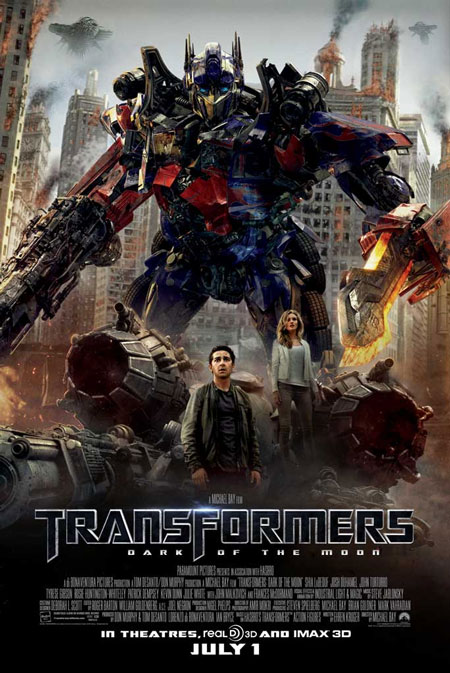
Reflections in Film: Transformers 3

Transformers: Dark of the Moon

T3
T3

History: Transformers began as Hasbro toys. Then they became a much beloved TV show. In the past four years Transformers was remade into the action fest, explosion orgy that are Michael Bay films. The first movie was released in 2007 and resembled Bay’s 1998 success Armageddon: plenty of senseless action, a little heart and emotion, and almost everything blowing up. It was a solid pop-corn, summer blockbuster action flick. The plot centred on hapless Sam Witwicky (Shia Lebouf) who buys his first car in high school which turns out to be an incognito alien robot, Bumblebee of the Autobots. The Autobots are locked in a centuries long conflict with a bunch of evil robots, the Decepticons. Once the Decepticons realize Bumblebee and his Autobot friends are hiding on Earth, they launch an all out assult, hoping to destroy the Autobots and reclaim a powerful alien tech cube called the All Spark (also hidden on Earth).

The film was good, for what it was.

Transformers 2: Revenge of the Fallen was released in 2009. By this time, Sam had entered college, the Autobots, having vanquished (but not destroyed) the Decepticons are partnering with the American military to hunt down and destroy any remaining enemy robots. Unbeknown to them, an ancient evil robot called the Fallen has been waiting in stasis on a broken starship. He returns to earth hoping to find an ancient tomb of powerful dead robots and reclaim a powerful object that will allow him to harness the sun’s power, but destroy earth in the process. The Autobots, and Sam, rally with the US military to overcome this new, and more dangerous, threat.

The second Transformers film had much more action, a little more emotion, and a lot more things exploding. It was as good of a story as the first film, but suffered from an unrestrained Michael Bay. There really is a certain level of over-the-top filmmaking that Bay can get away with, but T2 really pushed that boundary.

Hype: I was expecting another solid entry in the Transformers franchise with Dark of the Moon. Early trailers showed some sort of NASA coverup involving more alien robots on the moon, which seemed like an interesting plot device. Trailers also showed completely absurd action sequences inside of falling building. I was at once intrigued and dismayed.

Megan Fox, who had played Sam’s love interest in the first two movies, had been replaced for the third movie. While Fox has sex appeal, she seemed increasingly bored in her scenes, and her contempt for Bay and Shia off camera oozed into palpable distaste for Sam on camera and I was glad to see her go. I was hoping for a stronger female character to counteract Sam and the rest of the male characters (ie, every other character). Mostly I was wishing that the story would be strong, and the action restrained to normal Bay amounts.

The Good: Alan Tudyk was in this movie. He had a bit part, but it was a hilarious part, to me anyway. I know Tudyk from Joss Whedon’s TV shows Firefly and Dollhouse. In Firefly he played a space ship pilot who was a funny, wacky, oddball. In Dollhouse he played a psychotic serial killer named Alpha who had multiple personalities, some of which were funny, oddball, wacky, creepy, weird, hilarious, or pyschopathic. In this film, he seemed to be continuing his performance as Alpha, albeit reformed somewhat. Whenever he talked, I totally lost it. There was one scene in a bar when Tudyk’s character, for no reason whatsoever, snaps and does some awesome kung-fu and snatches a few guns away from some bad guys only to suddenly “wake up” and mutter “Sorry, that was the old me” and that was pure Alpha. I wonder if the writer’s did in fact rip off the Whedon character, but even if they didn’t, Tudyk was funny as hell.

Oh yeah…the good. Hmm. Megan Fox was not in this movie. Some of the action scenes were restrained and more on par with T1 than T2.

I’m still thinking.

Oh, the recreation of the Apollo 11 moon landing was fantastic. I loved seeing that intercut with archival footage and recreations of JFK in the White House. Best cinematic opening sequences and the movie only went down from there into a deep, dark, hellish abyss from which there was no escape.

The Ugly: The first hour of the movie consists of Sam living with a Victoria Secret model who works for a car museum and who totally despises him for not having a job. Sam then whines about not having a job despite having marginally helped to save the planet twice and having got a medal from Obama. Sam whines a lot. And then he meets a totally psychotic John Malkovich who has no reason to be in the movie. At all. There is some very unfunny stuff in the first hour with employees at a place where Sam does some stuff. I seem to remember something about the color red. Oh, and a murder that involved a man flying out of skyscraper window which the writers tried to make quite a few jokes about, but the scene was played sort of seriously, but then they also tried to make jokes. It was awkward and wrong and bad and clunky and completely unnecessary.

After Sam stopped whining about not having a nice car and a job working with the Autobots, the Autobots find the alien robots on the moon which nobody thought to mention to them, and then they find this ancient robot who they revive thinking he will be nice and helpful for them in their fight against the Decepticons, except that this guy made a pact with the evil robots back in the day and he totally betrays everyone and goes to the dark side.

Then for no reason he and his Decepticon pals destroy Chicago (for no reason) and demand that Earth expel the Autobots. The Autobots then leave on a special space shuttle (despite the fact that they themselves can fly into space or transform into space flying robots) which the Decepticons then destroy. But not to worry, because right as Sam is infiltrating Chicago basically on his own to rescue his uncaring girlfriend, the Autobots return, declaring that they allowed Chicago, and millions of humans to be murdered horribly, simply to show the Earth that the Earth really needs them…to save millions of humans from being murdered horribly.

Then some action happens, none of it believable, which is par for the course on a Bay film except that half the time it seemed like Bay was directing normal Bay scenes and someone else was directing totally-off-the-charts scenes. Seriously, this movie felt like it had 3 directors all fighting with Bay who was trying to make a T1/Armageddon scale movie.

Eventually, the incredibly evil former-good guys and the criminally inept US military win the day, and Optimus Prime, the leader of the Autobots, stands as victor over his original enemy, Megatron, and his new enemy, Sentinal Prime. Both surrender, and Optimus Prime pulls the spine out of Megatron and shoots Sentinal Prime in the head execution style. After both surrendered to him.

The story was good, except for the bits where Sam whined about being unemployed for an hour, the irrelevant characters, and, oh yeah, the events of the first two films being completely invalidated because if the facts of this film really were known by people during the first two films, then the first two films would not have happened like they did. This was one of those sequels that makes the prequels incomprehensible.

The Personal: I didn’t connect with this film at all. Sam whined like a bitch. One of the heroic soldiers from the first two movies transformed into a coward. And the heroic leader robot turned into an accomplice to mass murder before he summarily murdered two of his enemies who had just surrendered to him.

Final Thoughts: Sentinal Prime, the new villain, was voiced by Leonard Nimoy, Spock from the Original Star Trek. The writers used this as an excuse to steal Spock’s most famous lines from Wrath of Khan and completely misunderstand them and misuse them, which in addition to making the writers look stupid, also made them look completely lazy.

Sam whining about a job seemed selfish in the wake of massive national unemployment, especially when he had a few good job offers that he completely pissed on because he felt he deserved better. When millions are out of work, it makes your writers look like douches when their “hero” character won’t work available jobs.

There is a low standard for Michael Bay films, and this film worked way too hard to not meet that standard. This film could have been as “good” as Armageddon but whatever was happening with the especially horrible writing and inconsistent directing made this movie so much worse. All the way through, it seemed like there was a Michael Bay Transformers movie in there somewhere, but it kept getting interrupted by someone else’s idea of what would make a funny, or cool, or something scene, most of which didn’t belong or have anything to do with anything else in the film. Shia Lebouf has said that he is done making Transformers movies, and I hope that Bay is too. I think that someone else could bring a fresh vision to Transformers, but hopefully not for 20 years. We need more original stories right now and we need to forget about giant fighting CGI robots for a while.

Final Score: 1.5 of 5 transforming car robots (entirely due to Alan Tudyk’s presence and Megan Fox’s absence and the uber cool recreation of Apollo 11 and a cameo by the real Buzz Aldrin).

Reflections in Film: X-Men First Class

X-Men: First Class

First Class
First Class

History: The X-Men film franchise began over ten years ago in 2000 with the first X-Men film, directed by Bryan Singer, which introduced the world at large to one of the largest pantheons of comic book heroes: the mutant “x-men”. Gruff Wolverine aka Logan (Hugh Jackman) and scared, traumatized Rogue aka Marie (Anna Paquin) were the world’s first look at the mutant problem from an intensely personal angle. Mutants were people who were given extraordinary, lethal, or inconvenient “powers” through alterations in their DNA, making them the next wave of human evolution.

The movie sought to answer one question: what would a mutant do with their powers? Would they seek to overthrown humanity? Would they seek to hide from ridicule, hate, and prejudice? Or would they work for world peace? Two of the most powerful, and oldest, mutants were Erik Lehnsherr (Sir Ian McKellen) and Charles Xavier (Patrick Stewart), the former a manipulator of metal and a Holocaust survivor, the latter an English professor and a telepath. Erik was Magneto, and due to his personal trauma and superiority complex he sought to rule over mere humanity. Xavier took the high moral ground and worked his entire life for mutant and human peace.

The first film revolved around Magneto’s plot to induce mass mutations in the world’s leaders at a peace summit on Ellis Island, and his nefarious scheme to use Rogue to do it, an action that would result in her death. As an incidental figure, Wolverine moved from a life of personal exile on the fringe to a member of a group larger than himself. The film was a little campy, but it had its humor, emotional impact, and solid character development.

X2, released in 2003, was about one man’s vendetta against the mutant community with a side lesson in accepting people for who they are coupled with Wolverine’s search for his past. Colonel William Stryker (Brian Cox), a long time military man and hater of mutants, hatches a plan to wipe out all mutants everywhere using Xavier and his immense telepathic power. Wolverine discovers that he was once a mutant experiment of Stryker’s while a new mutant character, Bobby Drake aka Iceman (Shawn Ashmore) deals with “coming out” to his family about his being a mutant. X2 was solid. It had the best opening sequence of any X-Men film, and of most films, and the character development continued from the first film and set up the third one nicely. It had plenty of good action, but I feel that the plot to use Xavier to kill all the mutants was a little thin.

X3: The Last Stand, released in 2006, was about a final battle between Magneto and humanity over a new cure for mutantism. Xavier’s students get caught in the middle as some are desperate for a way to be normal and some offended by the very idea of a cure. A massive subplot of the film focused on the resurrection of Jean Grey (Famke Janssen) as the most powerful mutant alive, Phoenix, and her place as an force of nature while both Xavier and Magneto try to control her to their own ends. Wolverine completed his story arc from loner to leader and became a full-fledged member of Xavier’s school. Overall X3 rushed its way through a story that should have been handled with care and relied too much on mutant power eye candy instead of real story to drive the film. Bryan Singer had handed over directing duties to Brett Ratner and the film suffered for it.

Staying on pace with a release every three years, X-Men Origins: Wolverine was released in 2009. This film went back to basics, literally, to tell the story of the first ever mutant (as far as anyone knows): Wolverine. Logan’s back story was explored extensively throughout the trilogy, but only so far as his interactions with Colonel Stryker were concerned. Little was shown or told about this life before the 1970s, mostly because at some point Wolverine had contracted a little amnesia.

Wolverine focused on Logan, obviously, and his half brother Victor Creed aka Sabretooth (Liev Schreiber), who were children in 1845 era Canada. Following a drunken outburst and a case of mistaken identity, young Logan murders his father and he and Victor go on the run. Through the decades the duo fight in, and survive, every major war from the American Civil War through Vietnam due to their shared mutation of claws, and the ability to endlessly regenerate. Throughout their history, Victor shows tendencies of becoming more and more violent and animalistic, as does Logan, though Logan resists his darker impulses. During Vietnam, Victor loses control and kills and officer and both are condemned to death. Surviving their execution, they receive an offer from young Colonel Stryker (Danny Huston) who admits them into his mutant black ops team. The story then follows Wolverine as he quits, sickened by the killing, and Stryker who endlessly experiments on mutants, ultimately trying to create the perfect mutant killer who is a combination of the most powerful offensive mutations he can identify. Along the way he conns Logan into an experiment which results in the grafting of an indestructible metal called adamantium onto Logan’s skeleton. Eventually Logan hunts Stryker down and tries to kill him, but the Colonel manages to shoot Logan in the head with adamantium bullets, which erase his memory but fail to kill him.

Wolverine excelled in that it focused on three men fairly exclusively and kept the mutant eye candy to the peripheral. Logan’s character arc was good, but a bit quick, in my opinion; I loved the brother dynamic between Logan and Victor. The acting was good, and the action was even better.

Hype: With all the past 9 years had produced, I was looking forward to a second origin story in First Class, this time focused on Xavier and his school and Magneto. All new actors for the two mutants were introduced, James McAvoy for Xavier and Michael Fassbender as Magneto. I had seen McAvoy before, and was having trouble accepting him as Xavier. Fassbender was new to me, and he seemed to at least look the part. It wasn’t until I started seeing previews that I began to see the potential genius in the new casting choices. Centering the story around the Cuban Missile Crisis made me nervous as Hollywood movies which make money on glitz and action rarely pay the proper respects to history.

Also, I was looking, as always, for character development over mutant flash.

The Good: The casting was the most excellent part of First Class. McAvoy and Fassbender absolutely nailed their roles, paying homage to the performances that Stewart and McKellen gave the world without actually copying them. They both made me believe their passions and struggles were real. McAvoy’s talent for portraying emotion is on a very high level. The villain of the film was Sebastian Shaw (Kevin Bacon) and the casting choice there was brilliant. Bacon was able to make his villain suave, ruthless, gentlemanly, and completely insane without ever breaking the camp barrier.

The movie revolved primarily around Xavier and Magneto, with most other mutants barely tripping the radar. The title became a bit of a misnomer as the entirety of Xavier’s first class with his mutants was relegated primarily to a montage of scenes with a strong musical background, but I loved seeing how Xavier was able to personally connect with each person and help them find their calm centre, and the secret to controlling their mutations in beneficial ways. I especially loved the few educational interjections Magneto made along the way, which gave the audience a chance to see the future villain contributing in benevolent ways to other people.

The action was good, but mostly only were necessary and never too much out of control. Also, despite the superhero nature of the film, the CGI was kept as unobtrusive as possible. I always appreciate a director who can keep the computer in the back room.

Finally, while Bryan Singer did not return as director, he did produce the film and engineer the story, which is part of why I think this film succeeded where X3 and Wolverine suffered.

The Ugly: For me the failing of this film was setting the action around the Cuban Missile Crisis. Shaw personally meets with key members of both the American and Russian governments and threatens them into the series of actions which became the Crisis in an attempt to start World War 3. I found this scenario extremely unlikely, and it was also unfair to the historical period, which was one of extreme paranoia and not at all as simple as the film made out.

I just couldn’t see one mutant, no matter how flashy or persuasive, being in a position to influence governments to that degree, and, if he could, I fail to see why he couldn’t have simply pushed the launch buttons himself. Ultimately, I wondered why he even bothered with an extremely clumsy plot to try to force two superpowers into a reluctant war when he could have started one singlehandedly without any coercion at all by utilizing just a little misdirection. When one has a teleporter and a telepath as one’s friends and collaborators, one usually doesn’t need to muck about with bureaucratic and governmental middle-men.

The Personal: As Professor X says: “I believe the true focus lies somewhere between rage and serenity.” This film gave me a chance to understand and explore the power both rage and serenity provide and understand a way to incorporate both into my psyche. Being a human is all about balance, and while society, religion, or culture might want to eradicate evil and darkness entirely, I think that humanity would be incomplete without both sides of innate natures. Ultimately, that is what the X-Men franchise is all about: everyone has the power to do great things, and the question is, how do we handle that power? If X-Men: First Class achieves anything, it is that it makes that dilemma accessible to its audience by cloaking it in mutant struggles, bypassing mental defense through the guise of entertainment, and that is what art and film should be all about.

Bonus:
Xavier: “Want to see another parlor trick?”
Man in Black: “Sure!”
Xavier (exerting telepathic effort): “Get in the car.”
Man in Black: “What a great idea!”

Final Score: 3 out of 5 Jedi mutant mind tricks.

Reflections in Film: On Stranger Tides

Pirates of the Caribbean: On Stranger Tides

On Stranger Tides
On Stranger Tides

History: Pirates of the Caribbean: Curse of the Black Pearl premiered in 2003, based, absurdly enough, on a ride down at Disney World, but the idea was sound despite the perception that the conceit of a pirate movie (like westerns once upon a time) was thought dead and gone. Brilliant writing, better acting, and great cinematography was all it took to put pirates back on the silver screen and back into popularity.

Pirates was cast very well with Johnny Depp as the perpetually drunk and crazy Captain Jack Sparrow, Geoffrey Rush as the villainous and classic pirate Captain Hector Barbossa, Orlando Bloom as the naive, pirate hating Will Turner, and 17 year old Keira Knightly as pirate loving, society restrained Elizabeth Swann. Rounding out the cast, Jonathan Pryce as Governor Swann, Jack Davenport as Commodore Norrington, and Kevin McNally as Joshamee Gibbs all were perfectly cast for their characters. Pirates was full of colorful, well rounded, and excellently performed characters.

The story was straightforward and filled with extremely humorous dialogue and plenty of rousing, swashbuckling action. The film also knew when to be silly and when to be serious, and Geoffrey Rush’s Barbossa was often at the heart of the most emotionally heavy scenes. He revealed the full extent of the curse of the Aztec gold to Elizabeth in dialogue and gripping story before the effects revealed his skeleton form. He brought the sword fighting to a stand still when Jack’s last pistol shot echoed through the Isla de Muerta cave and he realized he could feel, but only until death took him.

Pirates was such a risky venture at the time that they did not plan on sequels, and thus when it exploded at the box office and the studios revealed that they could make more films that would be profitable, everything made for the first film had to be recreated for the sequels, down to ships and Captain Jack’s wardrobe, none of which had been saved.

Pirates of the Caribbean: Dead Man’s Chest and At World’s End, the second and third films in the franchise, formed a single storyline and were filmed concurrently. It was an epic four hour adventure on the high seas that advanced the character arcs of all of the major characters and quite a few of the minor ones. The film introduced the character of Davy Jones, played by Bill Nighy, as well as brought to the story Will’s father (only mentioned in the first film) Bootstrap Bill, played by Stellan Skarsgård.

The humor of the first film remained, as did the fun and adventure, but it took a back seat to heavy, epic story lines and character development. The scope of the films expanded to Lord of the Ringsesque territory, as did the action and CGI sequences, though the effects didn’t ever completely overwhelm the storytelling. Despite that, many people didn’t like the “complexity” of the plot twists. Personally, I absolutely love the films, and think that the plots are still actually fairly simple and easy to follow, though why who is doing what sometimes gets a big tangled, but Gore Verbinski, director of the first three films, did a magnificent job of keeping track of and paying off almost every single plot point.

Also of note, Hans Zimmer created perhaps one of the most iconic film scores of all time as he overproduced Klaus Badelt’s score of Black Pearl and completely took over the musical parts of Chest and End. His music is fun to listen to completely outside of the movies, the scores being every bit as fun and epic as the films they were written for.

Hype: As a huge fan of the Pirates films, I was excited for a fourth movie, but given the way that At World’s End sort of brought the sea-faring house down, I wasn’t entirely sure how a fourth film could find an authentic way to continue.

The third film left off with Captain Jack half-heartedly pursuing his beloved ship and also contemplating a quest for the mythical Fountain of Youth, so it was pretty obvious what the story would be, and also given the completed story arcs for Will Turner and Elizabeth Swann (also given the actors themselves bowing out of the franchise) it was clear that any further movies would be mostly about Jack and probably Barbossa.

Once more of the story was revealed, mainly through trailers, and the new character of Black Beard the Pirate was announced, along with mermaids and a privateer version of Barbossa, I was definitely intrigued and excited. Most of all, going in, I was curious as to the tone (as it was still unclear) and I also wanted answers as to why Barbossa seemed to have unilaterally given up the pirate life in exchange for formal employment by the King of England. I also wanted good treatment given to the Fountain and the mermaids.

The Good: Once again, the casting was spot on. In addition to the returning cast, Ian McShane was cast as Black Beard and there could be few other more perfect actors to play the notorious, and for once, completely historical pirate. Black Beard could have been over the top, or completely lame, but he was chilling, mysterious, and evil, and all of that is due to the great acting of McShane. Penelope Cruz was cast as Angelica, a former lover of Captain Jack, and she brought the character to life and played her well, despite being very pregnant during most of the shoot.

Once more, the effects were great, but not overwhelming, and Hans Zimmer continued his strong tradition of great scoring. The locations were picturesque and the story was simple and easy to follow.

I won’t spoil the plot points of Barbossa’s decisions, but suffice to say that the man has been and always will be the classic pirate in every way. His story arc was perhaps one of the best parts of the plot. As promised, more of Captain Jack’s sordid past was revealed and explored, and his character development, begun in Dead Man’s Chest is continued in this film in different, but still progressive ways, as compared to At World’s End.

The Fountain, and its rituals, were written well: it was everything that an Indiana Jones quest is all about, and just as legendary. The mermaids were handled very well, and actually contributed to the film in several significant ways, and weren’t just eye candy. Also, suffice to say, don’t ever make mermaids angry. Ever. “All I hear is the nesting of seagulls.”

The Ugly: For me, On Stranger Tides lacked something and it took me a while before I was able to put my finger on exactly what was missing, but I eventually realized that this film was not fun. It was enjoyable, satisfying, and well done, but it was not fun. I had watched each of the three films in the days leading up to my excursion to the theater, and I had honestly forgotten how hilarious Curse of the Black Pearl was, and even the other two, while epic and heavy, never forgot the mad-cap fun that was Pirates. While Tides tried a time or two, the only moment in which it came close was when Jack [did something daring at the beginning of the film which is slightly spoilerish]. There was no clever and humorous back and forth dialogue that was the heart, and bread and butter, of the first three films, and there was hardly any levity at all. For a film franchise built on a theme park ride and birthed in fun and humor, this fourth film was quite a departure.

The Personal: I love pirates and the sea, and one of the best parts of the entire seafaring saga for me was the attention to detail that the creators paid to their art. Very many allusions and references are made to classic pirate lore, literature, and legend, and in the fourth film that continued. Black Beard was shown to be a practicer of Voodoo, and though this is not historical, it was accurate in how it was portrayed and how it functioned, even down to the original idea of a zombie. Everything else about Black Beard was fairly spot on to the historical accounts of him. Even the mermaids were closer to their original origins in the different myths about them and classic stories (being man eating, vicious and tricksy creatures) than to modern ideas. For me, all this depth and detail is part of the immense attraction of the pirate films, and On Stranger Tides certainly delivered.

Final Score: 2 and 1/2 out of 5 really angry mermaids

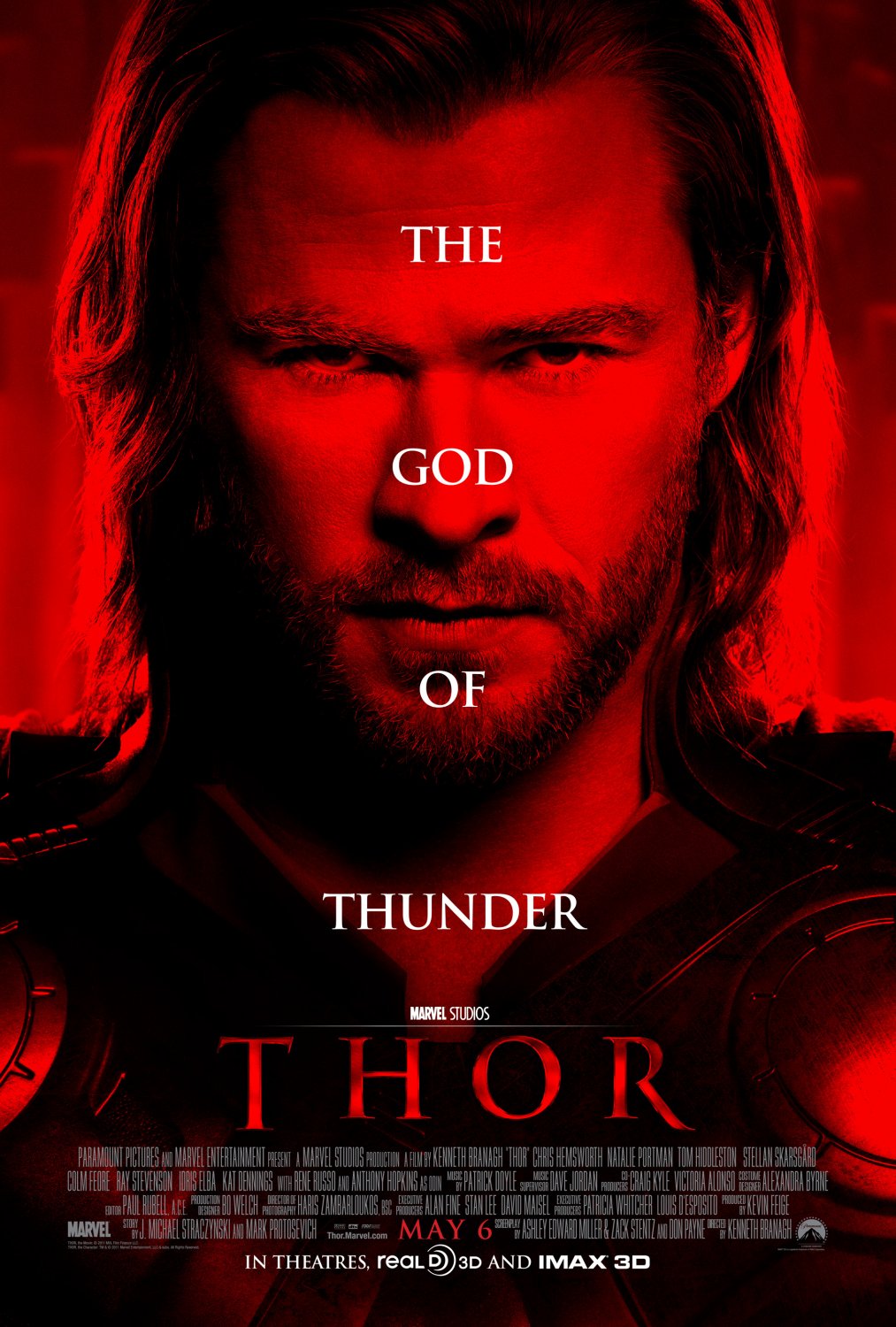
Reflections in Film: THOR

Thor: God of Thunder

Thor
Thor

History: Not having been a comic book reader or fan, my first knowledge of Thor was in the context of the Viking myth of Asgard, Valhalla, and a pantheon of gods, of which, one was Thor, the God of Thunder. But, once Iron Man debuted and the general public became aware of Marvel’s pantheon of gods, it was revealed to me that one such comic book hero was based on the Viking myth. Other than that, I knew little, except that he used a hammer, and was generally considered to be pretty hard core.

Hype: I really enjoyed Iron Man, and Iron Man 2 to a lesser degree, but once I heard that Joss Whedon, master of Buffy, Angel, and Firefly, was to write and helm Avengers, I have grown interested in all of the Avengers, and not just Iron Man. I re-watched the Hulk movies (and was disappointed that they weren’t much to write about), but this summer was very excited for Thor and Captain America. I went into the theater expecting the same level of writing, effects, and sense of story that Iron Man had delivered.

The Good: Casting. In a word, the casting of Thor was excellent. You could not ask for a better All-Father Odin than Anthony Hopkins, Chris Hemsworth was fantastic as Thor, Tom Hiddleston was excellent as Loki. The supporting cast was well chosen, with veteran presence coming from Stellan Skarsgård, and Natalie Portman playing a fairly easy role as the scientist girlfriend. Even Rene Russo’s fleeting screentime as Frigg, wife of Odin and mother of Thor, fit well. Everywhere one looked in this film one saw quality actors.

Overall, Tom Hiddleston’s Loki stole the film. He was fantastically devious and totally realistic/consistent. It took me half the film to remember that Loki was pretty much orchestrating everything, but because of the way things were set up, Thor really made it easy for him to do pretty much everything he did. I liked him way better than Thor, and the fact that I liked the villain more than the hero says something about how badly this film was written.

The Ugly: Plenty. I wanted to like Thor so badly, but I just couldn’t. The budget for this film was very small, and it seemed like most of it was spent on making it 3D. I have said it many times, but special effects, especially these days, can more easily ruin a film than anything else and modern studios just don’t get that effects DO NOT make a movie. By now the CGI thing is so tired that the audience just doesn’t care and isn’t wowed, but the execs continue to push for big effects because they think that is what will draw audiences. Unfortunately, they are right, but only if they want a big opening day payday and don’t care about anything after that (which, sadly, is also often the case with execs). An audience will pay for the spectacle once, but will pay several times for story. Case in point: Titanic and Dark Knight both had effects but also had much stronger stories, the former appealed to the romantic in every housewife and the latter appealed to pretty much everybody as it broke Titanic’s records. Exceptions do exist, but my point remains: story will trump special effects, and Thor would definitely have benefited from better story.

Lack of proper character exploration was another weakness in this film. Natalie Portman is some sort of scientist studying some sort of phenomenon, but we are never really told what or how or why it matters. She is all excited about her research and notes, but the significance is lost on the audience. Second, pretty much as soon as Thor dropped to Earth, she started going all gooey over him, and it completely contradicted her strong scientist character to have her all gaga over his well defined physical appearance. On the other side of the strange love coin, I have an extremely hard time figuring out why a god such as Thor would immediately become enamored with the first human female he encounters on his exile. Thor strikes me as the kind of dude that has several girls on several planets.

Furthermore, scope killed this movie where it stood. Everything that happened on Earth happened in a sleepy western town in the desert. Everything that happened in Asgard happened in the transporter room or the throne room, or on some ice planet that no one cared about (even the characters in the movie didn’t care about it). The movie felt restricted and small. Iron Man traveled the world twice in as many movies; Thor was cast down to exactly one spot on Earth.

Given the fact that this movie was supposed to be about a god learning humility, it could have been perfectly justified and probably a bit more likely to have Thor quest around the Earth learning humility from the down and out and the wise gurus of the Earth. Instead, he acted like a jerk and hung out in a coffee shop, a pet store, and a scientist crash pad.

Speaking of Thor acting like a jerk, that is pretty much all he did. He was a jerk in Asgard and jumped at the weakest incitement to try to start a war. And then he was a jerk to his dad when he was called on his arrogance. And then he acted like a jerk on Earth by beating up nurses and doctors (honestly, that was the exact moment when I started to not like Thor) and few soldiers. And then he did one semi heroic act (I say semi-heroic because he supposedly sacrificed himself to save everybody, but there were only about 10 people in the little diner that the old scientist evacuated, and the rest of the people who were “in danger” were his god-pals and Foster, so I didn’t really see the peril inherent in the situation), was killed for it, was reinstated as a god, and then continued to pretty much act like a jerk. I really didn’t see any character development in what was supposed to be film entirely about his character’s development.

Lots of other things made this film superfluous, for instance, the annoying intern who managed to have the best line in the film. No, not the one about “pretty cut” or “freaking me out” or “Facebook” but: “I’m not dying for six college credits”. Also there was the whole thing about Thor sneaking into the S.H.I.E.L.D.’s desert compound to try to recover his hammer and basically beating up a bunch of people for no reason (not to mention endangering Jane Foster for no reason). Finally, there was Thor’s total bewilderment of some Earth things but not others (ie, pet stores but not cars). It was inconsistent. Either he is a god or he isn’t, but he couldn’t be that selectively clueless.

Finally: the whole thing with the ice planet and stuff, I don’t get it. I know that Thor has to be shown being completely reckless and arrogant, but the ice planet ended up somehow being a part of the plot and it seemed odd and out of place. It was one thing too many in a film that was already going many different directions and it didn’t seem necessary at all.

At that is just the few things I have highlighted that made Thor a less than stellar outing. There were many more.

The Personal: I barely connected with this film. I should have been able to connect much more strongly. A movie about intense and fundamental personal change within a strong character should have been a movie to connect with and project oneself into, but this movie was so poorly done it was like watching a gaudy spectacle happen with detached interest at best.

In the final analysis, Loki was more relatable than Thor because he was the non-favored son who was stolen from his real parents and was lied to all of his life. He radiated real confusion, pain, suffering, and a loss of identity, all of which are visceral and human emotions that one encounters all to often. I connected with his pain, and understood his conflicts. I think he should have reacted better, but he in fact acted according to character, and thus was devious and angry. Also, he was actually somewhat cathartic as a character: I am a younger brother who many times has wished I could take my favored older siblings down a notch or two in the eyes of my parents. Loki actually succeeded, so I like him for that, despite the fact he was sort of evil.

Final Score: 1 out of 5 thunderous Viking hammers.

Reflections in Film: Fast 5

Fast and the Furious: Fast 5

Fast 5
Fast 5

History: I’ve been a fan of the Fast and Furious movies ever since the first one premiered ten years ago. The Fast and the Furious was a gritty street racing film about an undercover cop, Brian O’Conner (Paul Walker), who infiltrates the racing crew of Dominic Toretto (Vin Diesel) in an effort to bust a ring of 18-wheeler hijackers. The first film, on the surface, was no different than any other “undercover cop” movie. The underground street racing scene hadn’t really been featured before, and Fast and the Furious showed it in all its gleaming fiberglass and NOS enhanced glory. While the plot was simple and straightforward, the characters jumped off the screen. Diesel’s Toretto was the meathead jock, but he was also the tortured family man. Walker’s O’Conner was the conflicted cop, but he was also the man looking for a reason to fight. Both were antiheroes for different reasons and both grew through the quarter-mile drag races and incidental violence between street gangs. Fast and the Furious was a summer blockbuster with a bit of over-the-top action, but it also had soul.

The success of the first film was followed by a sequel, 2 Fast 2 Furious, which showcased the return of Paul Walker but not Vin Diesel. This movie tried hard to duplicate the first film, exhibiting fast slick cars, street racing, and underworld glitter, but it tried too hard. Without Diesel around to inject hard hitting emotion, the film floundered with more of a buddy cop/Miami Vice feel and didn’t grow the story or the characters. For all its NOS powered flash, it felt like an extended race scene that was deleted from the first film.

Despite the relative failure of the second film, the franchise continued with Fast and the Furious: Tokyo Drift which centred around a completely new cast and the new country of Japan. Dom Toretto cameos at the end, claiming to be a friend of one of the film’s protagonists, a car criminal named Han (Sung Kang) who is hiding out in his version of Mexico. Tokyo Drift‘s story was one of a son’s reunion with his father, and was a coming of age tale, and while it heavily featured underground street racing, it returned to the first film’s success of story powering the cars, albeit in drift races instead of the franchise’s traditional drag races.

The fourth film, which premiered in 2009, returned to both the original cast and setting. Fast & Furious also moved backwards in time from Tokyo Drift, showing Han at work in Dominic’s crew, while O’Conner worked in a special task force at the FBI that specialized in fighting crime centered around street racing. This story had cars and story in spades. Dominic was forced to confront the consequences of his crimes, which included the death of his girlfriend. At the same time, O’Conner’s struggles focused on which side of the law he really belonged. Both characters took separate, but parallel, paths to the same truth: that together they are stronger. The film ended with Toretto choosing to stand trial for his crimes. When the justice system worked against him, O’Conner broke him out of prison. By the end of the action, the two characters had moved through each other’s worlds and into a new synthesis. Again, the growth of the characters and the story made this film more about people than engines, and was the strongest outing yet for the series.

Hype: Honestly, I wondered how the franchise could stay fresh. Before going to the theater to see Fast 5, I watched the previous films (except Tokyo Drift), and tried to imagine how things could advance forwards. Most long running film series tend to duplicate themselves endlessly, relying on formula and fan base for success (such as Indiana Jones and James Bond), or are a continuation of a single general storyline (such as Star Wars and Star Trek). Even from the trailer, it seemed like the writers and makers of the F&F movies were intent on taking this new sequel, and future films, in a decidedly new direction. I had read that Fast 5 was going to take the main thrust of the movies from street racing to heists. That seemed like a stretch to me, as the major crime in the previous movies was either perpetuated by an uber evil bad guy, or was undertaken by a protagonist trying to grab a little extra, usually for understandable reasons. I had a hard time seeing the car crew/family as criminals in it for the crime. Finally, while street racing isn’t exactly boring if filmed dynamically, it was, ten years removed from the original, worn out as a plot device. I was unsure of its ability to keep an audience, or even myself, interested.

I was interested in strong character development and an evolution of the devices in a fast and furious car series that had proven in could do the former and was shaky in modifying the latter.

The Good: Fast 5 proved that evolution is possible. Honestly, I have never seen a film franchise so completely reinvent itself. It was as if established characters were lifted from an established premise and put into a completely different genre. In my mind, this was like James Bond being extracted from a spy film and being put into a sci-fi thriller with aliens. Such things shouldn’t work. Such things are never done. (I can think of one exception: Star Trek IV, the one with the whales, which was bookended with traditional Star Trek memes, but was a Star Trek film without a starship or outer space, taking place on pre-space flight Earth.)

But Fast 5 worked, and worked extremely well. The brief glimpses of street racing were mere homages, or internal references. There was only one drag race, and it was played for humor, not as plot advancement. Each character stayed true to himself (or herself), and thus cars were involved, but only in the way that James Bond would involve his PP7 in a science fiction film: as a convenient way to shoot aliens. The film spent most of its time off the asphalt, and in the character’s lives. The first big chase scene was a chase on foot, and completely devoid of cars. The biggest, flashiest car featured in the film spent most of its screen time either being taken apart or put back together, not being driven at insane speeds through flashy nighttime streets. The characters didn’t really drive cars, or use cars to solve their problems. They used their non-automotive skill sets instead (talking, infiltrating, cracking, monitoring, etc). The big heist felt like something out of Ocean’s 11 or Kelly’s Heroes, involving cars only because they are convenient, and not really as a showcase for the cars themselves (which separates this film from the Italian Job, where Minis drive the plot).

Fast 5, of course, had fast cars and a car chase, but the film wasn’t really about cars. For the first time in ten years, it was blatantly obvious that the titular words were not descriptors for the cars, and never were: fast and furious are schemas through which to understand Dominic Toretto, Brian O’Conner, and their car enthusiastic team.

Finally, Fast 5 was able to connect all the major players from four previous and mostly unconnected films in way that made Ocean’s 11’s way of bringing together a huge cast seem like an amateur effort in collaboration. Fast 5 felt more organic, more real, than the Ocean’s films ever did.

The Ugly: Some of the action seemed implausible. That really is about my only complaint. View the trailer for the film and you will see Dom and Brian towing a safe through the streets of Rio de Janeiro with two Dodge Chargers. I am not sure I entirely buy that, but I allow it because, after all, Fast and the Furious is a summer action blockbuster. Despite the character growth and drama, this is not supposed to be a hyper realistic film in which everything matches the real world, so I don’t really care.

Also, I suppose that if you watch the Fast and the Furious only for the car bits, and tend to hate plot and character development, then you (probably) really won’t like this film.

The Personal: Over ten years and four films I had become invested in these characters. I wanted to know where they went next, and how they solved the problem of being highly wanted fugitives who themselves desperately wanted normal lives free of complications and the threat of 25 to life.

I’d also connected with O’Conner, adrift in a life I wasn’t entirely comfortable with. The trust and the love shown across such an incredibly diverse group of people who accept former traitors and cops is moving, and, it must be admitted, personally challenging. Fast 5 allowed me the time and space to project into that sort of dynamic and explore it for a couple of hours. For that, I find Fast and the Furious 5 to be a great film.

Final score: 4 out of 5 supercharged, NOS injected Dodge Chargers.

SWD: On Filmmaking

I haven’t said much in my Star Wars: Deconstructed series about my underlying philosophy of film or my background in film study. This is intentional. Going through over 13 hours of film 10 minutes at a time in an in depth analysis of story and human behavior is a monumental task that I am struggling to finish in under 6 months. I won’t make it, unless I start writing many of these posts every day and overwhelming my readers. My first SW:D was in October of 2010. I am ten days from beginning a fifth month and am only halfway through the second film. So, in directing my focus solely on two aspects of the film, I am hoping to make my initial task manageable.

But, I am intrigued by much more than I am currently writing about, and hope to touch on that in the future when my first run through the saga is completed. To that end I spent much of today in research, both of the Star Wars films, and of filmmaking in general, and I have decided to post, unannotated, a few quotes I came across today that I think are relevant to comments I have made about George Lucas and his filmmaking.

“In order for audiences to not get bored…tune out, in other words, not believe what is happening on the screen, because believability is what filmmaking is all about. If you believe what is happening on the screen is real and believable then you stay locked in to that film. If it’s not, then you start looking at your watch and start wondering where you are going to go to dinner that night or ‘has anybody got any popcorn?’ or ‘why am I here in the first place?’ You lose it. You wonder why the hell you even came.”

Norman Jewison, Director the Hurricane, Thomas Crown Affair (1968), Jesus Christ Superstar, Fiddler On the Roof

“Effects these days are in the hands of Everyman. You can go shoot a movie on your own, of high quality, of broadcast quality, with camcorders. But it doesn’t necessarily mean we are seeing better movies. Shakespeare didn’t have a word processor. When we got word processors, we didn’t get Shakespeares. We’ve got to separate the two out: there’s creativity and there’s technology. The two are interrelated, but technology is not necessarily creative.”

Harrison Ellenshaw, Associate Producer and Visual Effects Supervisor TRON, Superman IV Visual Effects Star Wars IV, V

“If you try to over-control the process, you limit the process. I mean, I have a pretty strong idea of what I want, but I don’t feel that I create an atmosphere where people can’t speak up and have ideas, because often times people come up with wonderful ideas that are gonna make the movie better and you would be an idiot not to take them.”

Brad Bird, Director Ratatouille, Incredibles, Iron Giant, Mission Impossible: Ghost Protocol

“The theatrical cinema, as we know it, is storytelling. The technology is used to tell a story. And that’s the whole point. Its really the filmmaker and how well they are able to tell a story that counts in the end. The digital characters are really what I need to tell the Star Wars films, so I could tell a story that was more like the one I could think of in my head.”

“Very rarely do I not get what I want.”

George Lucas

I will come back to these quotes and discuss them, but at a later date. For now…food for thought.