
This week I ended up at Barnes & Noble a day earlier than I usually go. It was a warm, autumn afternoon, and I was full of poetry ready to be written. This week I had several more French styles of poem to work through: the rondeau redoublè, the roundelet, the roundelay, the triolet, and the kyrielle. These are similar to last weeks poems, and to each other. Each has a simple AB… rhyme scheme and each repeats various lines for effect. The repeated lines are easy to pick out, as are the rhymes because I wasn’t terribly clever in my writing.
This week I picked Lord of the Rings/ the Hobbit for my theme and wrote away to Middle Earth. I doubt Tolkien would be very impressed, but I like my poems.
The Hobbit
Once upon a time in the land of Middle-Earth
Far over the Misty Mountains sheer
Bilbo was a hobbit full of mirth
Thorin and his thirteen set forth with cheer.
The sun shone bright, the air was clear
The company sought gold, memory of mirth
The ponies jangled with weapons and gear
Once upon a time in the land of Middle-Earth
Old were the dwarves, one of great girth
The dwarves were bold, the hobbit full of fear
Many miles from the Shire of his birth
Far over the Misty Mountains sheer.
They fought and ran with sword and spear
A dragon who roared, made the land a dearth
though the goblins laughed and jeered
Bilbo was a hobbit, full of mirth
With magic ring he won in history a berth
Many peoples toasted his name with beer
The wizard, dear little Bilbo showed his worth
Thorin and his thirteen set forth with cheer
Once upon a time
Above you can see that each line of the first stanza repeats as the last line of each subsequent stanza, with the first half of the first line repeating as a refrain at the end. This is a rondeau redoublè. This is a retelling of The Hobbit.
Frodo’s Song
I am not brave
I will take the ring
I am not brave
The business is grave
Doom will failure bring
“Courage, courage!” I will sing
I am not brave
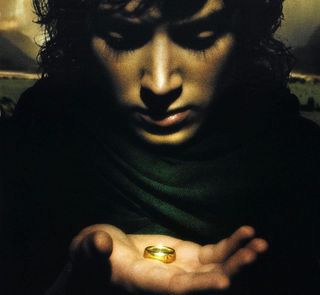
In the above roundelet the first, third and last lines are all the same. This is an imagined song that Frodo Baggins might have sung after accepting the quest of the ring in The Fellowship of the Ring.
The Three
An Elf, a Dwarf, a Man
chased the evil Uruk-Hai
through the vastness of Rohan
under Sauron’s watchful eye.
Tirelessly the three ran,
their friends they’d not bid good-bye.
Through the vastness of Rohan,
under Sauron’s watchful eye,
the hunters the horizon scanned:
the Rohirrim made the Uruks fly.
Tirelessly the three ran,
their friends they’d not bid good-bye.
The hunters the horizon scanned,
the Rohirrim made the Uruks fly,
the orcs fell into the horseman’s plan
the Uruks stood to fight and die.
Tirelessly the three ran,
their friends they’d not bid good-bye.
Here in the above roundelay the end lines repeat, as do a few of the other pairs of lines. This is about Legolas, Gimli, and Aragorn chasing the Uruk-Hai orcs who kidnapped the hobbits Merry and Pippin at the beginning of The Two Towers.
Of Gandalf
Gandalf was a wizard bold
with flashing sword and magic bright.
In appearance: a man now old,
Gandalf was a wizard bold.
Once he quested for dragon’s gold,
trekked o’er mountains, through the wold.
Gandalf was a wizard bold,
with flashing sword and magic bright.
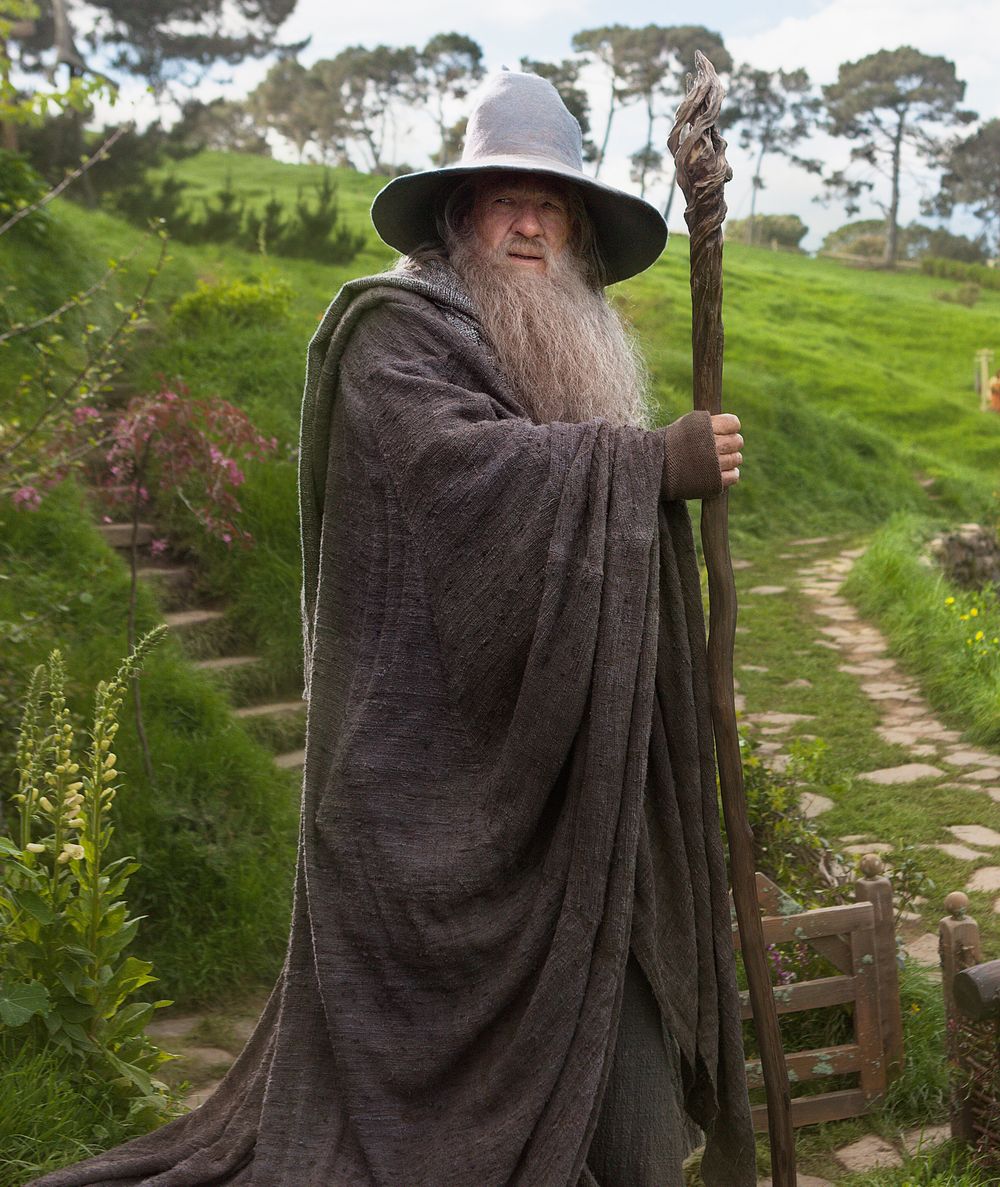
This above triolet gets its name from the trio of repeated lines, the first, and fourth, and next to last. The second line repeats as well to round out the poem. This is of course about the wizard Mithrandir, whom hobbits and men called Gandalf.
Merry and Pippin
Careless, care free, and full of song
May the Valar have mercy on us!
Friend of steward and of a King
The top o’their lungs they’d sing
May the Valar have mercy on us!
Hobbits did save warriors life
Each did evade the orcish knife
And sing of the tree lord’s lost wife
May the Valar have mercy on us!
The dark of night nor point of sword
could dull their merry little chords
May the Valar have mercy on us!
Merry and Pip did dance a jig
May the Valar have mercy on us!
Finally the above kyrielle, written in Iambic tetrameter, has the last line of each stanza repeat which is to be some variant of “God have mercy” (in this case, the gods of Middle-Earth, the Valar). Other than that there is great freedom in the form as long as some manner of rhyme scheme is maintained. This particular kyrielle is about the jolly hobbit twosome of Meriadoc Brandybuck and Peregrin Took and their exploits throughout The Lord of the Rings.
I hope you have enjoyed my poetical side trip through Middle Earth. I certainly did. Until next week.
 a simple man