
I had my newest vehicle in the shop this morning for servicing. It has some problem which has been causing an O2 sensor to continually fail. Don’t know what that problem is, exactly. I get the feeling the technicians didn’t look too hard, but they also seemed to think they knew what the problem was, so they probably didn’t feel the need to spend hours diagnosing a failure which may not be there to diagnose. At any rate, after a new O2 sensor and an unrelated alignment, my car is now at peak performance. Well, it still needs two new tires and front brakes replaced, but one thing at a time. My car budget isn’t inexhaustible.
All this talk about cars prompted me to drive down memory lane. If I am counting correctly, I have personally owned 8 cars since 2009. First was a 1995 Jeep Grand Cherokee, then a 2006 Toyota Corolla, a 2003 Toyota Corolla, a 2010 Toyota Corolla, a 2005 Toyota Corolla (noticing a pattern?), a 2003 Buick Century, a 2001 Honda CR-V, and finally a 2006 Toyota RAV 4. It is the RAV 4 that currently has the replaced but often faulty O2 sensor. We will see how long this new one lasts. Hopefully, if the technician is correct, a good long time.
I really loved my ‘95 Jeep Grand Cherokee. It was a V6, 4 wheel drive, do anything-go anywhere vehicle. It was already 14 years old when I bought it, with what I was told was a rebuilt engine. I never had any problems with it until the end of my ownership three years later when the radiator developed a persistent leak. Then, instead of spending a few hundred dollars to replace the radiator, I sold the Jeep. I still sort of regret that decision, but given the age of it, I wasn’t sure how much longer it would run without needing expensive repairs. Who knows, maybe I avoided a whole run of woe by saying goodbye when I did.
Speaking of woe, what follows next are a few tales of wrecked cars. I haven’t always been the most careful driver, and have had a bit of bad luck I’m afraid. The 2006 Toyota Corolla replaced a 2002 Toyota Camry that my former wife owned, and which had a catastrophic and freak mechanical breakdown one day while she was driving it. Fortunately, the failure happened at a red light and she suffered no injury. But the Camry was toast. Anyway, the ‘06 Corolla ended up partially bisected just before Thanksgiving Day in 2013. I was driving a bit too fast down a snow slushed hill with a turn at the bottom when I sailed off the road and into a light pole. It was a brutal crash, but I walked away with just a few bruised knees from where they hit the underside of the dashboard. That car was replaced by an ‘03 Corolla. My former wife bought the ‘06, so this ‘03 was only the second car that I actually purchased.
My 2003 Corolla was black, and quite a great find. I bought it on Black Friday from a local dealership for just under what my insurance payout was from the 2006. I drove that vehicle from Wisconsin to Texas a few times, most recently in 2015 when I relocated from the frozen north to the melted south. It served me very well, and I would probably still have it except that someone backed into it with a much larger SUV and caved in the side panel behind the driver side rear door. The insurance company deemed it too expensive to fix, so they wrote off the car.
After that, I again went to the dealerships in search of a new car. I ended up looking at, and purchasing, a beautiful blue 2010 Corolla, which was the newest car I’ve ever owned. Tragically, it was not to be, and this is painful to admit, but I only owned that car for a few minutes. After signing the paperwork, and taking delivery out front of the dealer, I rear-ended a car on the service road on my way home to show off my new-to-me car to my dad. Minutes from elation to despair. Again, I was ok apart from some bruised knees, and the woman I hit I think was ok. She went to the hospital out of caution, but I never heard that she was injured after that. Again, I found I needed a vehicle.
A great man by the name of Dick Bergman sold me my next car. It was a red 2005 Toyota Corolla I nicknamed “Red 5” because it was the fifth car I owned and because Luke Skywalker’s X-Wing starfighter was Red 5. That was a great car that I should have kept much longer than I did, but I sold it to save on the car payments I was making. I was starting to be in a financial decline that took me years to recover from, partly from bad luck and partly from bad choices, but I spent just $200 on the next vehicle, the ‘03 Buick Century. That was more boat than car, but it got me around until I lost it in a financial scam of sorts. Then I was car-less for a while.
Eventually I went back to Mr. Bergman, and bought a 2001 Honda CR-V. After all the Corollas, and one Buick, I wanted an SUV again and that was what he had available. Unfortunately, the CR-V had a host of problems from Day 1. I don’t fault Mr. Bergman for that, as he hadn’t ever actually taken ownership of the CR-V. He facilitated the purchase from another customer to me. Dick Bergman owned a small car dealership and specialized in helping low income families find great cars they could afford. Sadly he passed away from Covid in 2020.
I owned the Honda until this year, 2021, when it finally had a mechanical failure too costly to repair and I sold it for scrap. After that, my wife and I scraped together all we could, and with the help of friends, family, and the bank, I purchased my current 2006 RAV 4. It is a great vehicle, but has suffered from bad luck ever since I’ve owned it. It has that niggling problem with the O2 sensor, it needed a new windshield shortly after purchasing, a new key, and now it needs tires and brakes. At least the last two are standard maintenance issues that all car owners have to deal with. But the RAV 4 does seem to have had a hard time settling into my driveway without costing a fair amount of money right after costing a fair amount of money.
I do, however, hope to own this RAV 4 for quite some time. It is in excellent condition with low mileage, other than the issues named. I really dig it. But with cars, I am finding out, one never really knows what will happen. Accidents, mechanical failures, and old age eventually catch them all. And now I have owned 8 cars in 12 years which comes out to about a car every 1 and a half years, I guess. Though that calculation is skewed by a few cars I didn’t have but for minutes. Ah, poor 2010 Corolla!
What a journey car ownership has been for me! I’d actually use public transportation if I could, but nowhere I have lived has had reliable, or even extensive, public transportation. Busses haven’t had very wide routes, and I’ve never lived in a subway city. If I ever live somewhere that doesn’t require a car, I am not sure I will even own one. But that remains to be seen. For the most part, America is a country that built the automobile to what it is, and was built by it. Our love affair with cars isn’t going anywhere soon. For now, I will be careful when I drive, and try to hang on to a car for longer than just a few years. Speaking of which, I need to go get some gas.
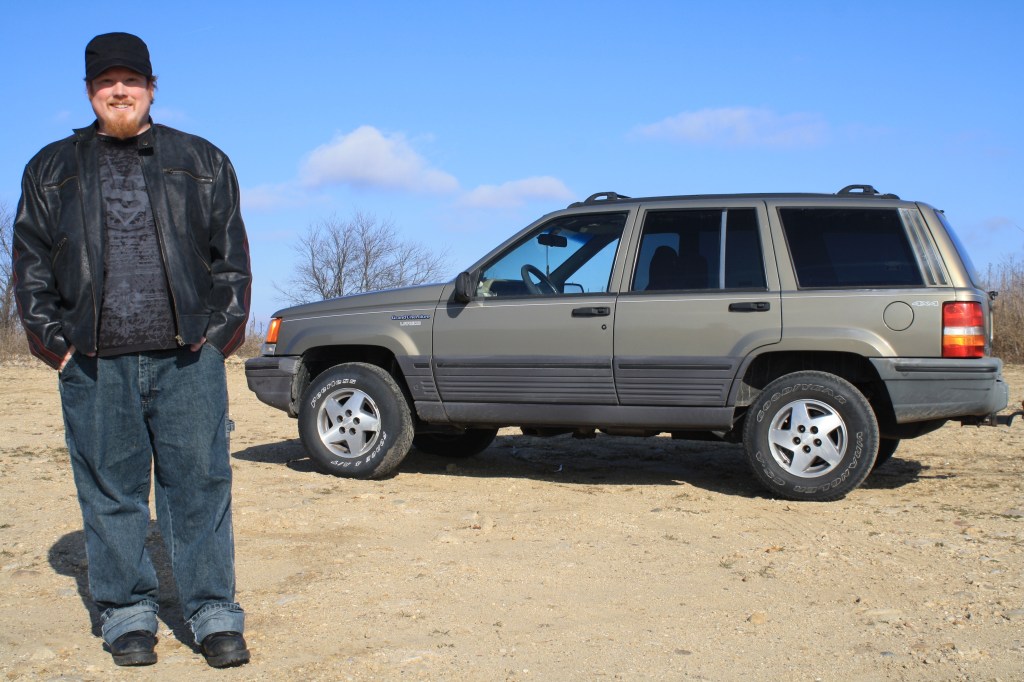
 a simple man