In a bout of creativity, I wrote a few poems. I thought I would share them with the world.
First of all, a tribute poem, in free verse, about the death of AOL Instant Messenger, a program I used for many years at the beginning of the internet, in the long ago times, to chat with friends and family. Just today it was announced that AOL has shut down the service. Wow. Never thought I would see the day.
AIM
Little yellow person
Running ’round the world
Connecting…
Me to you to her to him
To talk
Life, and everything.
Until the twenty year rotation
Killed the connections
In favor of more tenuous tendrils:
Texts and time for faces
Time to run no more.
Rest in the graveyard
Of future things.
Did you leave an away
Message: R U there?
Next up is a little poem contemplating nuclear holocaust. It came to me in a moment at work the other day as I was watching a bubble of water skim across the dishwasher surface. After a brief moment, it suddenly popped, and there was a miniature shockwave that rippled across the water beneath. I live in fear that our stupid president might attack North Korea and start a nuclear war and no one will have the guts to stop him. A silly fear perhaps, but there it is. Here is my poem, also in free verse.
Push the Button
One should not
Push the button
Until one has under
Stood
The cataclysmic collapse
Of a water bubble
Finally there is a poem about the dignity of manual labor. Usually I don’t go in for that sort of thing, but as I was mopping the floor at work the other day it struck me that there is dignity in accepting what we have to do in the current moment and doing it to the best of our ability. As I said, I don’t think manual labor in and of itself imparts dignity or creates a work ethic that is worth anything, but I do think that doing one’s task well is worth, well, something. For better or worth, here is that free verse poem.
Quiet Dignity
Quiet dignity resides within
Back and forth
Back and forth
Simple mop and motion
Back and forth
Back and forth
Sweeping away yesterday’s
Crumbs and beet blood stains
Back and forth
Forth and back
For a change of rhythm
And pacing
Back and forth
Back and forth
Fan dries clean floors
The blades whir
Back and forth
Back and forth
Here follows a few poems I wrote over the summer, just for fun.
The first two poems I wrote while in traffic on my way to my summer job. I composed them in my head from a few images that came to me as I merged my way to my exit and wrote them down once I had safely parked. Of those two, the first is about a supercar in traffic, a concept I find endlessly amusing and a little bit sad, like a caged animal that deserves to be running free. I give you
Pent Up Rage
TwelV horses
Nowhere to race
Supercar in traffic
The second is a proper haiku about brake lights. For your consideration
Brakelite Haiku
Blinky red asses
Off and on the grey freeway
Little metal ‘flys
Next comes a poem that I wrote while in a local coffee shop called The White Rhino. I was struck by the seeming hipster-ness of it all, and was also contemplating the social justice warrior movement. Included herein are a play-on-lyrics, a reference to a video game, and well, here is
SJWs
The White Rhino watches
Over mocha choca lattes
And lonely hipsters who first
Saw the waves breaking over Dawn
Rifles clutched tightly
Ready to battle the better beasts
Of industry and backward progress
As if they themselves had come
From another era, man buns
Wound tight to ward off the right
A new wave
Of social justice warriors
And last, but not least, a baseball poem based on a William Carlos Williams poem about some rainwater, chickens, and a red wheelbarrow. There is, above the infield, a
Pop up
So much depends upon a white baseball
In the blue, blue sky
Plopping into
brown
leather
So there you have a few poems. I love them, like fragile little butterfly children that I release into the harsh winter air. Be kind to them.
Hello all. Today was a cold, cold day as I made my way to Barnes & Noble. Such is fall/winter in Wisconsin. After I had got inside the store and warmed up, I sharpened my pencil and began to write. Today’s last two chapters were on the sonnet, that grand old form that served Shakespeare so well, and other miscellaneous “forms”.
I must be honest: I don’t like sonnets, and I’ll tell you why shortly. But, they come in two varieties, the Petrarchan sonnet and the Shakespearean sonnet. They both have fourteen lines, but the Petrarchan sonnet is differentiated by a rhyme scheme of ABBAABBACDECDE whereas the Shakespearean sonnet has a rhyme scheme of ABABCDCDEFEFGG. Really, that is all the difference I can find in the form, though each, perhaps, has its uses and themes that are better suited to pairs of rhymes or what not. I wrote one sonnet of each variety. The first, a Petrarchan, could also be called an ode, as it is written about a personal object that I so love.
Minifigure
The little man with yellow face and smile,
he stands upon my desk to greet the morn.
Though well he has been played; little worn
is he. His legs could walk a million miles,
his arms could lift a heavy plastic pile.
And should an arm or leg from body shorn
with careful reattachment he’s reborn
to last again some many little whiles.
But this tiny person is not too real:
he’s molded plastic, a child’s plaything,
minute and pallid, this man is but a fake.
Yet I like him and he has great appeal
to me. He and his kind, though small, are kings
of the playground. For him a world I’ll make.
The second sonnet, a Shakespearean, tells, at last, why I hate sonnets.
I Hate Sonnets
Though poet I am and poet remain
some forms of po-et-ry I do disdain
and try, as much as I can to refrain
from composing: the sonnet I abstain.
It’s overlong, and I don’t like the rhymes
Which come in separated pairs of ab
or cd or ef. And did I say the crimes
include a steady beat and meter drab?
Why it’s enough to drive the poet mad!
That is, if the poet’s me and not Bill
Shakespeare or, uh, Petrarch who both wrote scads
of poems in sonnetical form at will.
It seems, to some, like them, it’s easily wrote.
Apparently I got in the wrong boat.
Ha ha. I thus amuse myself.
The final chapter of my book, The Ode Less Traveled by Stephen Fry, as yes, I have at least reached the end, was on miscellaneous and sundry forms that are not, really, proper forms. There are the whimsical non-forms of ee cummings that seem to do whatever he wants them to do to fit the theme, and there are other poems by poets that make a shape to illustrate themselves. Finally there are forms for forms sake, such as the rictameter, which for no particular purpose is in the shape of a diamond. Here, I’ll demonstrate:
Shapely
They say
that a diamond
is a girl’s very best
and that to win her heart you must
buy one, ring one, set upon her finger
but I find it crass and capital
to buy love with a rock
white, sparkley
and cut.
See? Diamond themed AND diamond shaped. How bout that?
Lastly, I took a stab at an ee cummings type poem.
Faucet
From here it
drip
drip
drip
drips
down
la
sp sh
And there you have it. A dripping faucet.
I have very much enjoyed my poetical foraging, and for now I’ll put down the pencil. For one, next week is my sister’s wedding and I will be quite otherwise entertained, and for another, I’m done with my guidebook and must now think how to proceed without a set structure to follow. As always, I hope you enjoyed reading my poems.
I made it to Barnes & Noble this week earlier than ever before in the morning, just after the store opened. On a Friday, that meant the store was mostly empty and quiet, just perfect for a bit of poetry play and rhyming.
This time I worked along two avenues, one with two forms that mix and match a poet’s own words to form new poems, and the other in exotic forms in the vein of the haiku.
My theme today was the Avengers.
the Avengers
The first two forms I worked with were the Cento and the Clerihew. Both ostensibly re-work an existing poet’s lines of poetry to form new poems. Instead of taking an existing poet and his words, I instead worked from another medium that I enjoy: film. For my centos I remixed lines from the three Iron Man films to form poems. A cento also uses the name of the purloined poet as the first line of the poem, and in this case, the name of the movie. There is no meter or rhyme scheme.
Cento 1
Iron Man
Yeah, well, vacation’s over,
there’s the next mission, and nothing else.
(Sometimes you gotta run before you can walk.)
What you’re asking about: it’s me.
It’s not technically accurate,
I’m just not the hero type.
(Yeah, I can fly.)
The truth is: I am Iron Man.
Cento 2
Iron Man 2
It’s subtle, all the bells and whistles,
It’s a high tech prosthesis,
The suit and I are one:
It tastes like coconut. And metal.
The point is: you’re welcome,
I am your nuclear deterrent,
I’ve successfully privatized world peace:
it’s about legacy.
Cento 3
Iron Man Three
Let’s track this from the beginning:
we create our own demons,
the prodigal son returns.
Technically, I am Iron Man.
(I broke the crayon)
Everybody needs a hobby,
my armor was a cocoon:
I am Iron Man.
For these centos I tried to encapsulate what each film was about, speaking to both the plot and theme. And, as I said, all are composed entirely of lines spoken by Tony Stark/Iron Man.
Next was the Clerihew which is again formed by lines from an existing poetical work, for which I again used lines from a film, in this case, the first Avengers film. The clerihew uses the name of the poet for the first line of two couplets. There is no set length, and again, it is non-metrical and non-rhyming.
The Avengers
Thor
Who controls the would-be king?
Do I look to be in a gaming mood?
This is beyond you, metal man!
Tony Stark
Doth mother know you weareth her drapes?
Have you ever tried shawarma?
We have a Hulk.
Bruce Banner
So this all seems horrible.
I’m always angry.
Puny God!
Steve Rogers
There’s only one god, ma’am.
Put the hammer down.
We have orders, we should follow them.
Natasha Romanoff
These guys come from legend.
I’ve got red in my ledger.
This is just like Budapest all over again.
Clint Barton
You and I remember Budapest very differently.
Ever had someone take your brain and play?
I see better from a distance.
For better or worse: a clerihew. I tried to capture the core of each character, and also do a sort of call and response from one stanza to the next. In actual fact, each stanza is its own clerihew, as a proper clerihew is only four lines long. This is, truth be told, a super clerihew, just as the Avengers are a super team. Neat, huh? My cleverness knows no bounds, apparently.
Next up I tackled some more exotic forms. First, a Japanese form called the tanka, which is a five line poem consisting of lines of 5,7,5,7,7 syllables. Again, the Avengers gave me inspiration.
Hulk
Banner is a man
who got hit with gamma rays.
The man’s a monster
who turns tall and strong and green.
The Hulk is always angry.
Cap
Steven Rogers fights
for the small and helpless man.
The military
experiment made him strong,
time made him legendary.
Thor
He’s a demi-god
Thor from the realm of Asgard
He wields a hammer
a weapon to pound, a tool
to build a much better world.
After that I wrote a tanaga, a Filipino form consisting of four seven syllable lines, all rhyming.
Romanoff
Natasha’s a widow black,
a spy with assassin’s knack.
Fear and cowardice she lacks,
she shuts down the tesseract.
Finally, after all that, I wrote a Persian form called a Ghazal, which is written in couplets that rhyme the final word before an ending refrain. The ghazal is typically signed by the author in the last line.
The Avengers
There are six who fight: the Avengers.
In Loki they inspire fright, the Avengers.
Romanoff, a woman with widow’s bite,
Hawkeye, possessed of keen sight, the Avengers.
Thor, whose hammer throws light-ning
Captain America stands for the right, the Avengers.
Hulk, he smashes with green might,
Iron Man, a modern metal knight, the Avengers.
Though the world’s in a plight,
I, Redbeard, love to write the Avengers.
Do remember that all my poems are basically explorations of a form or style of poetry and are not claiming to be exemplars of said forms. They merely adhere to (most) of the rules of the form, no more, no less. Thus they are not great poems, or even good poems, but they are poems. I enjoy writing them, and as always, I hope you enjoy reading them.
Today I went down to Barnes & Noble, as is my custom now, and wrote some poetry. The poetical forms of this day were exotic, by which was meant foreign-to-English forms. I focused on the haiku, a Japanese form that in English is rendered as 17 syllables in three lines of 5,7,5. Usually the subject is nature, with the season being referenced in the haiku. There is some discussion as to whether or not the Japanese form can actually be translated into English for use, but I think the approximation is worth pursuing. I certainly had fun with it, at any rate.
Half of my haikus are about the autumn season, the other half are a macabre collection celebrating the holiday of Halloween.
Haikus on Autumn
1
A cool wisp of breeze
Rustles in the fallen leaves
Autumn is aground
2
A crow in flight caws
Harshly. The cold waning light
Lands on naked branch.
3
A leaf on the wind
Soaring, dancing, falling low
Joins its dying mates.
4
Chiseled pumpkin grins
Letting out the light within
Glows on the dark hearth
Halloween Haikus
1
Creaking and moaning
This cabin in the woods sits
Full of horror’s screams.
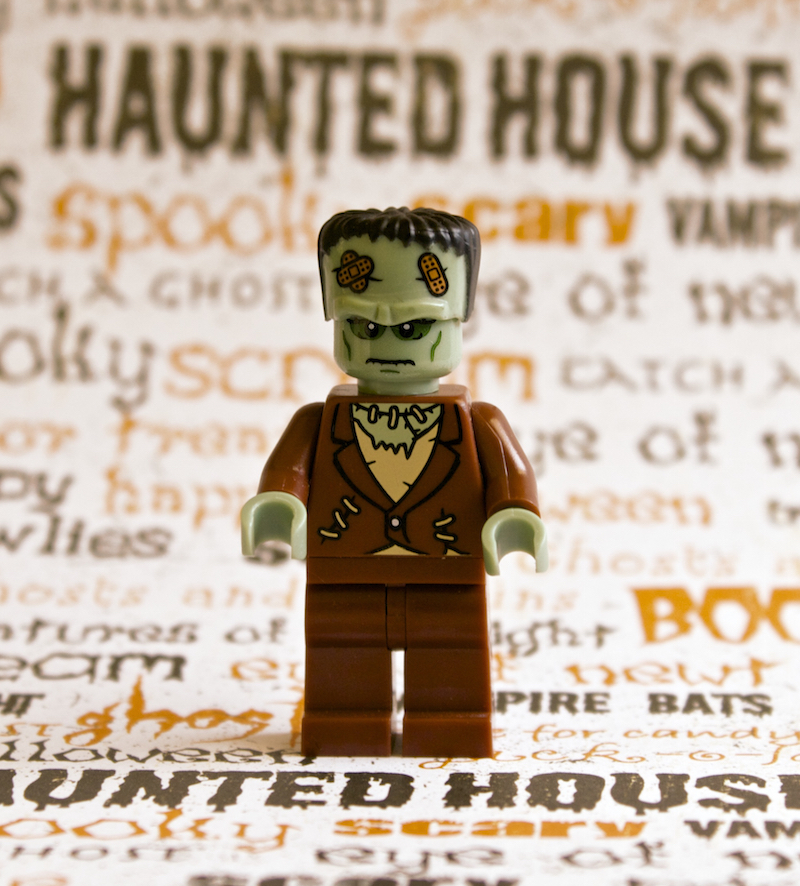
Frank the Monster
2
Jangling and clanking
Skellington walks into town
To trick-or-treat you.
3
Ghastly laughing ghoul
Haunts the house on the dark ridge
Ghost of virgin past
4
The monster moans low
He’s stitched and sewn together
Missing a partner.
5
Clink clank in the dank
Cold dungeon dark and slimy
Chained: rotten zombies.
6
Low moan on the heath
Zombie, ghost, or monster mean?
Just the autumn wind.
Like I said, I had fun, especially with the Halloween haikus which I wrote more in a spirit of the old gothic novels, creepy castles and Frankenstein’s monster, than in the mode of today’s horror films, which I detest for various reasons. Anyway, I hope you enjoyed reading through my haikus.
Until next time, have a spooktacular evening. *creepy laugh*
This week I ended up at Barnes & Noble a day earlier than I usually go. It was a warm, autumn afternoon, and I was full of poetry ready to be written. This week I had several more French styles of poem to work through: the rondeau redoublè, the roundelet, the roundelay, the triolet, and the kyrielle. These are similar to last weeks poems, and to each other. Each has a simple AB… rhyme scheme and each repeats various lines for effect. The repeated lines are easy to pick out, as are the rhymes because I wasn’t terribly clever in my writing.
This week I picked Lord of the Rings/ the Hobbit for my theme and wrote away to Middle Earth. I doubt Tolkien would be very impressed, but I like my poems.
The Hobbit
Once upon a time in the land of Middle-Earth
Far over the Misty Mountains sheer
Bilbo was a hobbit full of mirth
Thorin and his thirteen set forth with cheer.
The sun shone bright, the air was clear
The company sought gold, memory of mirth
The ponies jangled with weapons and gear
Once upon a time in the land of Middle-Earth
Old were the dwarves, one of great girth
The dwarves were bold, the hobbit full of fear
Many miles from the Shire of his birth
Far over the Misty Mountains sheer.
They fought and ran with sword and spear
A dragon who roared, made the land a dearth
though the goblins laughed and jeered
Bilbo was a hobbit, full of mirth
With magic ring he won in history a berth
Many peoples toasted his name with beer
The wizard, dear little Bilbo showed his worth
Thorin and his thirteen set forth with cheer
Once upon a time
Above you can see that each line of the first stanza repeats as the last line of each subsequent stanza, with the first half of the first line repeating as a refrain at the end. This is a rondeau redoublè. This is a retelling of The Hobbit.
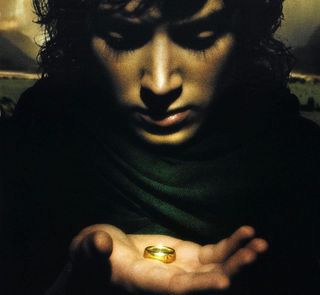
Frodo’s Song
Frodo Baggins
I am not brave
I will take the ring
I am not brave
The business is grave
Doom will failure bring
“Courage, courage!” I will sing
I am not brave
In the above roundelet the first, third and last lines are all the same. This is an imagined song that Frodo Baggins might have sung after accepting the quest of the ring in The Fellowship of the Ring.
The Three
An Elf, a Dwarf, a Man
chased the evil Uruk-Hai
through the vastness of Rohan
under Sauron’s watchful eye.
Tirelessly the three ran,
their friends they’d not bid good-bye.
Through the vastness of Rohan,
under Sauron’s watchful eye,
the hunters the horizon scanned:
the Rohirrim made the Uruks fly.
Tirelessly the three ran,
their friends they’d not bid good-bye.
The hunters the horizon scanned,
the Rohirrim made the Uruks fly,
the orcs fell into the horseman’s plan
the Uruks stood to fight and die.
Tirelessly the three ran,
their friends they’d not bid good-bye.
Here in the above roundelay the end lines repeat, as do a few of the other pairs of lines. This is about Legolas, Gimli, and Aragorn chasing the Uruk-Hai orcs who kidnapped the hobbits Merry and Pippin at the beginning of The Two Towers.
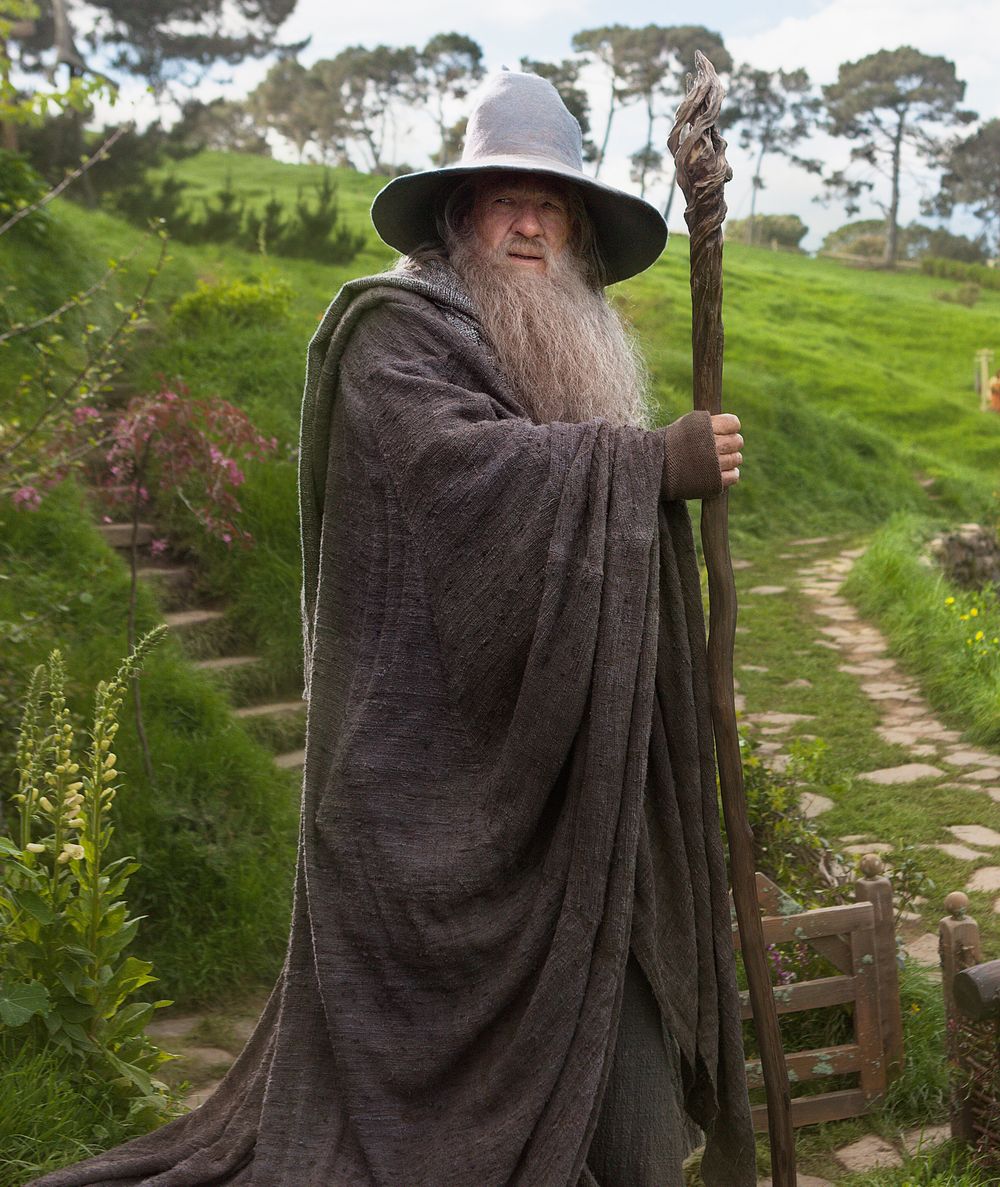
Of Gandalf
Gandalf
Gandalf was a wizard bold
with flashing sword and magic bright.
In appearance: a man now old,
Gandalf was a wizard bold.
Once he quested for dragon’s gold,
trekked o’er mountains, through the wold.
Gandalf was a wizard bold,
with flashing sword and magic bright.
This above triolet gets its name from the trio of repeated lines, the first, and fourth, and next to last. The second line repeats as well to round out the poem. This is of course about the wizard Mithrandir, whom hobbits and men called Gandalf.
Merry and Pippin
Careless, care free, and full of song
May the Valar have mercy on us!
Friend of steward and of a King
The top o’their lungs they’d sing
May the Valar have mercy on us!
Hobbits did save warriors life
Each did evade the orcish knife
And sing of the tree lord’s lost wife
May the Valar have mercy on us!
The dark of night nor point of sword
could dull their merry little chords
May the Valar have mercy on us!
Merry and Pip did dance a jig
May the Valar have mercy on us!
Finally the above kyrielle, written in Iambic tetrameter, has the last line of each stanza repeat which is to be some variant of “God have mercy” (in this case, the gods of Middle-Earth, the Valar). Other than that there is great freedom in the form as long as some manner of rhyme scheme is maintained. This particular kyrielle is about the jolly hobbit twosome of Meriadoc Brandybuck and Peregrin Took and their exploits throughout The Lord of the Rings.
I hope you have enjoyed my poetical side trip through Middle Earth. I certainly did. Until next week.


 a simple man