In the Year of Awesome

As 2010 winds down, I look across the horizon into the new year of 2011, and as I do so, my heart beats all to a flutter, and I will tell you why: I am ridiculously excited about more than one film that will be released next year.

This year had a few good movies, among them Iron Man 2, Inception, and Toy Story 3, but next year is set to be an astounding year. It is full of sequels, threequels (in one instance a 5th), a few new comic book movies, and at least one completely original story. I have a list of 10 films that I absolutely do not want to miss seeing in theaters, and quite a few alternates that I would love to go see, but cannot quite justify the expense to do so (please feel free to provide funding).

I am telling you this because I am quite well acquainted with the phenomenon of a film not living up to its hype, and leaving in its cinematic wake a trail of tears, disappointment, broken hearts, and emptier wallets. I am interested in documenting said phenomenon with a full review after each movie, a scoring of some sort, and a determination of the final experience of each film.

I can honestly say that I have not been as excited for an entire year of movies before in my life.

Behold: the Listing!

Fast 5 (April 29) the fifth in the Fast and Furious franchise, starring Vin Diesel and Paul Walker

Thor (May 6) the story of the Norse god Thor (Marvel comics version), starring Chris Hemsworth

Pirates of the Caribbean: On Stranger Tides (May 20) the fourth in the Pirates franchise, starring Johnny Depp

X-Men: First Class (June 3) a new prequel to the X-Men trilogy, starring James McAvoy and Kevin Bacon

Cars 2 (June 24) the only sequel Pixar has made outside of Toy Story, starring Owen Wilson and Michael Caine

Transformers: Dark of the Moon (July 1) the third Transformers film, starring Shia LeBouf

Captain America: The First Avenger (July 22) the story of Marvel’s biggest hero, starring Chris Evans and Hugo Weaving

Cowboys & Aliens (July 29) a new story about the old west and aliens, starring Daniel Craig and Harrison Ford

Mission Impossible: Ghost Protocol (December 16) the fourth M:I film, starring Tom Cruise and Ving Rhames

Sherlock Holmes 2 (December 16) the sequel to last year’s film about the legendary detective, starring Robert Downy Jr

Honorable mentions include Green Hornet, The Adjustment Bureau, Rango, Green Lantern, Rise of the Apes, Three Musketeers, The Adventures of TinTin: Secret of the Unicorn. I might actually go to one or some of these, but I am not sure yet.

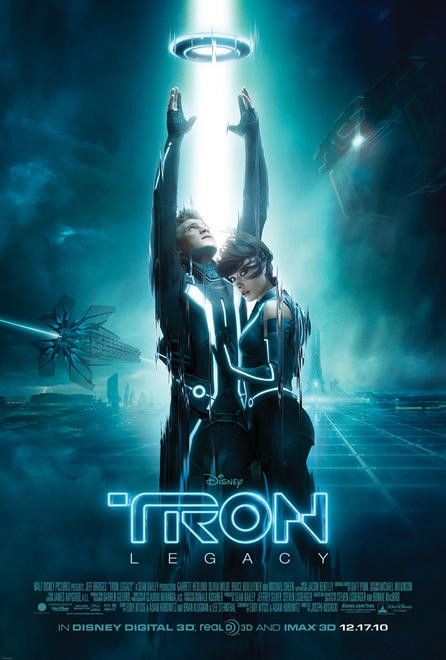
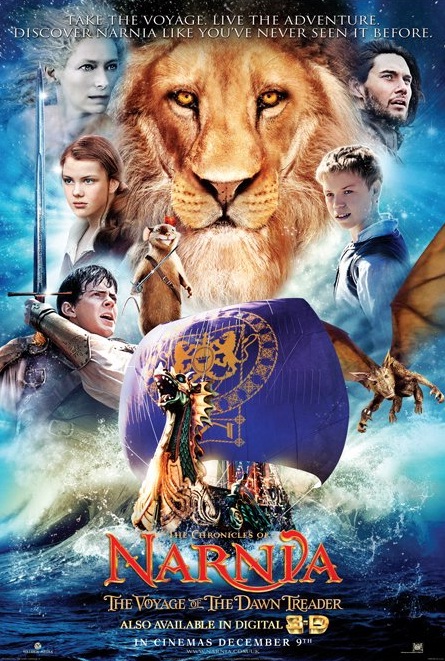
I will begin this blog series with the final two films of 2010 that I highly anticipated: The Chronicles of Narnia: the Voyage of the Dawn Treader; and TRON: Legacy.

Yes, there is more to life than movies, but I have been an avid film fan all my life and I love writing. In recent years have become more intentional about why I like certain movies and why I dislike others, and therefore want to explore myself and my love of film more intentionally through this blog. Writing is my avenue towards self-discovery.

SWD: “The Clone Wars” Special Edition

I have been going through a deconstruction of the Star Wars movies, and while I am focusing my attention on those six films, I am going to take a moment to deconstruct a few aspects Clone Wars cartoon series, while drawing a few examples from the most recent episode, Pursuit of Peace (available on StarWars.com).

Mostly I have been ignoring the Clone Wars, watching each episode out of morbid curiosity, usually while I eat my breakfast. I find the animation to be a little distracting sometimes, the writing is almost always atrocious, and even worse, this season, for whatever ill advised reason, the show’s producers and writers have been playing merry merry hob with the timeline. From what I can tell, most of Season 3 has taken place before Season 1, and various episodes have bounced around during Season 2. If a fan were not diligent about reading the episode guides on StarWars.com, I fear they would be hopelessly lost, sad, and confused by now.

That being said, I appreciate the effort, however badly executed, to show the intrigue, politics, and breadth of the Clone Wars. What first kept my attention in the series were the clone troopers themselves. Throughout the first (and partially the second) season special effort was made to show the clones as individuals, with hopes, dreams, fears, and most importantly, lives. Far from being organic battle droids, these guys were as human as the other characters in the Star Wars universe that fans knew and loved. Far from being faceless drones, these guys were every man.

Sadly, that level of characterization has been lost in the effort to promote female characters in the Star Wars universe, and Padme in particular (not that I have a problem with female Star Wars characters). Almost every single political episode features her in a major way. One would almost believe that she was the only Senator of importance, and every other Senator hovers in her circle. Even in the latest episode, Pursuit of Peace, Bail Organa is said to have greater influence than Amidala, but from what transpires (and what has already transpired) I do not believe it.

What prompted me to write this special deconstruction post was the way that Amidala’s handmaiden is treated in this episode. I focus on this interaction specifically because it showcases appalling gaps of logic in the writer’s reasoning, and is directly opposed to the goal of promoting female characters. I will explore that as I move through the episode.

First, the voice over says something about peace attempts being halted by a “droid suicide bombing” (00.29). I guess I better schedule a psych visit for my toaster oven, because I didn’t know machines that were designed to be bombs could commit suicide. If the robots in question were as sophisticated as Isaac Asimov’s creations, I could entertain a discussion on droid suicide, but not with something that was programmed to be a bomb from the beginning. Writing like that makes me either cringe, or giggle, but is what makes me not take this show seriously at all.

Much about this episode centres around a vote in the Galactic Senate to deregulate the banks in the galaxy which would have the direct result of allowing the Republic to borrow money in order to purchase more clone troopers. This is a move that Amidala directly opposes, ostensibly because she wants to end the war without further fighting. I personally do not see how deregulating a bank makes borrowing money from it any easier unless the Senate had previously passed a regulation limiting the amount of money they could borrow from private banks. Furthermore, I don’t understand why the Senate even needs to borrow money from private banks to fund their war. I admit that I don’t know enough about economics and politics to really critique this, but I fully suspect that the writer of this episode knows less than I because nothing here makes sense. In fact, the only outcome of the deregulation would seem to be a charging of extremely high interest on the loan from the one bank that Amidala talks to, which would appear to be a dumb move, because there would almost certainly be some other bank willing to loan money at a lower interest rate in order to get the Senate’s business.

However, the episode begins with an argument in the Senate, and Amidala tries desperately to get the Senators to continue with a bid for peace talks because the previous “droid suicide bombing” that has everyone outraged took place after the request for negotiations. I fail to see at all how she thinks this matters. The show’s writer apparently thinks this matters, but I just don’t understand. I know the audience (if they watched previous episodes) knows that the peace talks were a genuine gesture from the Separatists, but the Senate hardly knows that. As far as any given Senator knows, the peace talk overture was designed to lull the Republic into a false sense of security. Those that Amidala opposes have extremely valid viewpoints.

Directly after this, a representative from the Kamino cloners suggests that the Republic buy more clones. Can anyone explain to me why it is a good idea to allow corporations direct representation in the Senate? This is just stupid.

Senator Organa objects to this plan, not because it is war profiteering or stupid to take advice on the war from a party that makes more money the longer the war is being waged, but because the Senate is in debt. He wants to know how the troops will be paid for. The Kaminoan representative says that she wants to raise the money, and an indignant Amidala interrupts with a wild accusation that the money would probably come from a bank. What a horrid thought! Who would borrow from an institution that has money and is willing to loan it out? Already a mere one minute and thirty-nine seconds into the episode and the absurdities mount like borrowed credits.

Amidala continues her tirade by pointing out that the attack was designed to destroy the peace process. Well. Yeah. I generally don’t make peace with those who are trying to kill me. I try to kill back. Amidala is meant to represent a strong, forward thinking woman dedicated to peace. She sounds (and acts) like a total idiot. I mean a gibbering, senseless idiot. The only thing that Amidala says that is intelligent is that not every Separatist wants further war.

But, before the Senator’s one shred of logic can be explored, Count Dooku appears before the Senate to blame them for an attack that killed the Separatist Senator who was leading the peace process. And nobody checks with anybody in the military to see who launched the attack, why, or even if it was the Grand Army of the Republic. There is zero investigation. The Senate just accepts Dooku’s word. And he is the enemy. Who is writing this? Can I have their job? This makes absolutely no sense whatsoever and each second the episode continues is another opportunity for something dumb to occur or be said.

I know that this is supposed to be primarily a kid’s show, but if so, it is child abuse. I wouldn’t want my child anywhere near something this stupid. I want to them consuming intelligent entertainment, not mindless drivel.

I will skip ahead to the scene that made me write this post in the first place.

Amidala’s plan to defeat the deregulation of the bank’s hinges on her belief that plunging the Senate deeper into debt would bring about an inability to meet the basic needs of the Republic’s citizens. In a Republic formed by thousands of planets, I find this very hard to believe. I will illustrate with an interview Amidala carries out with her handmaiden, Tekla.

Amidala wonders why no one listens to her (as if it weren’t obvious) and Tekla says that it is because Amidala really listens to people, “people like me” (15:37). Never mind that Tekla is indistinguishable from any other handmaiden Amidala has ever had, and is paid (?) to be there and wait on Amidala hand and foot as if she were still the Queen. Tekla abruptly turns to go, as if she fears the wrath of Amidala for speaking when not spoken to. Seriously, that is exactly how that appears. But, Amidala, judging by the look on her face, stops her because Tekla may just be the leverage Amidala needs to sway the Senate. She then asks Tekla about her family. Because it is politically helpful, not because she seems to really care.

Tekla says “they are fine” but that isn’t quite what Amidala needs, so the Senator rephrases “how is the war affecting them?” to which Tekla says “it isn’t easy” (15:59). Amidala still isn’t getting the answers she wants, so she pumps her handmaiden for information. Apparently, revealed later during Amidala’s speech, Tekla “lives in a district without electricity or running water…her children can now only bathe once every two weeks…and they have no light by which to read, or study at night” (19:34). Really? The aide to a Senator from Naboo lives without electricity and running water? REALLY? How is Amidala that callous that she lives in a top floor penthouse suite and is waited on by someone without access to basic utilities? Does she, or the government of Naboo, not pay Tekla enough so that she can afford to live somewhere better, like Naboo, that is verdant, green, and covered with enough water that the planet core is full of it?

Oh. Wait…Amidala explains that it isn’t her responsibility because “the Republic has always funded these services” (19:43). What? The Republic pays the utility bill for the entire galaxy? How has it not collapsed 990 years before this? Furthermore, Amidala blatantly exploits the squalid life of her slave in order to win votes to further her agenda. No, really, that is exactly what happens.

This. Does. Not. Make. Any. Sense.

To recap: not only does Amidala appear to be an opportunistic idiot who exploits people, but her female handmaiden is little more than a slave, and apparently has the housing to match. How are these empowered women? Am I supposed to have these be the role models for my nieces?

But Dave Filoni and the writers on the Clone Wars want the viewers to believe that Amidala is good, and that this speech is a rousing example of heroism — just listen to the steadily rising music behind Amidala and examine the way the scene is filmed (with blatant overuse of electricity which could be powering lights for Tekla’s children to read by). I don’t care if a war is on. Nothing ever seen in the Star Wars galaxy, or reality, leads me to believe that this is true or could ever happen.

I try to give George Lucas the benefit of the doubt when it comes to his movies, but I know that for the rest of the Star Wars expanded universe, he is more benefactor than controller, and therefore he is only loosely associated with much of what happens on the Clone Wars show in particular, and the universe in general. So, I don’t blame him, but I do blame whoever approves the Clone Wars scripts. I honestly believe you have to not care, or work very hard, to screw up this badly, and I don’t know which I prefer or suspect.

Bad Writing is all around us. And it hurts.

SWD: South of the Rishi Maze

Sadly, it has almost been a month since my last Star Wars: Deconstructed post. This fact is a testament, mostly, to a lamentable curse: “Work once stopped is rarely restarted.” Despite that, I bring you the next installment of Attack of the Clones: Deconstructed, in which I look at a surprisingly well written section of the film.

Star Wars Episode Two: Attack of the Clones (00:31:34-00:40:56)

Obi-Wan Kenobi, having just put Padme and Anakin on the bus to school, has finally begun the investigation into the plot to assassinate the Senator. He heads to an old fifties diner run by a gruff, four armed former prospector. I absolutely love this sequence. This scene shows that Kenobi has street smarts. Somewhere along the line he descended from the ivory tower of the Jedi Temple and rubbed elbows with the blue collar workers of the galaxy, striking up a friendship with Dex. Or he just found the diner one day while hunting for a quick bite, but either way, Kenobi obviously doesn’t have a problem hanging out with a diverse group of people. Indeed, this is even a shadow of Old Ben in the dusty Tatooine Cantina, a place one could easily see him frequenting during those long desert dry spells. Having been unable to identify the toxic dart he found in the dead body of Zam the Assassin (seen in a deleted scene), the first place Kenobi heads for information is the man who might know, and even if he doesn’t, he would know who to ask next. As it turns out, Dex recognizes the dart almost immediately.

Lucas manages to achieve quite a bit of exposition in this scene while having it feel like a genial meeting between old friends, and that is a mark of good writing. Exposition is a necessary evil in all dramatic pieces. Somewhere along the line the writer is forced to take a step back from the story and explain what is going on, or explain something about what is happening, or explain something that the characters already know, but that the audience doesn’t. However it happens, explaining usually takes place somewhere. The challenge is to not interrupt the story, break the fourth wall, and go: here’s what you need to know. Anyone who watches the NBC show Chuck already is well acquainted with bad, albeit straightforward, exposition. At the beginning of almost every episode the audience hears Chuck say “Hi, my name is Chuck and here are a few things you might need to know or maybe you just forgot” before a montage of “Previously on…” clips plays out. That is a very bare bones exposition; it presents the background for the episode that is about to begin. What happens in Dex’s Diner is much better exposition. Two friends share a drink, a few jokes, and information. The interaction is informal and completely realistic. This scene would have been much worse and more boring if it had taken place in the Jedi Library, which is where Kenobi goes next.

Having learned the name of the system where the toxic dart originated, Kamino, Obi-Wan heads back the library to do a little research. Very quickly he finds that there is no information in the Jedi archives, and calls for assistance. It is comforting to know that librarians are librarians everywhere, even in an alien galaxy far, far away. The Jedi librarian quickly dismisses Kamino as myth simply because it doesn’t appear on record. She haughtily proclaims “if an item does not appear in our records, it does not exist” in response to Obi-Wan’s confidence in Kamino’s existence (based on a reliable witness who had once been there) (00.34.35). I am still trying to decide if this supreme and laughable arrogance is meant to show the obvious decline of the Jedi or is an artifact of George Lucas’ misunderstanding the breadth of the universe. To give Lucas the benefit of the doubt, and also because the first seems much more likely, I hold to the former explanation. It seems the Jedi have grown so complacent and so over-confident in their abilities and “wisdom” that they actually believe (some of them, at least) that they possess all available knowledge. Of course, I still find this hard to believe because even in 1000 years of interstellar travel an entire universe could not have been explored, and therefore there would be many items in existence that don’t appear in the Jedi Archives. How the Jedi could think the opposite is quite beyond my capacity. The mere idea is lunacy. As Dex said moments earlier: “I should think that you Jedi would have more respect for the difference between knowledge and wisdom” (00:32:57). Clearly the distinction has become muddled. However, it seems that the omission of planetary data, at least on a system that people clearly know about and sometimes travel to, should be there, and the fact that it isn’t is noteworthy. Obi-Wan settles in to ponder recent revelations, and the perspective shifts to Anakin and Padme en route to Naboo.

Unfortunately, the scenes between Anakin and Padme are consistently where this film fails the hardest. Despite Anakin spending a great deal of time complaining already, Padme goads him into more. She puts a surprisingly negative spin on the Jedi life, focusing on the restrictions of the order instead of on its higher calling and humanitarian focus. She wonders: “it must be difficult having sworn your life to the Jedi: not being able to visit the places you like, or do the things you like…” (00.35.17). It would seem to me that being a Jedi actually allows one unprecedented ability to travel the galaxy much more than an ordinary citizen who may not be able to afford a seat on the next spaceliner headed for an exotic planet. Sure, Anakin might not choose his destination, but he certainly isn’t limited on them. Of course, Anakin doesn’t address any of that, he just jumps right into creepy-lover-boy mode.

I’ve said it before, but I really don’t understand the Jedi restriction on love. Apparently they are supposed to appear monkish, but monks (and nuns) give up on romantic entanglements to focus on their relationships to God. There is no god in the Star Wars universe, so I don’t know why romance is forbidden. It doesn’t make sense. In any case, Anakin jumps right to defining compassion as passion, mistaking a fondness for the well being of others for a fondness of Amidala. He is so twisted. I do not understand how Amidala is falling for this guy. As a do-gooder Senator, she should be all over real compassion, and not be enchanted by Anakin’s abuse of the concept for his own personal lusts. To be fair to Amidala, once Anakin mentions his dreams (about her) again, she does give him a long I’m-creeped-out look, so at least some part of her remains unsure about him. Cue awkward pause.

Meanwhile, back in the Jedi Temple, Obi-Wan, who is convinced of Kamino’s location and existence, nevertheless seeks out Yoda’s take on the puzzle. Ostensibly he presents the dilemma as a simple problem, but I refuse to believe that Obi-Wan does not already know the answer to his own question. It is too painfully obvious. I buy that he is seeking confirmation of his belief, but not that he doesn’t believe. Yoda is busy teaching three year olds to handle lightsabers (I desperately hope that they are non-lethal) but still has time for Obi-Wan. Yoda also apparently knows the answer to Obi-Wan’s question, but asks his pupils if they have any ideas. I like this, even if the age of his students makes it a little amusing. When teaching, every moment is an opportunity to learn, and Yoda takes full advantage of that fact. Also, children are the closest thing to a free association engine there is, and are unbiased by adult assumptions about the world, so it is possible that they might have some random insight, however, I think that such insight would be more likely from kids a bit older than they appear to be. However, both youngling and Yoda give Kenobi the answer he already had. Yoda, like Obi-Wan, seems much more disturbed by the fact that the information is missing, not the nature of the missing information. Apparently only Jedi can erase information (proving once again to that snotty librarian that all knowledge does not reside within the Archives – for if deletion is possible, it occurs, even if only by accident). Yoda promises to ponder the erasure, while back on Naboo, Amidala and Anakin have arrived.

The current discussion between the fledgling love birds is much more natural than what they shared a moment ago. They catch up like old friends, talking about shared events from long in the past. Amidala then presents a report to the current Queen. Even if she is in hiding, she may as well make the most of the opportunity. Queen Jamilla, current leader of the Naboo, says “the day we stop believing in democracy is the day we lose it” in response to Amidala’s assessment of the current political crisis in the Republic (00.40.12). She is more right than she knows. My brother posted a bit about the economic and political breakdown in Greece which illustrates this rather starkly, especially when one remembers that it was Greek politicians who invented the idea of a republic in the first place. A loss of faith in the system leads directly to a dissolution of the system itself.

However, the talk naturally shifts towards the more immediate concern of Amidala’s safety. Sio Bibble, advisor to the Queen, asks Anakin’s opinion because Anakin is the Jedi, and the assigned bodyguard to the Senator. But, not one to be cut out of any discussion, Amidala jumps in to belittle Anakin and get the attention (I mentioned earlier that she does this quite a bit). “This is my home” she snarkily says. “I know it very well, that is why we are here” (00.40.39). That might be true, but she is stomping all over Anakin, especially when he was asked a direct question. This is nothing more than that annoying person who stands around at a party and answers every question they hear regardless of who asked whom. Anakin actually does the mature thing and just lets the argument go. I think Anakin is supposed to be showing his headstrong nature again, but he comes off as mature in this exchange while Amidala just sounds smarmy. Little unintended inversions like these are the definition of bad writing.

On that note, the scene ends.

(00:40:56)

Kindle Edition

Last night I was over at my brother’s house helping him unload a brand new snow blower. Given the way the fluffy white flakes have been falling all day today, I bet he is glad to have bought it. After our work was done, we retreated into the warmth of his house where my wife played with his daughter, and Joe showed me his other special child: his newest Kindle. Yeah, this one: Kindle 3.

For comparison, he handed me his Kindle 2. I perused a book on both while he enumerated the features and we argued about whether it was better to sell his old Kindle on eBay or Craigslist. (As a frequent eBay seller, I supported the online marketplace. He preferred the down home local feel of Craigslist.) As I held the Kindle in my hands, I admit that I was very impressed with the craftsmanship and the texture of the device. The text was clear and easy to read; the font lines were crisp and unblurred. The “pages” turned quickly, and the device was light in the hand.

I own a 3G iPad, a device I use constantly and value highly. The first thing I thought when my brother placed his new Kindle in my hands was that I couldn’t see the text. There was only dim lighting in the room (mostly his Christmas tree) and the Kindle has no backlight. Being used to my brilliant iPad display, I was immediately frustrated to not be able to see the screen in low light. Next, a message of some sort appeared on the screen, and I instinctively reached up to touch the “x” in the upper corner of the message to make it disappear, before belated remembering that the Kindle is not a touch screen device, and my brother pointed to the rather obvious keys put beneath the display for such purposes as typing and selecting. But, once a light was turned on near to me, and after Joe helpfully produced his little Kindle reading lamp, I could see everything just fine.

Despite being an admitted Apple fanboy and an iPad lover, I see obvious and distinct advantages to owning a Kindle. It is an excellent device, especially the 3G version. The 3G is free, and useable world-wide. I once used the 3G connection on my iPhone in Italy while on vacation (mostly the Maps app to navigate the incredibly confusing Venice streets) and incurred a hefty data fee while browsing the local cellular data network. So, the free world-wide 3G connection is definitely a bonus. But, even my unfortunate incurring of a large bill shows why the iPad is superior to the Kindle: my brother can only read on his Kindle. He can’t find his way back to Grand Canal when lost in Venice. I can watch movies, view photos, surf the web, type this blog post, look up recipes, play games, tweet, mail, and a thousand other things on my iPad. And I can do it in full color. Even reading books, I can see illustrations in full color. The Kindle is only black and white.

If reading were all one wanted to do, I could understand owning a Kindle over an iPad (for one thing, the cost of a Kindle is a fourth of the iPad’s price tag) but I can’t see opting for Amazon’s Kindle in a world were very few only want to read on a mobile device. In order to afford my iPad, I sold a Macbook that was barely 2 years old, a decision I have not once regretted. I can do everything I ever did on my Macbook on my iPad (and some things I couldn’t), and without the weight, heat, and shorter battery life. As for reading digitally, given the current status of the eBook market (small selection, and relatively high pricing) eReading simply isn’t that feasible right now. I have whole shelves of books that I love to read that I cannot download in the iBookstore, Kindle store, Nook store, or any other digital book store, and haven’t the time or patience to locate in decently pirated iteration. My number one most looked forward to app on the iPad was indeed the iBooks app, but after seven and a half months, I barely read on my iPad. If I had purchased a Kindle, I fear the money would have been wasted. The overwhelming amount of apps available for the iPad make it a much more valuable device. As is already cliche to say: there is an App for that. If you want to do it, chances are you can download an app that let’s you. Usually you have more than one option.

I can control my entire media library with the touch of a finger, push it onto my HDTV via my TV, browse my iMac for content, and do anything else that I routinely do in cyberspace, all with a device that I can hold with one hand. None of that is possible with a Kindle, and I believe that in a world where more people are doing more things with digital devices, an electronic book reader will be swallowed up by devices that allow their users to read — and everything else. I find this disappointing to say, mostly because the newest Kindle is so well designed, but a great design, if unneeded, is ultimately a useless design.

But, even the most versatile of devices, such as the iPad, is overkill if all one wants to do is curl up and read digitally. And the Kindle allows anyone to do just that — with elegance.

SWD: Risque Business

After not writing for a week, I am ready to jump back in the thick of Attack of Clones. When last I left the intrepid heroes, they were chasing down a bounty hunter, a pursuit that ended with a crash and burn. Sadly, the good writing crashed and burned along with Zam’s speeder.

Star Wars Episode Two: Attack of the Clones (00:21:01-00:31:33)

The action continues as Anakin chases Zam through what appears to be one of Coruscant’s red light districts, while Obi-Wan observes from overhead. Eventually Zam the Assassin ducks into the Outlander Club, and Obi-Wan lands to join Anakin’s attempt to find her. They meet up outside the club so that Kenobi can berate his padawan, giving Zam plenty of time to hide or find the back door and escape. Kenobi tells Anakin to take a breather because he thinks Zam went into the club to “hide, not to run” (00.21.57). I don’t know why he assumes this. Perhaps Kenobi has visited this club before and already knows that there is no back exit, but I doubt it, because I am pretty sure the back door is what they use to leave the club in a few minutes. I don’t know why Zam doesn’t leave through the back door, either. She clearly has opportunity as Kenobi spends his time at the bar throwing back a shot instead of blocking the exit(s) or finding the assassin.

I take a moment to pause here and ponder a paradox. Yoda clearly tells Luke that the Force is to be used for “knowledge and defense, never attack” but Kenobi upbraids Anakin for losing his lightsaber because “this weapon is your life” (00:22:03). Huh? A lightsaber is so powerful of a weapon that, even wielded defensively, it is an offensive weapon (blocked laser fire ends up being deflected, not absorbed, so unless the Jedi is really careful, that laser beam ricochets rather nastily). Making the lightsaber the focus of a Jedi’s training (what other definition fits with “your life”?) ensures that the Jedi learns to be offensive, which seems to contradict the Jedi’s target nature.

Before continuing with the scene, I give you the stupidest line of the film, what I like to call the Bigger Fish line: “Why do I get the feeling you’re going to be the death of me?” (00:22:08). No further comment.

Once inside the club, the viewer is made witness to the most risque part of the six Star Wars films. Leia’s gold bikini in Return of the Jedi made a big hit in 1983, but here Lucas amps up the skin. Ordinarily, I ignore most nudity or near nudity in movies, because it is almost always gratuitous (and I don’t care), but I make a point of it here because the Phantom Menace was fairly obviously a kid’s movie, and most of the kids who loved it were going to be even more excited about seeing Attack of the Clones. So then why put so many bare backsides, mesh pants, and cleavage in the sequel to a hugely popular kids movie?

Anakin and Kenobi glance around the club for a long moment before Anakin clues his master into the fact that they are chasing a changeling, to which Kenobi responds “in that case, be extra careful” but he sounds sarcastic (00.22.34). I wonder if that is deliberate, because under normal circumstances, finding out that a person you are chasing may not even look like the person you are chasing tends to make things more complicated. Kenobi then compounds my confusion when he tells Anakin to “go and find her” because he is “going for a drink” (00:22:44). What? My guess is that Kenobi is trying to lull the assassin into a false sense of security, or is trying to lure her into attacking him, both achieved by using Anakin as a hound to flush her out, but that makes little or no sense at all. Once she sees Kenobi at the bar and Anakin kind of half-heartedly looking around, why not just slip out the back, or out the front, since neither Jedi seems to be paying that much attention? The only explanation I can think of for this odd behavior is that the script demanded such odd behavior.

While drinking, Kenobi utilizes a Jedi Mind Trick in a manner other than directed: “you don’t want to sell me death sticks….you want to go home and rethink your life” (00:23:08). He preys upon a drug dealer for nothing more than a private, cruel joke. Sure, the scene is funny, but it is wrong. Messing with anyone’s mind, drug dealer or not, is unethical. Kenobi smirks as Elan Sleeze-bag goes home to rethink his life (the dealer’s name really is Sleezebaggano). Obi-Wan clearly enjoys the power he has to make even the most weak-minded bow to his capricious whim. Shouldn’t a “guardian of peace and justice of the galaxy” protect the weak minded most of all?

While all of this happens, Zam decides to break with all rational thought and tries to shoot Kenobi in the back. Having seen her botch the assassination of Amidala twice, I already think she is a lousy assassin, but this scene confirms it. She has a clear shot at his back at twenty paces, but never fires, even when she stupidly enters the blood range of his lightsaber. She does not do what any dumb assassin would do, and shoot with clear line of fire (or better yet, not kill unless you are getting paid) and this is the definition of Bad Writing: making people act as people do not act. And she pays for it, first with the loss of an arm, and then with the loss of her life.

Kenobi and Anakin help Zam out of the club (leaving her severed arm behind), and proceed to interrogate her in the dark alley behind the club (see? there was a back door). She almost tells them Jango Fett’s name, but Fett kills her first with a toxic dart (00:24:27). I find it next to impossible that Fett could be hanging around outside the club with his toxic dart gun just waiting for Zam to show up in the arms of the Jedi. He just conveniently happened to have followed them there, and been waiting in the right place for the right time. Nope, I don’t buy it.

But, one good thing comes of all this: the Jedi Council finally decides that it would be a good idea to track down and apprehend the second bounty hunter, and in the process discover who wants Amidala dead and why. In the mean time, they decide (without discussing it with her, or the Senate, or anyone) that it would be a good idea to have Anakin force her back to Naboo. Why? “She’ll be safer there” (00:25:16). Huh? Didn’t they learn their lesson from letting her stay in her apartment after the first attempt on her life? Amidala, after surviving a bomb, didn’t alter her routine at all, and went to sleep in her own bed, and the assassin found her. Going back to her home planet is the next obvious place to look (especially areas with which she is very familiar). The only reason Jango doesn’t find her there is because he inexplicably stops trying to kill her. Also, they are not to use “registered transport” and they are to “travel as refugees” (00:25:20). I guess that there would be refugees of the most overcrowded city ever hoping for a bit of green and open spaces on Naboo, but this little subterfuge is made meaningless as soon as Amidala takes an extended leave of absence from the Senate and makes Jar Jar the official representative in her stead. No point in hiding the fact that you are leaving when you announce that you are leaving. Unless the Galactic Senate works differently than the American Senate, there is no way Amidala could have left secretly under any circumstances, especially if she was the leader of a very vocal opposition to the creation of a Galactic Army.

In the midst of all of what I don’t like in these ten minutes, I love the scene in which Anakin talks with Palpatine. John Williams uses a single horn (?) in his scoring to give this scene a sinister, momentous feel, and the long camera angles cloak the characters in shadow, hinting at the darkness to come. Palpatine craftily works on Anakin’s vulnerabilities, making him more susceptible to his later seduction. In fact, Lucas will fairly clearly mirror this scene in Revenge of the Sith, when Palpatine reveals to Anakin that he is, in fact, Darth Sidious.

(But why does Anakin call the Chancellor, an elected official, “Your Excellency”?)

Next, Amidala packs for her long journey. After telling Jar Jar to get to work, she tells Anakin that she would rather not leave on the eve of a very important, galaxy changing vote. Anakin replies that “sometimes we must let go of our pride, and do what is requested of us” as if pride had anything to do with votes that change the very nature of a galaxy spanning Republic. “Anakin, you’ve grown up” Amidala says, which is condescending, but also blatantly untrue in every way that matters (00:28:14). (To be fair, for the briefest of moments, Anakin did seem out of character, i.e. mature). What follows is a “conversation” in which Anakin whines loud and long about Kenobi’s oppressive teaching style, and the fact that Anakin feels like he isn’t as powerful as he should be. Kenobi is clearly failing to teach Anakin anything because a Jedi shouldn’t be so preoccupied with power and achievement. Kenobi was well into his 20s before he was thought ready to be a Jedi Knight, and anyway, this diatribe is a very eloquent argument against promoting Anakin. He is still way too childish and immature to handle the responsibility, something that Kenobi brought up a few minutes ago with Windu and Yoda. Speaking of which, the senior Jedi again mentioned the concept of Anakin being the “Chosen One” who can “bring balance to the Force” without ever stating what that means (00:27:17). Since that is why they are trusting an unpredictable Anakin with an important assignment, it might have been helpful to provide a least a little explanation.

Also happening in this scene is the love starting to grow between Anakin and Amidala, though how an older, experienced, responsible Senator could ever find such a whiney clearly-still-fourteen-years-old Jedi attractive is beyond me. Especially when he looks at her in creepy ways, and then when she asks him to stop, doesn’t understand why, and continues giving her a creepy smile that says “when you say No, I think you mean Yes” (00:29:45). The condescending continues when Amidala combats the whining by saying “don’t try to grow up too fast” which is something a mother says, not a twenty-four year old (00:29:26).

Amidala finishes packing, despite the fact that she is going home where she probably has clothes, and despite the fact that few refugees would dress as richly as her anyway (and in ridiculous head things). For some reason Amidala thinks that her handmaiden is in danger “take good care of Dorme, the threat’s on you two now” (00:30:06). Why? Why would this even occur to her? Dorme is not pretending to be Amidala, she never was going to pretend to be Amidala, and she never will. Why would anyone bother her at all? If, instead of Jar Jar taking over, Dorme was going to pretend to be Amidala and still try to vote as Amidala in the Senate, this concern might make sense, but Amidala just sounds stupid saying what she does. (My personal theory is that Lucas intended for Dorme to be a decoy a la Phantom Menace, but changed his mind, but forgot to change the dialogue). Dorme starts crying (which seems out of place to me). Amidala sees this and says, “you’ll be fine” apparently thinking that Dorme is crying about her own “danger.” Amidala acts the part of a parent comforting a child, which is condescending and strange for an adult speaking to another adult (00:30:13). Dorme tries to explain that she is in fact not a self-centered person, but is concerned about Amidala because “what if they realize you’ve left the capital?” (especially since Jar Jar just announced to the Senate that he was taking over Naboo’s representation due to Amidala’s extended leave of absence)(00:30:19).

This scene is just wrong.

Finally, Kenobi tells Anakin to not do anything “without consulting either myself or the Council” (00:30:29). Such micromanagement would make anyone angry. Far from Kenobi making small mistakes with Anakin, it appears that he is screwing up galactically. If I thought that Lucas was intentionally writing these scenes to show Kenobi’s abominable failure, I would be happier right now, but I think we are supposed to agree with Kenobi and disagree with Anakin. Hold this thought, I will return to it after Anakin murders the Tusken Raiders later in the movie.

Cue awkward laughter. (“We have Artoo with us” gets second place for the Bigger Fish line.)

Typho and Obi-Wan share a parental moment, and the refugee starship blasts into space.

(00:30:33).
SWD: High Speed Pursuit

It is a good thing that the Jedi checked security, because someone is very determined to snuff Amidala and their hired bounty hunter’s hired assassin tries again that night. I like Attack of the Clones very much because it is an homage to the film noir detective stories of days gone by, complete with sleuthing, car chases, fights, conspiracies, and rain. The next ten minutes is almost entirely the car, ahem, speeder chase.

Star Wars Episode Two: Attack of the Clones (00.10.30-00:21:00)

The action shifts to a mysterious person meeting with another mysterious person in familiar armor. They discuss the previous failure to kill Amidala, and then Fett hands Zam a glass tube containing something “very poisonous” in hopes of more subtly killing the Senator (00:10:43). Fett then, apparently, leaves the assassination in Zam’s hands. The scene shifts to Amidala’s apartment, where Kenobi has returned from a perusal of the building. Anakin comments that he doesn’t like “waiting here for something to happen” to Amidala (00:11:04). While contemplating what he means by that statement, I recall something that Yoda said to Luke on Dagobah: “Use the Force for knowledge and defense, never for attack” and it would seem that Anakin’s natural tendency to head off problems has left him in a position at odds with the more defensive nature of the Jedi. Already this has been shown, as Kenobi is content to hang around and protect Amidala and simply wait for the assassin’s next move, while Anakin chafes at not being more active.

Amidala covered the cameras in her room, probably for the completely natural response of not wanting to be watched by a 19 year old who is infatuated with her, but she thinks that this is an ok way to survive an assassination because R2-D2 has been programmed to warn the Jedi in the event of an intruder (00:11:13). This is laughable. Given the size of Amidala’s room, by the time an intruder intrudes it will be too late for a warning to matter, but since Anakin has an inflated view of his Jedi abilities’ ability to alert him to danger, it sort of makes sense that he would allow her to do so. Apparently, all of this is being done in an effort to catch the assassin, and Amidala is “bait” (00:11:25). I don’t understand this at all. If someone is the target of an assassination, they are not bait, they are a target. You don’t need to bait their assassin because the assassin is already gunning for them. Secondarily, all of this is predicated on the assassin physically entering Amidala’s room to kill her, perhaps knowing that the cameras are turned off making it easier to gain entry. How is an assassin supposed to know that the cameras are off? Furthermore, what makes the Jedi, or anybody, assume that the assassin will try physical entry? The previous attempt at murder was done from a distance, probably by remote detonation. Especially considering the fact that they are in Amidala’s known residence, would it not have made more sense to defend against some sort of arial attack through her rather large window – like a missile, gunman in a speeder, or flying droid? The last thing I would expect would be an actual intrusion, because it seems highly unlikely a profession hit person would be so stupid as to try it. Well, it was “her idea” and Amidala obviously hasn’t got a clue, and because Anakin is silly with love, that means neither of them is thinking clearly, so I will let this bad bit of writing pass (00:11:27).

Zam loads up her specialized delivery system, and back at the apartment, the Jedi are discussing Anakin’s mother issues, which still haven’t been resolved. It is revealed that he hasn’t been sleeping because of bad dreams he has been having about his mother. I already wrote about this in my Phantom deconstruction, but I don’t know why the Jedi did not at least go back and free Anakin’s mother and give him a bit of closure in that part of his life. It is one thing to leave as a boy, but quite another to stay away for ten years. I maintain that if the Jedi had done something about this, rather than letting such feelings fester, they could have avoided a whole mess of problems with Anakin. Sure, attachment is forbidden, but what does that even mean? Obi-Wan was clearly attached to Qui-Gon, and now to Anakin (and Anakin to him) so why not make a special case for the one Jedi that knows his mother and is bound to have strong feelings about her? It obviously is disturbing him, but all Obi-Wan can say is that “dreams pass in time” (00:12:22). With Anakin? Doubtful.

But, because they are on the subject of Anakin’s attachments, he jumps to talking about his infatuation with Padme. Kenobi says it is Anakin’s “thoughts” which “betray” him (00:12:33). I don’t know why Kenobi would say that, considering that Anakin just said that being around Amidala “is intoxicating” (00:12:30). One doesn’t need to read minds to know what is going on, but then, maybe Kenobi is being ironic or euphemistic. Because Amidala is a politician, Kenobi begins one of his frequent diatribes against politicians, making them all out to be unscrupulous characters. While certainly the Senate is, at this time, very corrupt, it nevertheless seems questionable to lump them all in the same category (which Anakin calls him on). At any rate, the discussion, heard while the flying droid is delivering its deadly payload, it interesting and, to my thinking, fairly realistic.

I have my first real problem with this scene at this point: after cutting a hole through the glass, and delivering the poisonous centipedes, the droid hangs around. I have no idea why. It seems unlikely that it is waiting for the centipedes to return. Are the centipedes supposed to be somewhat sentient (they do hide when R2 activates for a routine sweep of the room) or capable of scaling curved glass? The only reason I can postulate for the droid’s persistence is so that Kenobi can jump through the window onto it. Convenient, but that is not a good thing when that is the only explanation.

Right before the centipede killers attack, the Jedi “sense” it (00:14:11). Sense what, exactly? Can the Force give them an message of warning? If so, why did it not do so when the centipedes first entered the room? Why right before attack? Did the possibly-sentient centipedes suddenly think “aha! we have her now!”? I don’t know what they could have sensed, but the Jedi run off and Anakin slices the centipedes while Kenobi dives out the window. Just before Obi-Wan makes the jump, the droid behaves oddly: it backs off slightly when it scans the Jedi, and then starts to run. Like I said, I don’t know why it hasn’t already left. It is possible that Zam wanted it to record confirmation of the death, but then you have a fairly large bit of evidence waiting to be found if someone stumbles into the room before the centipedes strike.

The next few minutes continue to stretch credulity because the sequence is dependent on Anakin taking time to find a speeder, then find Kenobi, then catch Kenobi, and then find Zam and give chase. Given that the city is massive, the droid small, and the three dimensional nature of the traffic, it is highly unlikely that Anakin could actually find Kenobi, much less Zam. Sure, there is the Force thing, but I would think that it would be nearly impossible, even for someone of Anakin’s power, to easily locate one mind among trillions. However, the Force is powerful, so I will give Lucas the benefit of the doubt here.

At 00:15:49 Zam shoots the droid putting Kenobi into freefall. She then jumps in her speeder and speeds off. Anakin then has to focus on safely recovering his falling master while Zam makes her getaway. He does so, but then somehow, and rather quickly, locates her (out of trillions of beings and thousands of speeders) despite the fact that she went left and he went down. Even if you grant that Anakin could find Kenobi with the Force, it seems highly unlikely that Zam is a Force user, and therefore on the Jedi’s special radar. How did they find her? The story dictates that they must.

Chasing ensues through three dimensions, around flaming posts, and for some reason through a large electrical discharge, instead of over. The dialogue during these moments sounds bad, but my estimation is that most of it is delivery, because to me it sounds like the casual banter between friends with whom this is not their first chase.

Now, for the biggest unlikely coincidence of them all. At 00:18:13 Zam takes a hard left into a tunnel through a building, and Anakin goes a different way, believing it to be a shortcut, but instead of cutting Zam off when she emerges from the tunnel, Anakin stops at a point several hundred/thousand feet above her and jumps out his speeder and lands on top of hers. What? I am sorry, my willful suspension of belief was revoked a few minutes ago, and I have none left for this. This doesn’t make sense, or even seem remotely possible. And then, while he is on top of Zam’s speeder, he shoves his lightsaber down through her cockpit and jiggles it around wildly, and somehow manages to avoid cutting her in half. Why would he even do that? Grabbing her gun hand makes sense, but he only does that after he loses his lightsaber. I think that Lucas didn’t have a good idea how to end the chase and decided to use the “crouching speeder, falling Jedi” gag one too many times and it wasn’t a good gag to begin with.

Regardless, errant blaster fire fries Zam’s flight controls, and the speeder goes down, tossing Anakin into the alley way while Kenobi watches from above.

(00:21:00)

I have avoided mentioning the aesthetics of the Star Wars films, mostly, but to offset all my negative comments, I will say that the color and level of detail in this sequence (and the next) is quite stunning. This may just be the most colorful part of the entire Star Wars saga, and I love the depth that this scene gives to Coruscant, and the universe of Lucas’ films. One can easily forget the illogical nature of what is happening if they focus instead on all that is occurring around the chase. I have watched this part of the film many times, and each time I find something new going on in the background action. Thumbs up to Mr. Lucas for that.

SWD: Setting the Stage

I am very excited to begin my analysis of Attack of the Clones. I enjoyed breaking down the Phantom Menace, though I was disappointed to discover that more of that movie made less sense than I originally thought. As far as writing goes my initial estimation is that Clones fares much better, but the real failing of Clones is in the acting. The performances seem wooden and one dimensional, but the point of my deconstruction is to see beyond that to the story, and the story is fun.

Star Wars Episode Two: Attack of the Clones (00.00.00-00:10:29)

The film opens, after the obligatory logos and tagline, with the familiar opening crawl. This crawl is perfect. It tells us who the major players are, provides the backdrop for coming events, presents the present conflict, and tells the audience what is happening right now as the words fade into infinity. The only problem I have here is the film’s title: Attack of the Clones. The title, like Star Wars itself, is a riff on the old adventure serials in the 50s, but the title refers to an event that happens at the very end of the film, and isn’t descriptive of the film itself. Every other Star Wars title is a descriptive one: Phantom Menace (refers to Sidious, and the coming of bad events), Revenge of the Sith (refers to Palpatine’s eventual victory), A New Hope (refers to Luke rising to prominence to turn the tide of the Rebellion), Empire Strikes Back (refers to the Empire’s strike on Hoth, and Bespin, and Vader’s “triumph” over Luke), Return of the Jedi (refers to Luke becoming a full Jedi, also of Anakin’s redemption). Attack of the Clones does not accomplish as many things as perhaps it should. If, as I suggest, this were actually the first film of the prequels (with the Clone Wars being the second) I would probably parallel A New Hope as Revenge of the Sith parallels Return of the Jedi and call this The Chosen One or something similar. That title would refer to Anakin as the Jedi’s hope, as Palpatine’s recruit, and could also refer to Jango Fett as the template for the Clone Army. I am not saying my title is the best, but I think it works better than Attack of the Clones.

The camera pans up to the planet of Coruscant as Amidala’s spacecraft soars majestically into view and comes into landing on a cloud shrouded platform. The dialogue inside the spacecraft, “Senator, we’re making our final approach into Coruscant,” only serves to fool the audience (coupled with the fact that the decoy aboard the ship speaks in Natalie Portman’s voice 00.02:20). In the world of the film, those aboard the ship would obviously know that the “Senator” is not Amidala (the decoy does not wear disguising face paint and is not a close enough resemblance to fool anyone) and wouldn’t address her as “Senator”. This is a tiny quibble, but I think that if one is going to go to the effort to make a movie, one should do so as accurately as possible.

Captain Typho speaks too soon, “there was no danger at all”, because as soon as he finishes- BOOM! the spaceship blows up. Padme rushes over to her fallen decoy, and Corde, while dying, mumbles something about “I failed you, Senator” (00.03.22, 00.03.50). I don’t see how this is true. The line might work coming from Padme (as in, “I’ve failed you as a friend by making you die in my place”), but Corde is dying know that she did not fail in her duty as bodyguard and decoy. In dying she saved Padme’s life.

Typho then spends the next minute or so convincing Padme to move from the scene of the assassination. In real life, important figures under guard 1, have more protection, and 2, are not allowed to argue with their protection. Secret Service will grab and hustle their charges away from a dangerous situation and worry about etiquette later. But, this is only the first instance in which the assassination threat isn’t being taken as seriously as it should be.

Also, Corde was apparently not wearing shoes, which is odd. Mythbusters “proved” that you can’t blow shoes off with an explosion, any explosion likely to do so would blow off the feet as well, but in all honesty I only noticed her bare feet after the fifth viewing of the scene. Speaking of oddities, I don’t know why seven Jedi need to be present for a simple conversation with Palpatine.

The writing in the scene in Palpatine’s office is actually quite realistic. Palpatine sounds like a political leader, and Padme presents as someone who is determined to get things done despite minor things like (failed) assassination. I like that she doesn’t put much confidence in the Jedi’s report of “disgruntled spice miners” but why she fingers Dooku is a bit of a mystery (00.05.49). As Windu says, Dooku was once a Jedi, and as Ki-Adi-Mundi suggests, he is an unlikely suspect as a murderer. Furthermore, if Amidala is coming to Coruscant to vote against creating a Republic Army, then Dooku would likely want her to succeed. If he does want to secede from the Republic, the last thing he would want is a military force capable of stopping him. No one knows that Dooku is a Sith, or that he is in league with Sidious, at this point, so, Amidala makes a logical leap based on the plot of movie, but not the facts at hand. It is bad writing when characters in the movie have premonitions based on the movie’s plot.

When Palpatine suggests Jedi protection for Amidala, Bail Organa objects, asking if it is a “wise decision under these stressful times” (00.06:18). This doesn’t make sense. The Jedi protected Amidala once before, and it seems like something that they do well and often, in fact. Under stressful times the leap to Jedi for protection might actually make more sense than regular security, especially seeing as beyond local police there is no larger military body capable of providing such protection, which is precisely why certain factions in the Republic want to create an army in the first place. As a practical matter, it seems no other protection exists outside of hiring mercenaries or professionals. In either case, the decision to make the protection Obi-Wan Kenobi makes sense, for the reasons Palpatine states (he is an old friend). This illustrates a common occurrence in Clones that was so sorely lacking in Menace: things happen naturally, not coincidentally.

The scene cuts to later in the day as Kenobi and Skywalker ride the elevator up to Padme’s top floor apartment. This is a very natural exchange between a father-figure/mentor and a nervous, lovestruck teenager: the awkward laughs, the shared memories, the familiarity. Mostly the reunion between the Jedi and Amidala works well, except that Padme’s line “my goodness, you’ve grown” belongs to a grandmother, not a twenty-four year old woman who has a secret crush on the person she is addressing (00.08.22). Anakin is perfectly awkward around her, not knowing how to talk to a woman he has dreamed of romantically for ten years. Even Typho and Kenobi shuffle their feet and seem embarrassed, knowing how obvious Anakin is being and perhaps sighing at his demeanor, but it is completely what one would expect.

The Jedi and the Senator get down to business, and with it comes the biggest confusion of the entire ten minutes: Padme says “I don’t need more protection, I need answers” and that sparks an argument between Anakin and Obi-Wan about the nature of their Jedi mandate – letter or spirit of the law (00.08.53). Anakin, like Amidala, wants to investigate her assassination threats, but Obi-Wan has been given the directive to protect, and he won’t exceed that. The question is as Anakin puts it: “protection is a job for local security, not Jedi” (00.09.23) – why assign Jedi to a task like this for mere protection? Anakin is wrong to argue with his Master, especially in a meeting with Amidala, but his point is not a bad one. The decision to not have the Jedi investigating at this juncture may or may not be bad writing, I can’t decide. On one hand it seems like Lucas, through Anakin, knows that they should be (and after the second attempt, the Jedi Council finally charges Kenobi to investigate), but on the other hand this could just be realistic: without immediate threats or leads, most governing bodies do little (the Jedi Council included). Only when the Jedi see an armored man and have physical evidence (the sabre dart) do they start hunting for answers. It could go either way, depending on one’s point of view. However, the scene is written authentically, showing Anakin to be headstrong and not that concerned with towing the party line, Amidala to be frustrated that no one wants to do something, and Kenobi and Amidala nonetheless trying to be as diplomatic as possible. The characters are full and real.

Despite the surface being smooth, there are fundamental questions with the location of the scene: Amidala’s apartment. If a person is under threat of assassination, and has already survived one attempt that day, why not move her to a more secure location, one that isn’t part of her normal routine? Keeping her in her own room is even questionable, especially since that is the exact place the bounty hunters look for her later that night. Also, just as the Jedi arrive, Amidala is seen standing on her balcony, in full view of thousands of people. If someone were watching the apartment, they could have sniped her from long range. Usually, when under threat of death, it is a good idea to avoid windows and open places. These are relatively small concerns with the film’s settings, but easily taken care of if one pays attention while writing them. I wouldn’t say this is bad writing, but it is clumsy.

The scene closes as Anakin focuses on the negative, and both Jar Jar and Kenobi tell him to cheer up a little. Pleasantly life-like, despite the CGI character. The Jedi then check on security…

(00.10.29)

SWD: Mind the Gap

I have watched Star Wars Episode Two: Attack of the Clones all the way through in preparation for beginning the second round of my Star Wars: Deconstruction series. I find that watching the film as a whole sets up the context for each ten minute segment. If I were to start with small bits, I think I could easily become lost in the minutiae.

However, as I watched, I noticed something disturbing: there really seems to be very little connective tissue between the Phantom Menace and the Attack of the Clones. One could definitely watch Clones without having seen Menace and not miss a single thing. All of Menace is an unnecessary prologue to the real story of Clones.

Consider what happens in Menace: the Trade Federation invades Naboo, during the struggle a boy of immense Force potential is discovered, Palpatine becomes Chancellor of the Republic, and Queen Amidala reclaims her planet from hostile invasion while Anakin begins his Jedi training. Phantom Menace begins with a struggle that is said to be of great importance to the entire galaxy, but nothing galaxy-altering comes of it. The net movement during the film is zero, and while it might be interesting to see exactly how Palpatine came to power, or exactly where Anakin came from, or exactly who Senator Amidala is, nothing of the Phantom Menace is vital to the audience’s understanding of the rest of the Star Wars saga.

What is rather important to the Star Wars universe is what happens after Attack of the Clones but before Revenge of the Sith: the Clone Wars. Anakin, Obi-Wan, Amidala, Palpatine, and the Jedi live and fight during the most galaxy spanning conflict in a millennium, and as far as the films go, the audience sees little of it. What dark places does Anakin go to, emotionally, during war? How does Obi-Wan manage to continue growing as a wise and powerful Jedi while fighting a war? What devious dealings does Palpatine work out behind the scenes while everyone else is focused on winning battles? None of this should have been delegated to a second-rate TV show. This should be an entire movie itself beacuse of the huge impact it has on the characters and the way it alters their lives.

In my opinion, Attack of the Clones does a much better job of setting the stage for what happens in the life of Anakin Skywalker than the Phantom Menace ever could hope to do. Lucas should have started the prequels with Attack of the Clones, ended them with Revenge of the Sith, and put the Clone Wars in the middle (as a live action movie with way more intelligent writing than the TV show is receiving). The nature of the story and the dramatic scope of the Star Wars universe practically begs for this arrangement, and yet Lucas chose to start the story 10 years before anything happens and he completely ignores the biggest event in his hero’s life. This is such bad writing and poor story planning that it is almost unforgivable. This is why, for me, the prequel trilogy will always fail in presenting the whole story of Anakin Skywalker.

Giving the world the Phantom Menace is like what would have happened if Lucas, instead of starting with A New Hope, told the story of a nine year old Luke Skywalker having some adventure on Tatooine while elsewhere in the galaxy Boba Fett hunted down a contract and Darth Vader oppressed a planet and then skipped ahead to the Empire Strikes Back. Such a story might be interesting, and the background on Boba and the cruelty of Vader would be nice to know, but it would be a failure because none of that is important to the Saga. What is important is to see how the Empire destroys Luke’s life, Luke reunites with Leia, joins the Rebellion, and wins the first real battle against the Empire (which is what we get in A New Hope). Similarly, Clones shows how Palpatine has influence over Anakin, puts Anakin and Padme together, and the Clone Wars begin.

There are many flaws in the prequel trilogy, but as I say, I think most of them are the result of poor planning, and a broken foundation. But, as films go, Attack of the Clones is much better than the Phantom Menace, and I will start my deconstruction of the second episode next!

SWD: Death and Credits

In which I discuss the last five minutes of the film, and wrap up the first part of my Star Wars: Deconstructed series.

Star Wars Episode One: The Phantom Menace (02.05.14-02:16:05)

The scene opens with an official Republic ship landing outside of Theed. Everything here is fairly standard, straightforward wrap-up. Palpatine shows up and imparts that he will begin watching Anakin’s career “with great interest” (02:06:07). Palpatine’s relationship to Anakin is complex, but with Maul killed, Sidious is no doubt in the market for a new apprentice and he is at least intrigued by Anakin’s potential. Kenobi’s history lesson in Return of the Jedi implies that Darth Vader turned to evil of his own accord, and then joined forces with the Emperor, but here Lucas starts a revision of history by showing that Palpatine had a very active role in seducing Anakin to the Dark Side of the Force. I very much like this because Anakin probably would have been a troubled Jedi, given what he goes through, but he still would have needed a reason to go bad. Unless Lucas wrote things brilliantly, it would have been a hard sell that the selfless good little Ani would just turn evil on his own. The addition of Palpatine as a dark mentor does not even contradict Kenobi, because Kenobi never knows the full extent of Palpatine’s involvement, and Kenobi blames himself so fully that, in his own mind, he probably completely discounts Palpatine’s influence anyway.

Palpatine suggests that he and Amidala will “bring peace and prosperity to the Republic” and this seems odd because Amidala is still Queen, but it is at least a hint that she will become Naboo’s new Senator (02:06:23). Oh, and behind Amidala are most of the top men at Lucasfilm. I guess if you are going to make a movie, why not put yourself in it somewhere?

Next the focus shifts to Yoda and Obi-Wan, which is the only real interaction the two have in the film. Yoda reveals that Obi-Wan’s actions are enough to win him the title of Jedi Knight, and that Yoda has a serious problem with Anakin being trained. Yoda speaks: “the Chosen One the boy may be, nevertheless, grave danger I fear in his training” (02:06:52). I really wish that they went a little more in depth about the Chosen One, the prophecy, and what exactly he means to the Force and the Jedi and the galaxy. To some extent Anakin’s potential is a bit of a MacGuffin, the object which everyone strives to possess in a film, a quest that drives the film’s narrative (in this case, the Saga) and as such, he doesn’t require a whole lot of explanation, but a bit more would help. Consider the Indiana Jones movies, and you see what I mean. Indy goes after the Ark of the Covenant, the Shakara stones, the Holy Grail, and the Crystal Skull, and while the objects themselves are not really that meaningful, they are least explained fairly well, usually in scenes of dialogue while Jones pours over old manuscripts or paces in his house. The audience is given a straightforward explanation why it is vitally important that Dr. Jones risk life and limb to recover said objects. Nothing of the sort happens here, and I think the audience could benefit from a bit more talk about the Chosen One. It just helps show why Anakin’s training is so important to Qui-Gon and others. Otherwise, it seems a little arrogant and/or dumb to disregard the advice of the oldest living Jedi Master, and arguably the greatest Force user in the galaxy (for good, anyway). You would think that he would know what he was talking about, and if a guy like that has premonitions of “grave danger” one would be wise to respect his opinion.

But a promise is a promise, and Yoda finally relates that the Council has already granted permission for Anakin’s training as a Jedi.

The penultimate scene of the film is the funeral pyre of Qui-Gon Jinn (necessary because he didn’t vanish like Obi-Wan) and I think this adds a nice symmetry to the saga as, in Jedi, Luke holds a similar funeral pyre for Darth Vader (though Lucas has stated that Anakin actually vanished as well, and Luke was just burning the suit).

Mace Windu turns to Yoda and reveals that the Jedi have decided that Maul was a Sith, and they wonder whether Maul was the Master or the Apprentice because apparently there are only ever two Sith. I won’t go into why this is a dumb assumption to make, especially when they already were assuming the Sith were destroyed forever and were proved wrong. Disregarding the Expanded Universe explanations (and since Lucas never gives any in the films), I just wonder how, outside of a clever Order 66, the Sith would have ever had revenge if there were only two of them. Seems like a very one sided fight that is doomed to fail. Fortunately, Sidious has a plan, but it doesn’t make the Rule of Two any more sensible.

My last comment to make on the film is that is seems very haughty of the Queen to make the Gungans march into her city for proclaim formal peace. She is still acting a little racist, but at least she is making strides toward full racial equality on Naboo. Oh, and Padme shares a long loving look with a nine year old.

Roll credits.

(02:16:05)

In conclusion to the Phantom Menace, looking over the entire film, it appears to me that most of Lucas’ writing faults comes from a lack of creativity when it comes to giving his origin story. He had all the pieces, characters, and ideas, and he knew where they needed to be in ten years, he just didn’t have a very good idea how to start. As a writer myself I know that often the beginning is the hardest bit to write. Most of the twists and turns of the plot seem clumsy because they are, which also helps explain why characters act unnaturally or nonsensically. When a writer forces things, that is what happens. As a first draft, Phantom Menace is great, but first drafts require much revision and polishing, and it seems like Menace never underwent hard rewrites. Lucas appears to have hammered out a story and went with it, and because the world was hungry for Star Wars and Lucas was already hailed as a visionary, no one questioned him, at least, not much.

Secondarily, it seems that the Phantom Menace was always intended to appeal to a much younger audience than the rest of the Star Wars films, and that is a good explanation for the overly simplistic plot and the lack of logic. Compare Phantom Menace to the two separate animated Clone Wars series and it lines up rather nicely in terms of the writing. The Clone Wars is hugely popular, but mostly with the under 15 demographic (as is Phantom Menace); that can hardly be a coincidence. However, when you write for children you get lower quality story telling unless you do it very well, and Lucas does not.

I still have fun watching the Phantom Menace, and it has plenty of exciting sequences, and I don’t mean to suggest that the Phantom Menace is not an enjoyable part of the Star Wars saga, but it is disappointingly written. I expected better, not because of any pre-conceived ideas about what should happen (in fact, I had very few based entirely on what Kenobi said in Return of the Jedi) but because Lucas had done such brilliant work with the Original Series and that didn’t carry over to the Phantom Menace.

However, what we have is all that we will have, and I love it because it is Star Wars.

[This concludes Part One of my Star Wars: Deconstructed series, but stay tuned because I will shortly beginning Part Two: Deconstructing Attack of the Clones.]

SWD: The Battle of Naboo Part 2

In which the Battle of Naboo concludes, with nothing therein making any sense whatsoever.

Star Wars Episode One: The Phantom Menace (01.55.35-02.05.14)

The action continues with the Jedi fighting Maul in the power plant. Ten seconds in at 01:55:45 Darth Maul misses a prime opportunity to cut the legs out from under Qui-Gon Jinn. Literally. Jinn punches him in the face, knocking him down to a lower platform. Jinn then stupidly jumps straight down after him. Stupid stupid stupid. Maul then kicks him away before getting up when his lightsaber is perfectly poised to cut Jinn in half. This makes no sense whatsoever. Don’t take my word for it, watch it yourself. Kenobi, having fallen some time back, plays catch up for the rest of the fight. This is actually very good writing in order to get him out of the way so that the balance of power in the fight is shifted back towards Maul and he gets the upper hand to wound Qui-Gon.

Meanwhile, back on Naboo, the droids have penetrated the Gungan shield and destroyed a link in their shield, causing it to collapse and a sensible retreat is called seeing as the droid artillery can now cause extreme causalities. More slapstick action ensues around Jar Jar, apparently because Lucas felt that by now only eight year olds would be watching or caring about this battle. With Jar Jar being the only main character here, I don’t see why anyone would care about this battle. It has no objective nor goal to accomplish; it is very one sided; and it is filled with goofy action. Most people who love the Original Trilogy hate the Ewoks in Return of the Jedi, but at least there they had smart battle tactics, and the audience had Han, Leia, Chewie, Threepio, and Artoo to care about when they got tired of angry teddy bears. Jar Jar simply does not have the necessary invested interest to carry a fourth of the ending by himself and no amount of silliness will add it back. When watching these scenes I mostly can’t wait to get back to the lightsaber fight because at least that is intense, and isn’t accidental, like Anakin’s flying.

Speaking of which, Anakin’s starfighter gets hit and while out of control he accidentally flies into the battleship’s main hold. I don’t know why the Royal Naboo fighters didn’t try this back when they discovered the shields were too strong for blasters. As a matter of fact, I have no idea what the rest of the air corps is doing at all, except flying around shooting droids. They certainly have no plan to actually take out the ship because Anakin does it by accident.

Good writing (and the only piece in this ten minutes): Qui-Gon meditates while waiting for the shield dividers to cycle off in the Naboo power plant. This is obvious, but Lucas has missed the obvious before, so I give full credit here. Believe me, he needs it, because when Qui-Gon gets stabbed at 01:59:54 it is without a doubt not a lethal wound. Lightsaber’s cauterize their wounds, which is a well established Star Wars fact, so a simple thrust through the midsection, which given the location of the thrust misses all major organs, cannot kill Qui-Gon. Some guy once blew a hole clean through his digestive tract and lived to be a help to doctors who studied his internal anatomy. Cows sometimes have holes put in them for precisely this reason. The most damage I can see this blow inflicting would be if Darth Maul had happened to hit dead centre and severed Qui-Gon’s spinal cord, making him a paraplegic. That would have actually been a fascinating occurance to explore in the Star Wars universe, but Lucas hasn’t that much imagination.

Darth Maul missed two clear opportunities to kill Qui-Gon already, and here misses his third because this thrust shouldn’t kill him. But it does. I can only guess that the only reason Qui-Gon even dies here is because Obi-Wan dies in A New Hope, but their deaths are so different, as are the circumstances, that there is no comparison. This is more bad writing. (As is the fact that Lucas kills all dramatic tension in the scene to cut to a stupid “Doh” line back on the Gungan field of battle 02:00:29).

Despite having no army, and few enemies, Queen Amidala keeps blasters in her throne. Convenient.

Finally, back to Obi-Wan, whose Force unleashes on Darth Maul. According to the behind the scenes, Lucas considered slowing down the footage because Ewan McGregor moves so fast, and I can well believe it. He is so ferocious in fact that I am slightly surprised that he doesn’t kill Maul, but Lucas can’t let another opportunity for Maul to miss an opportunity to kill to go by.

Proof of Anakin’s lack of brilliance: 02:02:42 “Oops!” He fires a few torpedoes by accident, and destroys the droid control ship by accident. Anakin is not Luke Skywalker: Luke destroyed the Death Star on purpose with the Force. Anakin pressed buttons at random and shouldn’t even have been there.

Please, someone, tell me why Maul is swiping his lightsaber at the ground and throwing down sparks? That is something a kid would do, not a Sith Lord. He is also too dumb to consider that Obi-Wan is going for Qui-Gon’s lightsaber (which he didn’t kick down the bottomless pit because that would have been the smart thing to do.) Obi-Wan force calls the lightsaber and jumps straight up, past Maul and his lightsaber and Maul misses the best opportunity yet to cut Obi-Wan in half which he would have done if he were an actual Sith Lord bent on revenge against the Jedi. Instead, Obi-Wan helps him part ways with himself, and the fight ends.

Qui-Gon is not quite dead, but just enough to force Obi-Wan to promise to train Anakin. It is all heroic, but it is also direct contradiction of Star Wars lore. In Return of the Jedi, Obi-Wan states that he thought he could train Anakin as well as Yoda, but in fact, Yoda was never going to train him, and had Qui-Gon not conveniently died, Obi-Wan would never had trained Anakin. Incredibly, unconscionably bad writing.

Qui-Gon dies ending the Battle of Naboo.

(02:05:14)